
Books
Book ban fans furore
Heated reactions and extensive debate have followed the hasty removal of Such a Long Journey from the Bombay University’s curriculum
The frenzied furore over the abrupt removal of Rohinton Mistry’s acclaimed novel Such a Long Journey from the SYBA (Second Year Bachelor of Arts) curriculum of the Bombay University (BU) following pressure from 20-year-old Aditya Thackeray, grandson of Shiv Sena supremo Bal Thackeray, has embroiled academics, activists, politicians, the legal fraternity and elicited a hard-hitting response from the reclusive Canada based author himself.
According to a report in TheTimes of India (TOI) dated October 22, 2010 two professors, Nilufer Bharucha and Coomi Vevaina were threatened by the Shiv Sena and had proceeded on leave. Both Bharucha and Vevaina have refuted the allegation (see "An eerie silence,” Readers’ Forum, page 4).
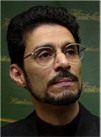
Rohinton Mistry: profoundly dismayed
Thackeray had taken umbrage at passages critical of the party after some students complained to him about them. He convened a meeting of the student wing of the Sena, the Bhartiya Vidyarthi Sena (BVS), which launched a protest and burnt copies of the book. The BVS also gave 24 hours’ notice to Vice Chancellor (VC) Rajan Welukar of BU to drop the novel from the syllabus, which demand was "cravenly bowed down to” (see "Sena nixes Mistry’s novel,” Events and Personalities, Parsiana, October 21, 2010).
Some days after the incident Mistry’s statement was read out by activist and documentary film maker Anand Patwardhan at a meeting called at Bombay’s Press Club organized by three citizen groups in the city — Citizen Initiative for Peace, Committee for Release of Dr Binayak Sen and Mumbai Initiative of Human Rights Education — which came together on October 18. Excerpts from the novel were read out to the 100-strong audience by theater person Dolly Thakore and author Meher Pestonji to highlight the "irreverence” that Mistry shows to "everyone and everything” in the book, reported Hindustan Times (HT) the following day.
The author’s statement, reproduced in Mumbai Mirror (MM) on October 19, 2010, speaks of the "sorry spectacle of book burning and book banning” whereby "the Shiv Sena has followed its depressingly familiar, tediously predictable script of threats... But it is the expeditious decision by Bombay University which caused profound dismay... A political party demanded an immediate change in syllabus, and (the University) provided deluxe service via express delivery, making the book disappear the very next day... (the) University has come perilously close to institutionalizing the ugly notion of self-censorship.”
But there is a "bright spot” in this "sordid story” Mistry acknowledges. "Civil society has responded... with outrage, questions, petitions; it is inspiring to see. The stand taken by teachers, citizens’ groups, bloggers, journalists is exemplary...” Mistry is ascerbic at the role of the Sena scion, who was inducted into the youth wing of the party, the Yuva Sena, on Dassera day, October 17. "The young man who takes credit for the whole pathetic business, who admits to not having read the book, just the few lines that offend him and his bibliophilic brethren, has now been inducted into the family enterprise of parochial politics... Twenty years old, in the final year of a BA in history, at my own alma mater, the beneficiary of a good education, he is about to embark down the Sena’s well trodden path, to appeal... to all that is worst in human nature... He is clearly equipped to choose for himself. He could lead, instead of following, the old regime. He could say something radical — that burning and banning books will not feed one hungry soul, will not house one homeless person nor will it provide gainful employment to anyone.”
A letter signed by 35 literary heavyweights including Salman Rushdie, Vikram Seth, William Darymple, Hari Kunzru and Suketu Mehta has urged Welukar to restore Such a Long Journey into the curriculim, noted TOI on November 2, 2010. Put together by writer Siddharth Dhanvant Shanghvi, it offers him support "should (he) experience fear or doubt... we will be happy to... help you come to a more reasonable and informed decision.”
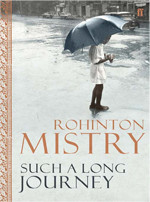
Earlier, after some teachers had spoken out against the action, albeit anonymously for fear of reprisals, St Xavier’s College principal Father (Dr) Frazer Mascarenhas boldly posted a notice on the institute’s website expressing displeasure at the University’s withdrawal of the book just because it carried a few passages which are critical of the Sena’s violent ways. "It is inconceivable that in the 21st century, a political outfit will not show maturity to accept criticism and answer it by evidence of its own actions,” the notice says, adding, "The book in question has not evoked any controversy in civil society and is considered an example of excellent literature, recounting life as lived by the common men and women of our time.”
Jumping into the fray the state government at first reacted strongly to the University’s action, with the then chief minister Ashok Chavan promising to personally look into the matter, reported MM on October 11. But a few days later Chavan did a volte face, echoing the Sena’s sentiments that the novel did contain "objectionable” passages. Embarrassed, the Congress party to which he belongs sought to distance itself from Chavan’s remarks. However, historian and writer Aroon Tikekar was unsparing in his criticism over the "U-turn.” In a piece written for TOI of October 20 he chided, "With his modern vision and position as chief minister of a so-called progressive state, (he) should have displayed a deeper literary sensibility.”
Instigated by the Sena, the dabbawallas, who deliver lunches for Bombay’s workforce, sought an overall ban on the book, Daily News and Analysis (DNA) of October 20 noted. They were incensed at being "defamed” by one "demeaning” paragraph in the novel. "How can someone living in a far off country write such things about us?” asked Raghunath Medage, president of the dabbawallas’ association, though he admitted that he had not read the book, just one paragraph from it.
Higher and technical education minister Rajesh Tope, a member of the Nationalist Congress Party told MM on October 11 that he had asked the vice chancellor to enquire into how the book found its way into the syllabus. It is the job of the Board of Studies to frame the syllabus, and it should be held responsible for the mistake. "If this book has portions that are objectionable, the board should not have let it be introduced in the curriculum.” Tope also informed MM of October 14 that the government cannot intervene in the matter. "The decision to recall the book was the University’s prerogative. We can only check if the procedure followed was correct.”
A senior member of the University revealed that the VC had prepared a comprehensive report on the contentious issue and presented it to the governor, K. Shankaranarayan who is Chancellor of the University, reported TOI on October 14. But the very next day government house officials informed the newspaper: "This is purely an academic issue. Raj Bhavan will not step in. At the same time, the governor must know the circumstances leading to the withdrawal of the book.”
Alarmed by the University’s decision, 20 teachers from BU and the College Teachers’ Union met the VC, to hand over a memorandum on the manner in which the book was removed from the syllabus. Their letter, quoted by TOI, states: "The VC has to be the leader of the academic and intellectual community and should consider it his bounden duty to defend academic freedom against any onslaught... Unfortunately, the academic community in the state feels let down by your action... In academic matters, the last word must be that of the academic community... The book has received recognition, acclaim and the Commonwealth Writers’ Prize for its literary work, characterization, satire and humor. What is shocking is that you as VC have taken recourse to an undemocratic approach... in using the powers vested in the VC under the Maharashtra Universities Act, 1994.”
"There is a procedure to select a book and a procedure to drop it,” writer Shanta Gokhale explained to TOI. "It has to be a decision taken after discussion and not on the demand of a bunch of students. The book was selected for literary reasons and has nothing to do with politics.”
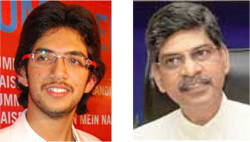
Aditya Thackeray and Rajan Welukar: the initiators of the ban
The University’s action has sparked protests online, with one website inviting people to support a petition against the move, noted TOI on October 12. Within a week it had garnered 1,200 signatures, HT mentioned on October 20. The next day HT reported that two students from a Bandra college had launched a Facebook campaign on the issue. But deputy registrar of the University defended Welukar saying, "The decision of withdrawing the book has been taken by the vice chancellor on the advice of former members of the Board of Studies in English and not suo moto... The decision is as per the provisions of the Maharashtra Universities Act, 1994.” When repeated efforts to speak to Welukar were met with silence, MM of October 13 posed three open questions to him, the first of which was whether he had read the book before purging it from the syllabus. The second was whether a posse of less than a hundred political party workers protesting against a book which had been uneventfully taught to students for the last four years construed grave danger to the University. And finally MM wished to know whether the politics and controversy surrounding his appointment as VC, Welukar was playing safe by banning an allegedly contentious book, or by pandering to the Sena was he securing his future? The questions remained unanswered.
Finally breaking his silence on October 15, Welukar denied that the decision to ban the book was his. It was a proposal made by the University’s Board of Studies, he informed DNA of October 16. But TOI of the same date explains that though the VC can withdraw a book from the academic curriculum, the Maharashtra Universities Act makes it mandatory for him to have his decision approved by the academic council, the highest body for academic matters in the University. However, the academic council has not been in existence since September 1, 2010; the nomination process for members is on and the election will most likely be held in November.
Over 1,000 signatures against the removal of the book from the syllabus have been collected by the Bombay unit of the All India Catholic University Federation (AICUF). Delfi Chinnappan, a student of St Xavier’s and Maharashtra president of the AICUF told DNA on October 12 that the book should be reintroduced into the curriculum after a debate on whether it deserved to be banned. The AICUF appeal reads: "If you feel that voices of dissent need to emerge against the shrinking democratic spaces within the University and the city of Bombay in general, then please lend your support by endorsing the statement and signing the letter.” The petitioners have demanded that details of the University proceedings that led to the ban be made public.
Eminent legal counsel Gautam Patel, in his column in MM on October 15 expostulates on how books have always been feared by those in power down the ages. "Our vice chancellor’s decision to ban Rohinton Mistry’s Such a Long Journey from the syllabus is not only entirely wrong and illegal, it is plainly silly. Bullying is not bravery; quite the opposite. Aditya Thackeray’s demand for a ban on a book he has not read makes this clear: what is it that Thackeray fears?”
Thackeray told The Indian Express (IE) on October 11 that if the book were to be reintroduced, the University should also induct into its syllabus The Red Saree by Spanish writer Javier Moro whose fictional work is believed to be based on the life of Congress president Sonia Gandhi, showing her in an unflattering light. Revealing that the party plans to demand a ban on Mistry’s book, he told IE that "if inflammatory speeches can be banned, then inflammatory literature too can be banned. One can criticize policies but using abuses is wrong.” His father Uddhav, executive president of the Shiv Sena, mentioned to HT on October 15 that the book deserved to be sold only at railway stations.
Meanwhile, the popularity of the novel has reached dizzy levels following the controversy and threatened ban. People are queuing up to read it, borrowing it from libraries or buying it from bookstores which are doing brisk business, TOI mentions in its edition of October 15.
It is to be noted that despite the heated reactions and extensive debate it has engendered, not a single Parsi institution has reacted in any way to the controversy raging over the acclaimed novel of one of the community’s leading living literary lights.
◆ ◆ ◆
From the archive