
The perfect balance
Writing is an act of faith, not a competitive sport, believes Rohinton Mistry
Shroff, author of Breathless in Bombay, who was shortlisted for the Commonwealth Writers’ Prize in the best debut category from Europe and South Asia, has been published in over 50 premier literary journals in the US and UK. He is a six-time Pushcart Prize nominee and the recipient of the John Gilgun Fiction Award.
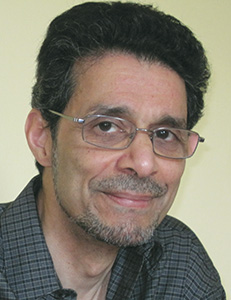

Award winning authors: Rohinton Mistry (left) and Murzban Shroff
Shroff: You say somewhere in an interview that you are by no means a practicing Parsi, and yet no writer has done more for the community than yourself. What is it about the community that has drawn four absorbing books from you? Books that have made it to the Booker shortlist and demystified the community in the eyes of the world?
Mistry: If I said "practicing Parsi,” I probably meant "practicing Zoroastrian.” I think it was in the context of a narrow question about prayers and rituals to be performed religiously by a practicing Zoroastrian. But if we broaden the question a little, and first ask: who is a practicing Zoroastrian, the answer becomes more interesting. Is it someone who observes sudreh-kusti, recites the requisite prayers each day, visits the agiary or atash behram on recommended days? Or is it the person who sincerely tries to practice good thoughts, good words and good deeds; who finds happiness in endeavoring to bring happiness unto others?
But I digress from the main point of your question. Every community has its idiosyncrasies, its endearing and not-so-endearing characteristics. One works with what one has. Looked at another way: if you find yourself in a copper mine, you mine for copper; in a silver mine, it is best to bring the silver to the surface.
Shroff: In an early letter to me, you had advised that no amount of care is enough for a writer. Your own work reflects an almost obsessive sense of detail. Do you develop your journeys along the way, or, like (author) Vikram Seth, work to a clear-cut plot line? Can you share your work method?
Mistry: There is some vague sense of the destination, and a general idea of the direction, with, of course, the readiness to change course if necessary. Rather like travellers who know where they are headed, but do not carry an itinerary that governs their every move — playing it by ear, stopping here for longer than planned, stopping there not at all, willing to turn left instead of right, if instinct tells them to do so.
Shroff: Tell us something about your literary influences. Who are the writers you grew up on? Who are the writers you read today? If there was one writer you wished you were, who would that be?
Mistry: To go all the way back, it would be the books in primary and high school libraries: Enid Blyton, Richmal Crompton (the William books), the Hardy Boys series, the Biggles books, Agatha Christie. Nothing unusual, really. Later on came John Steinbeck, William Faulkner, John Dos Passos, Ernest Hemingway, Kurt Vonnegut, John Cheever, Bernard Malamud, Saul Bellow. And Anton Chekhov, Ivan Turgenev, Fyodor Dostoyevsky, Leo Tolstoy. And in no particular order: Vladimir Nabokov, Christopher Isherwood, Chinua Achebe, V. S. Naipaul, Nadine Gordimer, Albert Camus, James Salinger, Mavis Gallant, James Joyce and R. K. Narayan. Lately, I’ve been enjoying the work of Irish writers: John McGahern, William Trevor, Dermot Healey and Colm Toibin.
Shroff: Undoubtedly the period in history that fascinates you most is the Emergency (declared by former Prime Minister Indira Gandhi). It formed the socio-political background of Such a Long Journey and A Fine Balance. Is there any other period in Indian history that fascinates you, inspires you, as a writer?
Mistry: I suppose if one argues that the roots of the Emergency reach back to 1971 and the aftermath of the Indo-Pakistan (Bangladesh) war, which is the time period in which Such a Long Journey is set, then the answer is yes. I’m sure the present times are as fascinating as any.
Shroff: Besides the Emergency, there are other issues, too, that drive your work. The caste system, for example, and the urban greed for property?
Mistry: I think that as the narrative takes shape, it reveals its own potential and things become clear regarding what can and should be included, and what has no place.
Shroff: Family Matters, one of my personal favorites, was a sensitive take on end-of-life issues. If you were to write that great Parsi novel today, what are the issues you would like to cover?
Mistry: The big issue presently in the media is the threat of extinction of the community. But in Family Matters, published back in 2002, it was also the subject of an argument between two characters, Police Inspector Masalavala and Dr Fitter. It occurred towards the last quarter of the novel. This is the scene where the two are sipping Scotch while Inspector Masalavala suggests one hare-brained scheme after another to boost the Parsi population, including in vitro technology, which he sees as a way to "produce six and seven Parsis in one shot.” Today, we have the Jiyo Parsi campaign with its attendant controversies.
In Such a Long Journey (published in 1991), after the death of the character Major Bilimoria, there is a scene at Doongerwadi, during which there is a discussion about vultures versus crematoria (for disposal of the dead). While I was writing that novel (between 1988 and 1990), the dwindling vulture population was in evidence, though some continued to deny the reality. In the Doongerwadi scene in the novel, there is some wild ranting about importing more vultures. That notion, including breeding the birds in captivity, has been seriously considered recently despite what is known about diclofenac and other complications. The acrimonious debate of dakhma versus cremation continues, with no resolution in sight. Meanwhile, the numbers decline, and will continue to, so long as the community’s strengths and virtues, which allowed it to survive and prosper for many centuries, remain turned on their head — as things to be feared, as weaknesses. I am referring, of course, to strengths and virtues like adaptability, compromise, the willingness to change with changing times, and the spirit of generosity (including the generosity of welcoming into the fold the Parsi’s non-Parsi spouse, of either sex, and their children). But these virtues are being abandoned gradually. What should be abandoned, instead, is the preaching of racial purity.
Shroff: In all your writing, you seem to achieve the perfect balance between character and plot. How much do you rely on character to drive the plot? Do you write out a first draft and then build on it, or complete sections, one by one, to your satisfaction?
Mistry: It is an act of faith, most of all. To begin the first draft, one has to believe and trust in the impulse that has started it all, and keep going, keep building on it. There is no formula, no tried and true method that I can set down, even for myself, let alone as advice for another. The way one works could change from book to book, depending on the demands of the narrative.
Shroff: When you are living your stories so completely as you do, how do you break free, relax? Tell us about your life in Canada?
Mistry: Reading is essential, even for relaxation. Music, too, is important. A bit of gardening, when the season is right. And there is always snow to shovel during winter.
Shroff: I am curious to know, in a world that is seeing more and more of minimalist writing — blogs, twitter, e-books — how do you see the future of novels? Do you agree with Naipaul and Philip Roth who have decried the fate of, and even predicted, the end of the novel?
Mistry: The end has been predicted for a long time now, periodically. But it’s probably difficult to kill something that is so adaptable. Besides, there is a human need for narrative, for story — something in the DNA, and as long as that is satisfied, the rest does not matter.
Shroff: As a community, we have always been known for our literary leanings, our reading habit, our proud collections of books. I have known of Parsis who can rattle off passages upon passages of John Milton, William Shakespeare and Thomas Macaulay. Do you think we should be doing more to promote our writers and scholars? Do you feel we need to invite our writers into some of the contentious debates that seem to be unresolved as yet?
Mistry: Our scholars should definitely be invited into the contentious debates; I wish them well. As for writers, if you mean poets and novelists and storytellers, I don’t think they need an invitation — they barge into debates on their own terms (metaphorically speaking) when they feel they have something to say. Sometimes they may do so obliquely; sometimes, rather than offering a solution, their contribution might be to ask the right question.
Shroff: Your not winning the Booker has been a source of disappointment for many of your readers. I, for one, thought that A Fine Balance was right up there. How does this affect your writing?
Mistry: Writing is not a competitive sport, as has been said before. In an ideal world we would not need literary prizes to glamorize books, and reading would be as natural as sleeping and waking. I do not deny that winning or being shortlisted can give a boost to a writer’s career, and the fact that all my novels have been shortlisted for the Booker is incredibly good fortune. I have nothing to complain about.