
Tradition
The symbolic sés
The traditional sés continues to represent wealth and virtues on auspicious occasions
The traditional sés is dear to a Zoroastrian bride not only because the price of silver is galloping ahead but because this gift from her maternal home brings with it the blessings, the hopes and faith that she in turn is expected to pass on to the next generation.
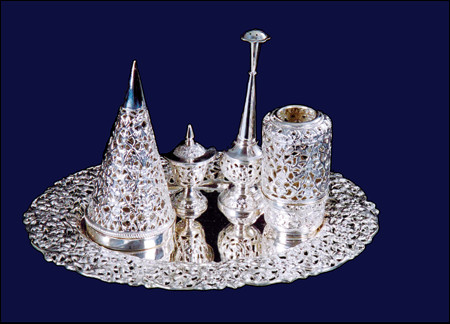
On the variety of sés — in terms of size or quality of silver used or craftsmanship — may depend its cost ranging from Rs 1,000 for a mini sés suitable for a showcase to Rs 2,00,000 for the large, carved, pure silver tray and its accompaniments. Dominating the sés is invariably the soparo, a cone symbolizing a mountain of sweetness that holds rock sugar (khadi sakar) or flat sugar rounds (patasa). The gulabaz (long-necked rose water container), pigani (containing vermilion paste), divo (oil lamp) and coconut are the other standard symbolic silver accessories laid on the sés each representing different values (see "Significance of sés”). An integral feature for auspicious occasions like navjote, wedding, agharni, it is believed that the sés is "mainly used by Zoroastrians with origins in India rather than Zoroastrians with origins in Iran,” according to the website www.heritageinstitute.com
"Earlier there used to be three-five percent nickel in German silver. Today there is no element of nickel,” states Kurus Shroff who with his brothers Rumi and Dossabhoy (Jinoo) runs two well known shops Appoo Menesse and Company (Grant Road) and Naoroji Shroff and Company (Fort) that deal in silver items and other religious requisites like sudrehs-kustis. "There was a time when German silver used to be imported from England and Austria but with the imposition of the licence raj, permits granted to shops” like theirs were cancelled and they had to use German silver manufactured in India, he recalls.
When executing fresh orders, they insist on using good quality material. "We don’t sell recycled old stuff as new items,” specifies Kurus. He feels reassured though that those who do that use genuine, old, good quality German silver. The German silver sés sold by the Shroffs costs around Rs 2,000 for the smaller varieties used on regular occasions like birthdays and around Rs 7,500 for the larger ones used on navjotes and weddings.
Pure silver which until five years ago cost Rs 6,000 per kilo is today available at Rs 32,000, mentions Kurus citing commodity trading and increasing speculation as the chief reasons for the escalation in silver prices. With a pure silver sés now becoming prohibitively expensive, at their shops the Shroffs do not keep stocks of any pure silver sés but are willing to accept orders from interested buyers.
.jpg)
Their shops are also frequented by those who need to buy khumcho/karasiyo (tray and vase) for the muktad prayers in honor of their deceased family members. In earlier days implements like haveneem lala, khal batto, taar, barsam used for ijashni and vendidad ceremonies were specially made out of nine metals but not any more, recalls Kurus.
During wedding-navjote season "we are neck deep with polish work,” reports Kurus, pointing out that at the time of a child’s navjote, the parents often use the same sés that was used at their wedding. On the occasion of the children’s wedding the old sés is either passed on to the next generation or a new one is bought depending on the number of children in the family.
While the silver business contributes 40 percent of the shops’ income, the more lucrative component is the sudreh-lehenga business for there is a year-round demand for these vestments that tend to tear or the kustis that break.
The third generation who presently manage the family business started in 1894 give credit to their "loyal customers who are sure that they won’t be cheated here.” With eldest brother Rumi now being incapacitated due to Parkinson’s disease, Kurus and Dossabhoy take turns managing the shops at Fort and Grant Road, mutually rotating their duties on roz Hormazd, mah Fravardin each year so that both are equally familiar with the workings of the two shops, the suppliers and the customers. They run the business whilst pursuing their professions as chartered accountants in the family firm of M. D. Shroff and Company.
Family loyalty is also the reason why Dinyar Ti-randaz is in the business of sés polishing introduced by his late brother Rustom around 30 years ago. With expertise in electroplating and galvanizing at their workshop they were confident of handling sés polishing work for family and friends. It started as an honorary service but when they realized that "badhaa né mafat karee aapvaanu moghu paréch (rendering gratis service was proving expensive),” they decided to charge a nominal rate, making sure they were cheaper than the others in the business.
On the basis of weight they levy polishing charges which could be in the range of Rs 1,200-1,400 for a simple sés to Rs 6,000-7,000 for a more elaborate one which has designs, embossing and border. They are not in the business of buying and selling silver ware but having seen items with the King’s crown imprinted on it, they are willing to add/remove names, touch up a piece with soldering and give it a fresh lease of life before it is presented to the next generation. "It is like doing cosmetic make-up to change a bride’s look,” states Dinyar. A plain sés would retain its sheen longer as versus an engraved one where dirt can settle in, he declares.
"I encourage customers to go for small silver sés rather than the silver plated larger ones which are usually packed up and stored to be used probably three to four times in the near future. The small sés can be used even on a daily basis on a prayer table and taken out at all functions and celebrations,” recommends Kavas Dadabhoy of KRD Enterprises, adding, "Design preferences vary but the pierced (cutwork) ones are the most popular provided they are made to high standard of workmanship...
"In the olden days the khumcha and the para was usually made of German silver (an alloy and with no precious metal value) but the gulabdani and the pigani was in silver. The rationale probably being that the khumcha and para were probably used very infrequently and the other two regularly for any occasion and blessing,” mentions Dadabhoy whilst informing us that the sés is brought into the groom’s family by the bride on the adarni and left there till the wedding. Traditionally (though not practiced these days) the groom brings this sés to the wedding ceremony. Another interesting bit of trivia is that the name engraved on the sés is usually that of the father of the bride.
Adil Sodawaterwalla who has been in the business for the last eight to 10 years, operating from his workshop in Malad or his residence in Parel, charges Rs 1.50 per gram for making of plain sés and Rs 2 for kotrélu (engraved) sés in German silver. Those who want to purchase a pure silver sés from him would have to pay Rs 34,000 per kilo for the simple variety and Rs 40,000 for engraved ones. Nearly 70 percent invariably choose to purchase engraved sés as compared to a plain one and 90 percent buy German silver artifacts as versus pure silver ones. While the sés business is seasonal, muktad vases are in demand throughout the year, he points out. Since he also markets sukhad he is able to observe that the silver business is more lucrative with orders coming from all over India and abroad.
Cutwork sés: displaying extensive workmanship
After executing orders for several years for the well known shop of Ruttonjee Jehangir, Jayantibhai Soni chose to operate independently under the name of Jai Khodiyar Metal Works 72 years ago. Presently the second generation member Sanjay Soni and his nephew Chandresh Soni look after the business. Their polishing charges are Rs 300-400 a kilo and besides silver plating they offer chrome plating as also gold plating services. Chrome plating that gives the effect of stainless steel appears to be popular among those abroad. Gold plating is only undertaken on select items like asho farohar or a frame of Zara-thushtra, reveals Chandresh. Over 95 percent of their customers are Parsis, the others coming through some recommendation by a Parsi friend. To change the look of a plain sés to an elobarate one they charge one rupee per gram.
Those in the business recommend different strategies to look after one’s silver goods:
When the sés is not in regular use it should be wrapped in a newspaper and kept in a wooden cupboard instead of a steel one so that it does not get tarnished easily, recommends Kurus Shroff. "If you are going to put it in one place and forget about it then polishing it is inevitable.”
Rather than try cleaning it with detergents which may give it a bright look for three-five days and then appear blacker, Dinyar Tirandaz recommends cleaning with chalk no chuno (powder). But that is only effective if cleansing is undertaken regularly. It is like a person who looks presentable if he shaves daily at home but who after a month of unkempt hair would not be able to use a razor at home and would need to avail of the professional services of a barber, he draws an analogy.
Wash the sés with Colgate tooth-powder, dry it and wrap it in Clingwrap or thin plastic so that it is not exposed to humidity in the air, recommends Adil Sodawaterwalla.
Significance of sés
Soparo symbolizes a mountain of sweetness. It is believed to be a modification of the Iranian Kalleh Ghand, a cone of solid rock sugar wrapped in green/gold foil and sometimes embossed with a farohar motif. With the gulabaz, rose water is sprinkled on guests welcoming them with the words "Khush amadid.” A pigani bearing the vermilion paste is akin to the Rajput practice of putting a blood mark on the forehead before venturing on important missions. Today the vermilion vertical mark on the forehead of a man (representing the sun’s rays) and the circular one on a woman (signifying the moon) represent the assurance given to a loved one that sacrifices will be willingly made for the person.
The other items in the sés like coconut remind a person to be resourceful and useful in all walks of life. Water in a kutli (purity), egg (life-giving force), betel leaves (suppleness), betel nut (strength), rice (abundance), sugar crystals (sweetness), rose petals (happiness), garland (joy), dates (resilience), un-shelled almonds (virtue and honesty), pistachio (firmness), silver and gold coins (wealth) are the other staple inclusions in a sés.
◆ ◆ ◆
From the archive