
In Memoriam
The committed comrade
Died: Homi Faramroj Daji, 82, state secretary of the Communist Party of India (CPI) in Madhya Pradesh for 20 years who was twice elected to the Madhya Pradesh Assembly and once to the Lok Sabha, in Indore on May 14, 2009 following lung infection.
Hospitalized on May 2, 2009 after he complained of difficulty in breathing, the Madhya Pradesh government had announced an assistance of one lakh rupees for his treatment. Among the nearly 5,000 people who had come to pay their last respects to the popular labor leader (who was wont to introducing himself as "atom bomb”) when his body was brought to Shahid Bhavan before being taken for cremation were CPI general secretary A. B. Vardhan, Polit Bureau member Amarjeet Kaur, state industry minister Kailash Vijayvargiya...
Describing Daji as "a veteran Communist leader, parliamentarian and an eminent statesman,” the President of India Pratibha Patil noted in her condolence letter, "He was a multifaceted personality who served the nation well.”
At its session on June 4, 2009, Lok Sabha Speaker Meira Kumar described Daji as "an able parliamentarian (who) was a member of the committee on public undertakings and the committee on subordinate legislation during the Third Lok Sabha,” as conveyed P. D. T. Achary, secretary-general, Lok Sabha.
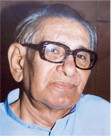
Homi Daji: eminent statesman
"In his passing away we have lost an honest and principled politician,” acknowledged the Madhya Pradesh Congress Party president Suresh Pachouri. Yet another Congress leader and former minister Suresh Seth wrote, "I can now openly say that Indore has become totally leaderless with the death of Homi Daji. Personally I have been his admirer... even though we were often political opponents... He was a bold, strong, honest and sincere leader who did not have money, or even a car, or a big house, but had mass following...”
Daji’s political career had begun at the young age of 16 when he participated in demonstrations in Indore under the 1942 Quit India movement. The next year he joined the All India Students Federation. Subsequently when the Congress moved out of the Federation, Daji chose to be associated with the communist faction and became a member of CPI in 1946. "Straight away he was given the charge of working class struggle,” notes a biography of the comrade by Jaya Mehta.
Indore was considered an important textile center with around 30,000 workers employed in seven composite textile mills in the town. Just when Daji joined the party, a 12-day strike was announced in the mills and the senior leaders were arrested. Required to take charge, Daji addressed meetings.
In 1957 Daji was elected to the Madhya Pradesh Legislative Assembly at a time when the mill management was victimizing workers associated with the CPI or the All India Trade Union Congress (AITUC). Daji organized a protest through a cycle rally of workers from Indore to Bhopal, covering 200 km. The next year Daji was elected secretary of the Textile Mill Workers’ Union. The dynamism of Communist leadership on the trade union front unnerved the government which passed the Madhya Pradesh Industrial Relations Act under which only one representative union, the Indian National Trade Union Congress had the right to negotiate with the management on behalf of workers. Although the powers of AITUC were officially curbed, it continued to raise demands through its hunger strikes organized by Daji and many a times the management had to unofficially come to an understanding with AITUC before signing the formal agreement with INTUC representatives, reports Mehta.
Daji was chosen as general secretary of the AITUC and had been deputed as AITUC delegate to attend trade union conferences in Yugoslavia, China, East Germany and to Moscow to attend the World Peace Conference and to Vietnam to attend the meet on world solidarity. In 1978 Daji had authored a book Massacre at Bailadila, published by the CPI, dwelling on the strikes and lockouts by the miners, as also alleged police misconduct in the Bastar district.
Besides worker-management negotiations, the Indore unit of AITUC had a citizens committee where party members were encouraged to participate in local electoral processes and influence municipal rulings. Daji was elected as corporator under the banner of Nagrik Samiti. When they were able to abolish the municipal tax on cycles and the municipal house tax on slum dwellers, Daji gained substantial popularity with the people calling him "cycle tax abolisher.” He was also instrumental in getting the square outside the palace of Holkars, originally known as Rajbada, dedicated to the people and named Janata Chowk.
At another time when chief minister D. P. Mishra came to Indore, Daji gave a call for an Indore Bandh to protest against his policies. The entire town was completely shut down and black flags shown to him. Some years later when Daji organized a citizens’ protest against price rise, the unprecedented momentum compelled the administration to clamp a curfew on the town. Yet another agitation spearheaded by Daji was the demand that Narmada water be brought to Indore because the traditional sources were proving insufficient for the town.
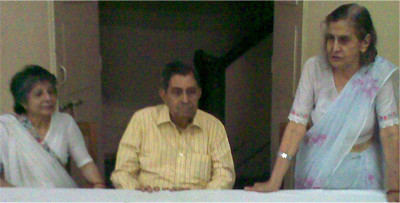
Perin Daji speaking at the Indore Anjuman condolence meet while Bomi and Shireen Heerjee look on
In 1962 when Daji was elected to the Parliament, Indore got exposure on the national scene. Observing Daji’s clarity of thought and aptitude for debates then Prime Minister Jawaharlal Nehru included Daji in the Indian delegation deputed to Colombo to speak for the country on the subject of Indo-Chinese conflict when addressing the representatives of non-aligned countries.
"I had occasions to interact with him when I was posted as commissioner of Indore in 1973-77. That was probably the period when he was at the peak of his career,” recalled Bomi Heerjee, president of the Indore Parsi Zoroastrian Anjuman, adding, "A person of great oratorical skills, he was a rabble rouser and was called the Lion of Indore! To my knowledge, he never interfered in the local administration. No favors were asked or given. He carried a very clean image…”
Daji’s political career came to an abrupt halt in 1992 when he suffered a paralytic stroke following brain hemorrhage. Incidentally this was also the time when mill after mill closed down and workers lost their identity. Fortunately for him, through all his ordeals he had the support of his wife Perin who had willingly forsaken her material comforts when she married him in 1950. Their children — son Rusi, a budding lawyer, and daughter Dr Roshni who was practicing medicine — too had adopted their parents’ ideology and were selflessly serving the country’s poor working class but unfortunately both succumbed to cancer. Daji had lost his brother too at a very young age.
Trials and tribulations constituted a major portion of Bombay born Daji’s growing years after his father who owned a cotton ginning mill was ruined in the Great Depression of the 1930s. The family relocated to Indore where he began his education in St Raphiel School but being unable to pay the school fees, with the consent of the principal he was permitted to sit on the verandah outside the classroom. With no finances to buy books, a friend in the neighborhood lent Daji the books after his day’s study was completed. Thus he would study by night under street lights or with the sole kerosene lamp at home after other members of the family had gone to sleep. In his college days he struck a bargain with a bookshop whereby he would bring them orders for textbooks, deliver consignments to customers and in return be permitted to study books sitting at the bookstore. He ultimately passed his MA in history, standing second in the Agra University and also obtained a law degree with first class. Although the family hoped that Homi would bring prosperity once his education was over, they were equally supportive of his decision to fight the capitalist system.
"To the Parsi community he was an icon. Health permitting he used to attend Anjuman social gatherings,” states Heerjee referring to the well attended condolence meeting convened in his memory by the Anjuman on May 24, 2009. "A person of impeccable honesty and integrity, he led a Spartan and simple existence (and) died in indigent circumstances but to the end he remained popular and respected,” conveyed Heerjee. After tributes were paid to the popular politician, Perin recalled incidents from his life. Referring to his "sincerity for the poor,” in a subsequent telephone chat with Parsiana she mentioned about offers being made to erect his statue and name a bridge after him. But she believes what matters is "kaam, naam nahi (service, not name).” His soul mate would be happier if they would start a school or a medical dispensary in his memory.
When he entered the 80th year of his life, the citizens of Indore organized a special meeting to celebrate his accomplishments. Irrespective of party affiliations people came from all sections of the society to honor him. Retaining his zest for life until the end Daji believed politics is paramount and an individual’s struggle is inconsequential.
The communist crusader is survived by his wife Perin.
◆ ◆ ◆
From the archive