
In Memoriam
Rustom Tirandaz: from tirades to tributes
Died: Rustom Sheriar Tirandaz, 65, Bombay Parsi Punchayet (BPP) trustee and former councilor of the Bombay Municipal Corporation, of a sudden massive heart attack in Bombay on January 27, 2009
"How religious was Rustom Tirandaz? He would say, ‘I am not religious. I don’t know how to pray.’ But is anyone more religious than Rustom?” asked Dadar Athornan Madressa principal Ervad (Dr) Ramiyar Karanjia to answer his own question: "He embodied the teachings of Ardibehesht, (being) honest, truthful, full of integrity; of Shahrevar — he led from the front; he was fearless like Bahram, fighting for the right…”
Karanjia’s invocation of the ameshaspands and yazads in extolling the virtues of Tirandaz who died with his shoes on in his second innings as BPP trustee, set the trend for the emotional outpour that characterized the condolence meet called by the BPP at the Dadar Parsi Colony’s (DPC) Palamkote Hall on February 11, 2009.
The BPP condolence resolution read out by its public relations officer Godrej Dotivala traced the life of this "messiah of the masses” born October 12, 1943:
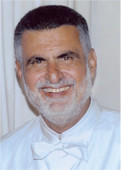
Rustom Tirandaz: contempt for selfish pursuits
"Rustom was a corporator of the Bombay Municipal Corporation for well over 17 years and held several important positions in the civic body such as leader of the Opposition, chairman of the Public Health Committee, member of the Standing Committee, Improvements Committee, the Ackworth Leprosy Home and the Victoria Jubilee Technical Institute…
"He entered politics as a member of the Nationalist Congress Party ever since its inception and has the distinction of being the only person in India to get two Shiv Sena MLCs (members of the Legislative Council) disqualified in one single election petition by the Supreme Court.”
"People came in droves to pay their last respects. Within 10 minutes of the news of Rustom’s passing away, crowds began to gather at his home. The road was crammed with people of all communities… just about everybody whose life was touched by Rustom,” noted Pervin Mistry in tribute. Indeed, the Albless Bungli at Doongerwadi overflowed with mourners on to the grounds outside and a seemingly unending cortege wended its way to the upper level whence the body is inevitably ferried out of view. A host of non-Parsi fans viewed the proceedings from the background.
"The poor, the lay people, the shopkeepers at Wadala and other areas mourn losing Rustom, their friend and ever-present helper. The non-Parsi communities at Wadala, Dadar and Matunga put up big banners in the area to recognize Rustom’s unflinching devotion to the poor and the needy. They called special meetings at Dadar, Wadala, Matunga to honor and celebrate a life so well lived!” added Mistry.
A tearful Mithoo Jesia, who had spearheaded the successful legal battle to save the DPC covenant that ensured the community’s right to exclusive residence in this quiet enclave from being undermined by other communities with the wealth to buy out the properties, bared her "soft spot for this exasperatingly lovable man.” She recalled their close association when Tirandaz contested municipal elections, legislative assembly elections, BPP elections initially: "I was convinced he was what the community needs, the common man’s man…And when I needed him, he was there, in our fight for the covenant, for raising funds…” When Tirandaz sought reelection to the Punchayet however at the end of his first term, "I did not stand by my friend for reasons known only to him and to me. I could see the pain in his eyes but he never held it against me. He is no more, but that pain I will carry to the end of my time. And as I stood with hundreds of people I felt very small.” Referring to the common criticism against Tirandaz, "Su bolwanu té samajtau nathi (he doesn’t speak with discretion)” Jesia added, "He made us all eat humble pie. Hundreds of people stood with tears in their eyes and he had the last laugh!”
Noting that "Rustom would never shed tears,” his stage impresario brother Dinyar Tirandaz referred to the tragedy when Rustom and Armaity’s eldest son Behram succumbed to rabies in 1993 — the only time he had seen the two weep "duské duské (uncontrollably)” in a corner. Dinyar alleged that the Alert Zoroastrians Association (ARZ) campaign on behalf of the 104 community members who had been allotted BPP flats by the earlier board in the Charity Commissioner’s office — an allotment allegedly being resisted by the new board for various reasons — had been directly responsible for his brother’s heart attack. On a lighter note, Dinyar recalled how Rustom would attend weddings with a "token present and no meals.”
Marazban Wadia recalled Rustom’s help when the river Tapi overflowed its banks in Gujarat, in foiling a plan to build a bus depot at Five Gardens and thereby preserving the sanctity of the precinct and his presence at virtually every community event, even if it be in the villages of Sanjan or Nargol. "Jarabi kai thai tau people would say, Rustomné phone karo. É barabar kari aapsé (Whenever anything went wrong, people would say, call Rustom. He’ll set it right)!” Corroborated BPP trustee Arnavaz Mistry who has been involved in the administration of the Parsi Ward at the Sir J. J. Hospital since a couple of decades: "For the past 20 years we have been holding a jashan ceremony on March 21. There has hardly been an occasion when he was not present.”
Social worker and unsuccessful contester for BPP trusteeship Phiroze Amroliwalla noted in his tribute, "We agreed more or less on all fronts and our thinking was alike, save and except that whereas I would volunteer help only if merited, Rustom always maintained that he would help any and every one who approached him.”
Ali Mohammadi, consul general for the Islamic Republic of Iran, was among the speakers testifying to Tirandaz’s impact that evening.
In a tone husky with emotion BPP trustee Jimmy Mistry had much to say of the man he revered as a father figure since the past 16 years. "I learnt so much from him, I can’t begin to tell you!” He referred to one of his early forays into international trade when he had imported containers of furniture in 1996 which had become stuck in red tape. Enlisting Rustom’s aid they arrived at the directorate of foreign trade where Mistry found that the director general knew Rustom by first name but the matter needed higher pursuit. "P. Chidambaram was then the union commerce minister. He told Chidambaram, ‘I am an honest man. I’ve lost my son and Jimmy is like a son to me.’ Chidambaram said, ‘I know who you are and that’s why I’ve given you five minutes…’” With tears coursing down his face, Mistry was overwrought and could not continue.
BPP chairman Dinshaw Mehta, an old battle-scarred warrior himself, was likewise overcome by emotion and refused the invitation of his son Viraf, the evening’s master of ceremony, to take the mike.
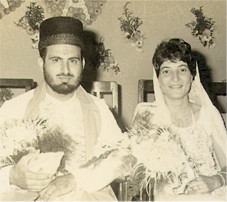
Forty years ago: Rustom and Armaity on their wedding day
Rustom’s wife Armaity recited the poem beginning, "Dear lord, make me an instrument of thy peace…” His youngest son Darayus told the audience that the BPP’s appeal for the appointment of Rustom as sheriff of Bombay had evoked a response from the authorities saying that they had agreed to consider his nomination. He also reiterated Rustom’s familiar words guiding his actions, "In the larger interest, for the maximum number of people, for the maximum time.”
Relative and friend Rustom Jasoomoney recalled how they had both been named after Rustom’s paternal uncle, "though (it turned out that) he was an extrovert and I was an introvert... His detractors called him a rash speaker…He got excited, carried away…but he was never one to hurt people, never expected anything from anyone. If he helped somebody, he hoped that person would help somebody else…”
Ashdin Dodhy, Tirandaz’s campaign manager during his final successful bid for BPP trusteeship, described how lackadaisical he could be about addressing the voters if someone, it didn’t matter who, had brought to him a serious problem. For example on one occasion they were running 45 minutes behind time for an election meet but Rustom was glued to the phone and oblivious to Dodhy’s annoyance and Darayus’ prodding, merely motioning them to silence until "the more important matter” was sorted out. It was the petitioner who explained to them that his wife had delivered a baby with a congenital heart problem in Nallasopara who needed hospitalization at the Wadia Hospital for Children. But there was no space there and no one to turn to except an ayah who suggested he contact a man named Rustom Tirandaz somewhere in Dadar Parsi Colony. Tirandaz would not move from the phone until the dean of the Hospital assured him admission for the infant and the head of the Pediatric Surgery Department agreed to take personal interest in the case. "Finally, just as the man was leaving, Rustom asked him his name…!”
Speaking with "a sense of pain and a sense of hope,” BPP trustee and Zoroastrian Studies founder Khojeste Mistree acknowledged Tirandaz’s service in upholding dakhmenashini at the time when the influential group of Parsi professionals — Disposal of the Dead with Dignity-Action Group (DDD-AG) — had sought and the BPP trustees had agreed to the use of a Doongerwadi bungli for the funerary prayers of those who opted for cremation. He supported Armaity’s candidature for BPP trusteeship to complete the "unfinished task Rustom has left for us,” recognizing her inner strength.
Zoroastrian associations from around the world and all over India had sent in messages of condolence. Noted Iranian philanthropist Mehraban Zartoshty recognized his "commitment and passion to uphold the traditions of the community,” and stated that he was proud to learn that Tirandaz was the first Irani member of the BPP board of trustees. "He never shied from any errand for the benefit of the community and its members,” attested former BPP chairman Eruch Desai.
When Parsiana had first interviewed Tirandaz on March 20, 1985 when he was seeking election as councilor to the Bombay Municipal Corporation once again, he had been busy aiding the late Darvish Irani’s son and daughter-in-law — both blind — who ran a stall at Kemp’s Corner. The Iranis’ stall was in danger of demolition by the municipality and Tirandaz was trying his best to help the blind couple save their business. He had then noted, "When it comes to main issues, party mandates and disciplines are meaningless to me.” He had entered the Corporation the first time as a Jan Sangh (JS) candidate. But the JS had promised its Muslim electorate to do away with the stunning of animals before they are slaughtered, a measure which reduces their pain. Tirandaz had told us, "I cannot afford to perpetrate cruelty to animals and live with myself. Until I was in the Corporation, I didn’t allow them to pass that resolution. As soon as I ceased being a councilor, they passed the resolution. We — the Society for the Prevention of Cruelty to Animals (SPCA), Salim Ali, Jussdanwala — went to court. We won!” (see "What makes Tirandaz tick?” Parsiana, April 1985).
In the interview with Parsiana after his election as trustee in 1995 Tirandaz had described himself as the "custodian of the 300-year-old hopes and aspirations of the Bombay Parsi Punchayet.” He wanted "management by objectives,” and rued its antiquated systems. According to him then, the problem with the community was that it no longer pulled at opportunities and pushed at obstacles together. It was his dream to have a complete census of the community in India and to get the community and the Punchayet working in unison. One effort to that end had been the open Doongerwadi day he had organized when the gathered Parsis were escorted through the Doongerwadi precincts by the trustees and all its encroachments pointed out.
At the inception of his trusteeship term in 1995 when he was introduced to the BPP staff, one of them had challenged: "Would you be able to differentiate between crocodile tears and real tears?” He had told his querist, "My mission here is to eliminate real tears and crocodile tears.” He had amplified, "The trustees say they are the apex body. Even if one Parsi is disgruntled, it’s the job of the seven trustees to redress it…” (see "I’m a man in a hurry,” Parsiana, February-March 1996). Hence it is doubly sad that for some members of the community at least, like the 55-year-old woman and about 30 others, some of whom couldn’t hold back their tears as per a report in the national daily DNA (December 18, 2008), their memory of Tirandaz will be tainted by his words in the Charity Commissioner’s office: "You are all liars. Most of you do not deserve a house; you come only to seek sympathy from the Charity Commissioner.”
Among the file of condolence letters to the family are many from associates in cosmopolitan social service organizations. We learn he had been a former vice president of the Indo-American Society and was closely associated with all its social work activities to improve the lot of poor uneducated Indians by guiding them in various fields of endeavor. Dr Suhas Pednekar, principal of the Ramnarain Ruia College wrote of him as "our illustrious alumnus” and the College’s alumni association speaks of his unfailing support as member of the managing committee. S. K. Agarwal, president of the Maharashtra State Indian Scout and Guide Fellowship notes, "Rustomji was our president for almost a decade and did his best to popularize the Fellowship and…inspire the youth.” Pushpakant Mhatre refers to his sincere work as joint secretary of the B. J. Home Orphanage at King’s Circle, Matunga. He had been vice president of the All India Importers and Exporters Association, notes Hasmukh Zaveri in his letter. Kishan Goradia recalled Tirandaz as "a very popular and bold speaker” during the Emergency.
But pride of place goes to the letter from retired IAS officer S. G. Kale: "I really got to know him when I was working as the municipal commissioner and he was a corporator. The role he played in the running of the Corporation was truly extraordinary. He was a man of great courage and integrity. He refused to be cowed down by the majority opinion and expressed himself forcefully. If anyone tried to disturb his speech or to distract him, he would deliver a fitting repartee and raise his voice to a level where he could be heard over the commotion. He always fought for the cause of preserving integrity in the conduct of municipal affairs and would come down very heavily on proposals that had ulterior motives. His presence in the House would always ensure that the right course of action would be supported. He had scant regard for those who had a personal agenda behind the proposals, ostensibly tabled in public interest, and he did not hide his contempt for such pursuit of selfishness.”
Dr Shernaz Cama, director of the UNESCO Parzor project recalled Tirandaz’s presence at the two-day seminar in Bombay "where his humor lightened the proceedings but also showed how intently he could observe and comment on issues facing the community. He was unafraid of speaking his mind, even if it was not politically correct… Tirandaz was a bridge builder, his smile encompassed each individual. His presence will be sorely missed by all.”
Tirandaz is survived by his wife Armaity and sons Feredoon and Darayus.
◆ ◆ ◆
From the archive