
In Memoriam
An engaging educator
Died: Jal Pheroze Gimi, 87, former vice chancellor of the Nagpur University and erstwhile president and secretary of the Nagpur and Kampthi Parsi Zarthosti Anjuman, on September 15, 2001 at his residence in Nagpur following a brief illness.
Gimi inspired several new members of various university bodies, guiding them to work for the welfare of the students and the Nagpur University, commented the present vice chancellor Dr Arun Satputaley when presiding over the condolence meeting convened by the University in honor of the man who on two brief occasions had officiated as vice chancellor. For 35 years he had served on the executive council of the Nagpur University and to him too goes the credit of establishing its postgraduate department of business management where he was appointed honorary director. The meeting hall of the University has been named after Gimi and this same hall where important decisions are taken by various University committees will bear a portrait of Gimi, reported The Hitavada of September 21, 2001. The Jal P. Gimi Memorial Lecture series in memory of the flamboyant orator has been instituted by the department of business management.
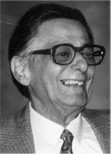
Gimi: celebrity with humility
Among the three former vice chancellors present at the condolence meet M. M. Lanjewar recalled that Gimi was a man of principles. He served the University for almost 35 years but never accepted any remuneration for it. In fact, he even refused to use the University car and opted instead to move around on his bicycle. As commented Shernavaz Buhariwala, head of a department at the Nagpur University, in The Hitavada of September 17, "A celebrity on a bicycle is not a picture of austerity but one of curiosity. And he loved its attendant publicity...What in a lesser person would be gimmickry, made here an arresting personality, and his crusade colorful and charismatic. And charisma he certainly had. It flowed from precept and practice. To the first, histrionics contributed. To the second converged qualities forged in the furnace of the human heart...What made (him) remarkable was the conviction that propelled it and the tenacity that sustained it. For how else could we evaluate a service that sought favor for neither friend nor family, that scoffed at money and preserved a lifestyle of dignity which never gained or waned?”
During the 42 years he had served as honorary lecturer in the Nagpur University’s department of law Gimi had impressed many students including Dr P. L. Bhandarkar who later became the vice chancellor of the University. Referring to Gimi as "a personification of humility,” Bhandarkar remarked that "he never hurt people even while pointing out mistakes or wrongdoings.” Although a strict disciplinarian he remained approachable to his students who valued his wit and advice.
Among the other academic institutions he was associated with were the Bharatiya Vidya Bhavan where he was an executive committee member and the J. N. Tata Parsi Girls’ High School of which he was a trustee. The Chief Justice of India had appointed him chairman of a committee for admissions to BEd colleges under Nagpur University, notes his curriculum vitae.
"It is the responsibility of every citizen to see that the city is clean,” his student Pankaj Maniktala recalled Gimi’s words in The Hitavada of September 16. Gimi who had been the vice president (now known as deputy mayor) of the Nagpur Municipality and subsequently a member of the Nagpur Improvement Trust Tribunal regretted that "nobody is looking after the man on the street. Even employees of the Municipal Corporation do not do what they are paid to do.” The first president of the Jan Sangh’s Central Provinces chapter, working closely with S. P. Mukherjee, Gimi was reportedly a good friend of Atal Behari Vajpayee, Lal Krishna Advani and Justice M. Hidayatullah. At a condolence meeting convened by the Bharatiya Mazdoor Sangh (BMS), the organization paid tribute to his stewardship as the first president of the BMS outfit, Sarva Panth Samadar.
Having unsuccessfully contested one of the Lok Sabha elections, Gimi had remarked, "Had I succeeded my main pressure of working would have been to give an honest government and an honest administration. Nobody now cares about integrity.” As a socially conscious activist he led one of the first batches of satyagrahis seeking Goa’s liberation, had courted arrest in Pakistan occupied Kutch, and had undertaken a long journey by bus when he was 77 to verify for himself the genesis of the Mandir-Masjid controversy at Ayodhya.
Viewing him as a "prominent figure in the Parsi community,” senior Congress leader and former member of Parliament Gev Avari recalled the occasion of his father Manchershaw’s demise in 1974 when the non-Parsi crowd in the area insisted on taking out his procession for the last rites, contrary to the Zoroastrian practice. Gimi who was then the president of the Nagpur and Kampthi Parsi Zarthosti Anjuman arrived at a timely solution to avoid a crisis. He urged the non-Parsis to have their procession with the chanting of inter-faith prayers after which the body was handed over to the community for Zoroastrian rites and prayers.
"Until well into his 70s Gimi was among the best dressed men in Nagpur, impeccable, very proper yet pleasantly spontaneous, so much so that he would shock other proper persons with his easygoing lighthearted approach to life,” acknowledged his associate Vijay Phanshikar. And although he was comfortable on a bicycle he enjoyed sitting at the wheel of his imported car and was regarded as one of Nagpur’s finest drivers. The Surat born, Nagpur educated Gimi was one of the respected handwriting and fingerprint experts in the country, according to his bio data. Trained at New Scotland Yard, London, he lent his expertise to the customs and central excise departments with whom he was working in sensational cases involving gold smuggling and forged documents. A director of the Nagpur Electric Light and Power Company Limited, Gimi was a charter member of the Rotary Club of Nagpur.
"His endearing speciality however was that he never fussed about his countless achievements, his widespread contacts, his social commitments and his die-hard faith in ethical life,” noted Phanshikar adding, "He found in his life that potion that has kept humanity humane all these ages: unshakable faith that goodness prevails in the end and an unfaltering yet silent doggedness in persisting with that faith through life’s thick and thin.”
The academician is survived by his wife Jeroo and sons Shiraz, Farhad and Feroze.
◆ ◆ ◆
From the archive