
Books
“Some also get recognition”
Confessions to a serial womanizer: secrets of the world’s inspirational women by Zerbanoo Gifford. Published in 2007 in conjunction with Phact Publishing by Blacker Limited, Hillcroft Barn, Coombe Hill Road, East Greenstead, West Sussex RH19 4LY, UK. Pp: 406. Price: Not stated.
"I am hurt , but I am not slain; I’ll lay me down and bleed awhile. Then I’ll rise and fight again.” This old Scottish ballad that Zerbanoo Gifford quotes, epitomizes the thread that links the 300 women from 60 countries whom she celebrates in this art paper, coffee table presentation. They include, in the author’s words, a "self-confessed goddess, a hugging saint, a ground-breaking scientist who took on the multinationals, a French Resistance heroine who took on the Gestapo, a judge who took on Saddam Hussein, a high flier who was educated by an elephant, a spiritual giantess who danced with Fred Astaire, the original Cosmopolitan Girl, a politician who lives with two Oscars and a princess who is able to touch her nose with her feet.”
Many of Gifford’s inspirational women come from the Parsi community, including Aban Marker Kabraji, Anu Aga, Arnaz Marker, Bachi Karkaria, Coomi Kapoor, Dhun Adenwalla, Dina Vakil, Jeroo Roy, Mahabanoo Mody-Kotwal, Maja Daruwalla, Meher Banaji, Meher Master-Moos, Meher Heroyce Moos, Pheroza Godrej, Shernaaz Engineer, Shireen Isal, Shireen Irani, Shernaz Vakil, Simone Poonawalla, Sooni Taraporevala and Zenobia Nadirshaw. The book is also dedicated to another special Zoroastrian lady — Zerbanoo’s aunt Maperviz, wife of the retired Indian Air Marshal Edul Dhatigara. Gifford says that interviewing the women showed how important their religion was in motivating them to be outstanding and outward-going in their varied and exceptional contribution to the wider community.
And all of them spoke about the influence of their mother, whether positive or negative, comparing their mothers’ lives to their own. Thus writer and editor Shernaaz Engineer’s mother "never had a career or financial independence. I am single in my thirties. I have both. But I think her’s was a more fulfilled life overall, although mine is more exciting.” Director of the Commonwealth Human Rights Initiative Maja Daruwalla described her mother as "content to be the army wife…Later in life when I dinned feminism into her she would talk about things she should have done.” The remark leads Gifford to comment that the "story of women looking back on a life unlived is a familiar one as many energetic and talented women of earlier generations simply did not have the opportunities or resources to fulfill their potential against the fixed grain of gendered expectations.” Phrases like the last demonstrate the author’s way with words that lifts an idea out of banality and into the realm of fine writing.
On the other side of the coin, many speak of the joys of motherhood vis-à-vis the myth of the superwoman. The desire to strike a happy balance between the demands of motherhood and the workplace is discussed by Gifford’s subjects for, as she notes, it is a "daily dilemma for many.” Also there are those who have suffered the loss of a child, have coped with a differently-abled child and those who have opted to forego the choice of motherhood.
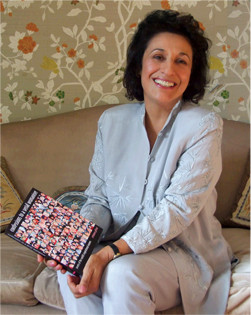
Zerbanoo Gifford: "I have seen the world and survived”
There is a chapter on the women’s relationship with their fathers. Film producer Elaine Attias notes that "paternal love creates in a child a need to perform.” It also reveals nuggets of social history. Inveterate traveler Meher Moos reminisced, "A good many years prior to his marriage my father worked in Kabul, where his maternal uncle was the then King’s closest friend. They were the sole importers into the kingdom of Afghanistan. I hero-worshipped my father. He influenced my extrovert nature and my passion for travel.” Speaking about fathers in India Me magazine editor Sathya Saran recalled, "In the past, during census time in India, when a man was asked how may children he had, he would say six even though he had eight children. He didn’t count the girls.” Others spoke of their fathers’ remoteness, hair-raising temper and propensity for sarcasm. However, for Meher Master-Moos, whom Gifford describes as one of the few women among world religions respected for their scholarly knowledge, the horoscope foretold that she was "destined to be a leader” and so her parents gave her the best of everything including building a beautiful house in East Africa overlooking the sea in order to provide an inspiring environment.
Education, schools and teachers have produced a mixed bag of achievement — some with support, others in the face of opposition. But The Times of India editor Dina Vakil and outstanding screen-playwright Sooni Taraporevala both recalled that the scholarships that enabled them to spend time in the US changed their lives. But the real lessons have had to be lived.
A good many successful women have attributed their success to the support of the men in their lives — some in the present, some in retrospect. But many too have succeeded in spite of their spouses or in-laws. Only two Parsi women have been featured in this section. One is Arnaz Marker, wife of Pakistan’s ambassador Jamsheed Marker, who served as president of the UN Ambassadors’ Wives Association. The other is Aban Marker Kabraji, director of the World Conservation Union. She works in Thailand, her husband has a law practice in Pakistan. They meet over weekends and holidays.
The women examined the meaning of life. Notes Gifford, "Nearly everyone felt there would be some sort of judgment in life…and that finally the laws of karma and God would come into play. Many were confident that on death their souls would experience all the unkindness they had inflicted on others, as well as all the kindness they had shown… there was no escape from the consequences of the life they lived.” But there are also the naysayers. Historian Kusoom Vadgama has asserted, "I am a realist. For me pigs never fly; they stay in the sty.”
Many battled their own lack of self-confidence. Industrialist Anu Aga asks herself, "Would the board have selected me (as chairperson) if my family did not own a 62 percent stake in the business?” And who were the heroines’ heroines? Indira Gandhi for some; historical figures, Satya Sai Baba and Osho for others; also football players and pop stars. But to Maja Daruwalla it was the young women from deprived backgrounds who left behind home and family to work in other people’s houses as domestics, who make life easier for their employers, living without companionship or a support system. "They had so little from life and yet they were the real successes.”
The women had experienced the blow of death and knew the worth of love. They also valued challenge for its own sake and the need to tune in to the Universe through prayer and/or meditation.
At the launch of the book at Bombay’s Crossword bookstore by Sathya Saran, one of those featured in the book, the audience raised some freewheeling questions like how pertinent is the book to the development of India? Have you given thought to the president of the Indian National Congress Sonia Gandhi (who is not included in the book)? Gifford responded that wherever she went she would ask the women where they would like to go for their next meeting or holiday and they spoke of India. They see it as an industrial giant in the making. They see India at the top of the economic heap 20 years from now. As for Gandhi, Gifford maintained that "many women do wonderful work and do it quietly. Some also get recognition.”
Author and founder of the Cymroza Art Gallery Pheroza Godrej organized a special dinner on the terrace of Godrej Bhavan in honor of Gifford in conjunction with chocolatière Zeba Kohli of Fantasie Chocolates and author and chef Karen Anand. All three feature in Gifford’s book. Other Bombay based ‘subjects’ like journalists Dina Vakil and Bachi Karkaria, and Meher Banaji, principal of the Happy Home and School for the Blind were among the Zoroastrians enjoying the event. Responding to Godrej’s words of welcome Gifford admitted her nervousness at the launch and informed the gathering that the sales proceeds from the book will go to her charity Asha Foundation. "I am not the most holy or the most powerful person, but I have seen the world and survived. …I can’t tell you all the people who came and wanted to be in the book. But I am not going to do another book (on women). I have been ticked off by the men and I’ve told them my next book will be on Nice Blokes!”
◆ ◆ ◆
From the archive