
Books
Gifford’s chronicle
Zerbanoo Gifford. An Uncensored Life by Farida Master. Published in 2015 by HarperCollins Publishers, A-75, Sector 57, Noida, Uttar Pradesh, 201301; website: www.harpercollins.co.in. Pp: xii + 227. Price: Rs 399.
Reading biographies satisfies a vicarious pleasure that we take in the lives of others, particularly the lives of the rich and famous. 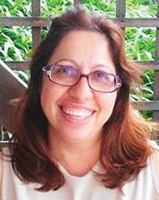 Farida Master’s (pictured) largely adulatory biography of Zerbanoo Gifford does just this by giving us a glimpse into the life of this dynamic Parsi woman who has become among the most well-known faces of multi-cultural Britain. Divided into 17 chapters (the last being the "Inner thoughts” of the author), the book more or less chronologically follows the happenings in the life of its subject.
Gifford was born into a privileged Irani Zoroastrian family in Bombay. Her flamboyant and generous father Bailey Irani (who was a great influence on his daughter) and more circumspect mother Kitty emigrated to Britain soon after India’s independence, where they opened Bailey’s Hotel in London. Little Zerbanoo joined them in England at the age of four, where she began helping out in the running of the hotel as she grew older. From an early age, she became conscious of the economic disparities that exist in society: when she was seven, she made flags out of scraps of cloth, sold them to passers-by outside Bailey’s Hotel, collected £ 10, and sent them in an envelope to Jawaharlal Nehru, Prime Minister of India, to help the poor children of the country! It is only in the fitness of things, then, that years later, she was awarded the Nehru Centenary Award for her work championing the rights of women, children and minorities.
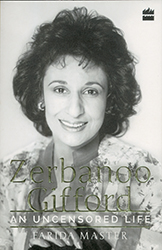 The biography then traces Zerbanoo’s rise in public life as she graduated from the elite Roedean School in Brighton, to her marriage to English lawyer Richard Gifford (her greatest support and strength), the birth of her two sons, and then to a political career as a councillor for the Liberals in 1982. It is this phase in her career that provides interesting insights into her tenacious personality as well as to the racism and intolerance in British society of the times. Though she connected with many of her constituency during campaigning, she was also spat upon with the words, "We will never vote for a blackie.” This, however, did not deter her; nor did threats of violence or house break-ins by violent masked men frighten her away. The election results were a surprise, as she defeated the Tory candidate Major Harsant, to become the first Asian woman to ever win a seat for the Liberal party in Britain. By doing so, she made an entry into the well- guarded boys’ club of politicians and proved that the personal and the political can coexist. She was also the first non-white woman to contest a Parliamentary election three times over.
Zerbanoo was also very active in the women’s empowerment movement. By highlighting issues of domestic violence and crimes against women, she reached out to women all over the world. The author tells us about her other achievements, which include being chair of the Race Relations Forum, the director of Anti-Slavery International, London Organisation for Shelter, and the motivator behind Charities Aid Foundation in India. She has won many awards for her humanitarian work, some of them being The Freedom of the City of Lincoln, Nebraska, for her work combating slavery and racism, the International Woman of the Year in 2006, and the International Splendour Award in Hollywood, for her lifetime achievements in the field of equality and human rights. Indeed, her work has received plaudits from world leaders such as Nobel laureate Desmond Tutu.
Perhaps the project closest to Zerbanoo’s heart is the setting-up of the ASHA center, which encourages and supports philanthropy worldwide and works for interfaith and intercultural understanding, particularly among the young. The center is located in a historic building, formerly known as Gunn Mill House, in the forest of Dean. Here, amidst beautiful surroundings of trees and flowering plants, young people from different parts of the world learn to co-exist with each other.
Aside from her public achievements, the author gives an interesting insight into the private world of Zerbanoo, her problem with a rare blood disorder, as well as her inclination towards the spiritual. It is ironic that she married an Englishman against her father’s wishes — in fact, he refused to attend her wedding — but she strongly recommends that all Zoroastrians marry within the fold! She is also deeply influenced by Sathya Sai Baba, as well as by the Hindu scriptures. She writes, ”There is no doubt I am a Zoroastrian, but I am also attracted to the great Hindu scriptures that acknowledge the supreme reality that you have always existed and will always exist.” The basis for her strong views on gender equality come from the Zoroastrian religion. The Prophet saw men and women as equals, she says, and goes on to criticize "the religious charlatan with his hogwash interpretations” who has denigrated Parsi women to an inferior position in present society.
Farida Master’s (pictured) largely adulatory biography of Zerbanoo Gifford does just this by giving us a glimpse into the life of this dynamic Parsi woman who has become among the most well-known faces of multi-cultural Britain. Divided into 17 chapters (the last being the "Inner thoughts” of the author), the book more or less chronologically follows the happenings in the life of its subject.Gifford was born into a privileged Irani Zoroastrian family in Bombay. Her flamboyant and generous father Bailey Irani (who was a great influence on his daughter) and more circumspect mother Kitty emigrated to Britain soon after India’s independence, where they opened Bailey’s Hotel in London. Little Zerbanoo joined them in England at the age of four, where she began helping out in the running of the hotel as she grew older. From an early age, she became conscious of the economic disparities that exist in society: when she was seven, she made flags out of scraps of cloth, sold them to passers-by outside Bailey’s Hotel, collected £ 10, and sent them in an envelope to Jawaharlal Nehru, Prime Minister of India, to help the poor children of the country! It is only in the fitness of things, then, that years later, she was awarded the Nehru Centenary Award for her work championing the rights of women, children and minorities.
The biography then traces Zerbanoo’s rise in public life as she graduated from the elite Roedean School in Brighton, to her marriage to English lawyer Richard Gifford (her greatest support and strength), the birth of her two sons, and then to a political career as a councillor for the Liberals in 1982. It is this phase in her career that provides interesting insights into her tenacious personality as well as to the racism and intolerance in British society of the times. Though she connected with many of her constituency during campaigning, she was also spat upon with the words, "We will never vote for a blackie.” This, however, did not deter her; nor did threats of violence or house break-ins by violent masked men frighten her away. The election results were a surprise, as she defeated the Tory candidate Major Harsant, to become the first Asian woman to ever win a seat for the Liberal party in Britain. By doing so, she made an entry into the well- guarded boys’ club of politicians and proved that the personal and the political can coexist. She was also the first non-white woman to contest a Parliamentary election three times over.Zerbanoo was also very active in the women’s empowerment movement. By highlighting issues of domestic violence and crimes against women, she reached out to women all over the world. The author tells us about her other achievements, which include being chair of the Race Relations Forum, the director of Anti-Slavery International, London Organisation for Shelter, and the motivator behind Charities Aid Foundation in India. She has won many awards for her humanitarian work, some of them being The Freedom of the City of Lincoln, Nebraska, for her work combating slavery and racism, the International Woman of the Year in 2006, and the International Splendour Award in Hollywood, for her lifetime achievements in the field of equality and human rights. Indeed, her work has received plaudits from world leaders such as Nobel laureate Desmond Tutu.
Perhaps the project closest to Zerbanoo’s heart is the setting-up of the ASHA center, which encourages and supports philanthropy worldwide and works for interfaith and intercultural understanding, particularly among the young. The center is located in a historic building, formerly known as Gunn Mill House, in the forest of Dean. Here, amidst beautiful surroundings of trees and flowering plants, young people from different parts of the world learn to co-exist with each other.
Aside from her public achievements, the author gives an interesting insight into the private world of Zerbanoo, her problem with a rare blood disorder, as well as her inclination towards the spiritual. It is ironic that she married an Englishman against her father’s wishes — in fact, he refused to attend her wedding — but she strongly recommends that all Zoroastrians marry within the fold! She is also deeply influenced by Sathya Sai Baba, as well as by the Hindu scriptures. She writes, ”There is no doubt I am a Zoroastrian, but I am also attracted to the great Hindu scriptures that acknowledge the supreme reality that you have always existed and will always exist.” The basis for her strong views on gender equality come from the Zoroastrian religion. The Prophet saw men and women as equals, she says, and goes on to criticize "the religious charlatan with his hogwash interpretations” who has denigrated Parsi women to an inferior position in present society.
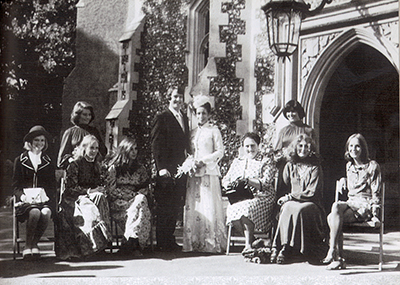
Zerbanoo and Richard Gifford on their wedding day with family and friends
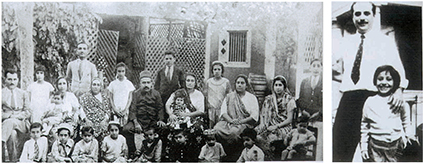
Above: Irani family photograph with paternal great-grandmother Zomord,
grandfather Rustom, grandmother Gover, aunt Hoshbanoo and father Bailey;
Right: Young Zerbanoo with father Bailey
In Master’s biography, Zerbanoo emerges as a doer, strong-minded, ambitious, with solid family values, concerned with the plight of the underprivileged. She is a champion of women’s rights, anti-racist and deeply spiritual, an eloquent speaker and writer, a generous friend, and one who sees with clarity the limitations of present day interpretations of religion.
The reader, however, may get weary of the reverential attitude of the author towards her subject, and the constant use of superlatives to describe her: Zerbanoo is compared to the river Severn, carrying all in her abundance; to "a quivering arrow, intoxicated with a burst of energy and passion for life,” and so on. In the final chapter, Master describes the experience of writing about Zerbanoo as "elevating, enriching, exhilarating, exhausting…” If the involvement with her subject is so intense, it leaves little space for objectivity. It would have made for more engaging reading if the author had critiqued some of Zerbanoo’s ideas — as, for instance, her rather simplistic views on the British colonists, who have, she says, bad karma because they wronged others, and now suffer; or her unquestioning attraction to godmen/women. In fact, the subtitle of the biography, An Uncensored Life, suggests revelations of a kind not constantly adulatory in nature — but the reader is denied these. What we get, then, is more a readable hagiography, rather than a sharply observed biography.
◆ ◆ ◆
From the archive