
Zoroastrians Abroad
“People with passion”
British Zoroastrian Zerbanoo Gifford’s book provides a unique insight into the lives of path-breaking women of our times
"I wanted to discover what was really happening to women around the globe at this point in history, to record their experiences of life and so enable them to share their wisdom with others. Thanks to a NESTA (National Endowment for Science, Technology and Arts) fellowship I had the opportunity to fulfill this ambition and to embark on a unique and extraordinary adventure,” says Zerbanoo Gifford, UK based author and social activist, about her latest offering: Confessions to a serial womanizer – secrets of the world’s inspirational women (see book review "Some also get recognition” on page 29). After a triumphant launch at London’s National Portrait Gallery followed by dinner at South Africa House, Gifford was euphoric when Parsiana met up with her last November.
"It was a star-studded launch in London… the Gallery couldn’t hold any more people!” She marveled at the huge cake an accomplished chef made for her, featuring all the portraits of the women in her book. "It took all of four days to make. It was unbelievable. Everyone thought it was a book: they kept sticking their fingers into it!” laughed Gifford. There were many Press and TV cameras and many VIPs she was introducing to each other, recalled Gifford as many of the subjects of her book attended the launch – Margret Beckett, Britain’s first woman foreign secretary, international horse breeder Kirsten Rausing of Sweden, Lila Poonawalla, former chair of the Tetra Laval Group, India, among others. In other words, it was a jostling soirée of highfliers which included the Duchess of York.
It has taken Gifford two and a half years to do the book and all the material she has collected has been gifted to the London University Women’s Library. Celebrated painter Jeroo Roy has created a portrait of all the 300 women included in the book. They form the collage that illustrates its front and back covers. For a while the paintings will hang at the British Council but Gifford eventually intends to make them a part of her Asha Centre in Gloucestershire. It will require special expertise to move the huge collage.
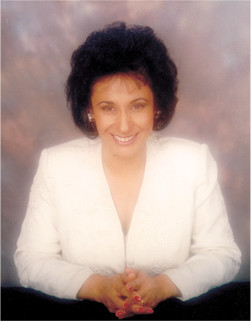
Zerbanoo Gifford: Zoroastrians need to develop public relations skills
Gifford says she has interviewed women who were pioneers in their field like Helen Gurley Brown, the founder president of Cosmopolitan magazine. She is considered one of the 50 most influential women in America, Gifford tells us. Another is Joan Davies, the first woman lecturer at Sandhurst Academy and the late Lucie Aubrac, the French Resistance heroine who died at the age of 95 and was given a state funeral.
An effusive extrovert "interested in people who had done things,” Gifford says she wanted to show the diversity of women’s achievements. So she concentrated on those at the top of their fields in 60 countries and attempted what she says has "never been done before.” Starting out with her own research, Gifford also "went with the flow,” taking the cue from those she interviewed. The path led her to TV and media personalities, the UN, interfaith and religious personalities, spiritual guides and the richest woman in China. "Nobody said ‘no’ to me,” notes Gifford.
A lot of Parsi women feature in Gifford’s book. They include industrialists and social workers, writers and editors — and, unexpectedly, a nun. Sister Cecily Pavri is an outstanding educationist in Singapore. Her Parsi father from Navsari had worked in the mining industry in China and had met and married a Chinese lady working for the British embassy. When Mao Tsetung took over China, the family escaped to Hong Kong and thence to Singapore. Cecily was the youngest in the family, Gifford sketches the background. An outstanding nun, Pavri has been used by the Vatican to execute its mandate in various parts of the world, Gifford adds.
Gifford’s research has revealed that 80 to 90 percent of these highflying women had been educated by Catholic nuns. As far as politicians are concerned, she found Indian politicians more dynamic and Indian journalists "more hands-on and approachable.” Of course "they knew what the story was, were all personal friends.” Gifford found NDTV anchorwoman and war correspondent Barkha Dutt "fascinating.”
At the top of their fields there are still Zoroastrians and Gifford found that "they are respected for their honesty, their sense of dignity. They are seen as upholders of righteousness, as above corruption. Any inspirational book would have Zoroastrians. But they are quite modest, discreet, don’t do enough PR. The community needs to develop PR skills,” she opines. Gifford says she was shocked to find that the governor of the London Metropolitan University and head of the Women’s Library is a Zoroastrian — professor of psychology Dr Zenobia Nadirshaw. "She is known as the authority on minority psychology. There are people like that in the community who we don’t know about!”
According to Gifford "Parsis are originals, mildly eccentric! You know you are in the presence of something different. They went with life, weren’t calculating. Parsi women took their opportunities and did what they could. They had more sense of fun – as distinguished from humor. They could be naughty. Perhaps they were more relaxed with me. On the whole they are bighearted.”
Ninety percent of the women understood the law of karma, says Gifford. And they "understood men. They said they couldn’t have done what they did without the support of their partners. So men were crucial to their success, not money. They considered fame and power not so important because they are all transitory. But to leave a legacy you have to do something new. If you don’t have affection for people you can’t do it.”
Seeking to concentrate now on her Asha Centre (all the proceeds from the book are slated to go to this charity which fosters peace and understanding amongst diverse communities), Gifford hopes to create "peace ambassadors” and says "Buddhis (old ladies) like me should just empower the young to change the world, transform their own communities.” She has been working with disabled children from St Christopher’s School, telling them that despite their disability there is ability.
Gifford tells us about a group of Arab and Israeli children who spent a month at the Asha Centre pursuing a course of study. She says she was determined to break the wall between them. She insisted they learn English and produce a play. She says she spoke to the Jewish and Palestinian teachers about the "huge opportunity of coming to a new country.” They were taught English and drama skills. The transformation in one month was "unbelievable.” She says she has now been asked to work with South Africans, with blacks, with Indians. She has found that when they come to a new country they are more prepared to mix.
The daughter of Kitty (Mazda) and the late Bailey Irani, founder president of the World Zoroastrian Organisation, Zerbanoo is married to solicitor Richard Gifford whose contribution of the title of her book she acknowledges with affection. Of their two sons, Alexander is running the Asha Centre while Mark is enjoying working for Minorities of Europe, Zerbanoo tells us.
The Giffords have moved from their home at Harrow on the Hill to an apartment at Gloucester close to the Asha Centre where they are training volunteers in bio-dynamic agriculture where everything is done by hand and the lunar cycle dictates the planting of different crops. She says they use no fertilizers, no machines. They use the energy from the sun. "Conservation is a big thing in England. The food feels so fantastic when I eat it! The water is pure from St Anthony’s well. Ahura Mazda has given us the most beautiful center. We have a forest and a stream. Older people come for retreats. Young Zoroastrians come after their exams. We are always booked.” Ervads Rustom Bhedwar and Jal Karkaria had done the Zoroastrian prayers; so had the Hindus and the Sai Baba Association, when the Centre was inaugurated a couple of years ago.
Not one to idle for long after the completion of a project, she is planning to work on two more books – "on the eccentrics I’ve known and on nice blokes. To see if men at the top are as honest as the women.” Her friends and admirers have other plans. A letter on e-mail from optometrist and historian of Indians in Britain Dr Kusoom Vadgama notes that an official award in recognition of her "lifelong work in fighting prejudice and intolerance and her commitment to creating a fairer world” is long overdue. In pursuing a Dame-hood for Gifford, Vadgama chronicles her many achievements:
"This remarkable woman’s contribution as a writer, politician and campaigner, has touched and changed many people’s lives, both at home and abroad. Twenty-five years ago she became the then Liberal Party’s first non-white female councillor, when she was elected to the London Borough of Harrow. She is the only Asian woman to have stood for Parliament three times and in doing so faced personal threats and abuse from the National Front and the BNP.
"For Zerbanoo, politics is all about social justice and human rights rather
than self-advancement... Through her writing and numerous books, Zerbanoo has sought to promote greater understanding and awareness. (She) has worked tirelessly for charities such as Shelter and the RSPCA (Royal Society for Prevention of Cruelty to Animals), she is heavily involved with Anti-Slavery International, the world’s oldest human rights organization, and abroad has helped set up a home for street children in Bombay and has campaigned for the rights of the Chagos islanders...
"In the past, Zerbanoo has received the Nehru centenary award, has been named as International Woman of the Year, and was one of only two women to be given the Splendour Award to mark the 60th anniversary of Indian independence. Such international recognition only serves to highlight the way Zerbanoo has been overlooked in her own country. Much is said about the need to foster a more inclusive, truly multicultural, caring, society; honoring Zerbanoo would send a clear signal that our political leaders are really committed to making this vision of the future a reality.”
Gifford has her own take on the virtues of achievement: "In recording what the women said as they opened their hearts to me I realized I was doing much more than just writing down what they were saying; I was learning to listen with loving ears and to suspend – or at least tone down – my judgmental side, so that what came through were the women’s stories, in their own words. One common quality was that they were not afraid of failing, or of life, seeing obstacles as challenges to be overcome and failures as necessary lessons to be learnt in order to achieve success.”
◆ ◆ ◆
From the archive