
Zoroastrians Abroad
Fight rape intellectually
"The fear of rape…controls us, frightens us, paralyzes us, regulates our behavior and is a constant reminder of what we cannot do; in other words, of our dis-empowerment. It is internal to us, which is why it is insidious and exerts a stronger and more lasting influence. It travels with us wherever we go,” notes Dr Shazneen Commissariat in the preface of her thesis, "The aftermath of rape in Gujarat: the dialectics of voice and silence.” The work earned her the PhD degree in health research from the University of Lancaster in September 2007.
Though the traditional Indian woman’s attitude to rape has been despair and death, Commissariat writes, "in seeking ways of surviving the aftermath of rape … death need not be the only path ahead.” Thinking of alternate ways of facing the trauma, she notes, "This study is an invitation to engage with them experientially: listen to them, think about them, come close to them. And realize the potential for them to be us, and us them.”
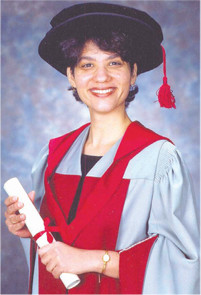
Shazneen Commissariat: addressing rape
A daughter of the late Jolly and Tehmas Commissariat of Ahmedabad, Shazneen found the widespread and horrific sexual violence perpetrated on women in her home state during the riots of 2002 "numbing, silencing and shaming.” She is candid in her response to Parsiana, explaining the impact the events had on her own psyche: "‘Numbing’ because of the extent and forms of sexual violence; the sheer impunity with which it was perpetrated and condoned/denied (and still is in large quarters of society); ‘silencing’ because despite feeling strongly about it, I did not utter a word against it because of fear (except for strong arguments with my father bordering on fights, I haven’t really ‘gone public’ about this); ‘shaming’ because I was trained as a psychotherapist and knew I could do something to heal the wounds, but I felt unprepared and scared, so I didn’t really do anything. It was this constant realization that led to guilt. The widespread sexual violence perpetrated in Gujarat has affected me; it has pushed me to fight for a voting card despite umpteen bureaucratic struggles. It made me realize the ‘closeness’ or proximity and therefore the vulnerability to sexual violence.”
The topic is close to her heart. "Even if these riots never happened, I’d still have engaged with rape as a subject,” she writes. And having studied its antecedents and many faceted aftermath, Commissariat feels that she could best do the subject justice in a book. But that is a while away. In the meantime she wants to publish shorter, more accessible pieces of work such as research papers, articles in magazines, etc. She is also hoping to get a fellowship to enable her to retain her focus on sexual violence.
We wonder whether her interests would be academic in nature or whether she would join other feisty social activists in pursuit of justice for these women. Responds Commissariat: "I’d love to see myself as a social activist. But I haven’t done enough to call myself that. As for academia, it’s my cocoon. It makes me feel safe and secure. But I also hate the sterility that sets in once you’ve carved a niche for yourself in this area. So, I suppose, I’d like to be in both areas. In fact, that is how I have conducted this research, that is how my thesis reads — I’ve consciously written a very readable and accessible thesis — and that is where I am right now. I am in conversation with academics, social activists (who may not call themselves that), psychotherapists and, hopefully soon, journalists through my interactions, workshops and constant efforts at networking and dialog.”
Traveling, specially to places where she is close to nature, interacting closely with people, reading, writing, eating, dancing, acting, listening to music and playing with children are some of Commissariat’s other interests. "Dabbling in a little bit of everything” is how she denotes them.
Coming from a family who has been traditionally involved in community affairs — her father was a painting contractor who was a trustee of the Ahmedabad Parsi Panchayat for over two decades, she tells us — she has maintained her contact with the community through Parsiana and, before she went to Britain where she studied for two-and-a-half years, through attending the annual Zoroastrian Youth Seminars organized by FOZYA (Federation of Zoroastrian Youth Associations) in India.
Educated in Mount Carmel school in Ahmedabad, Commissariat worked for her bachelor’s degree in psychology at St Xavier’s College, followed by a masters in clinical psychology at Gujarat University. Alongside she trained and practised as a psychotherapist for four years and took the UGC (University Grants Commission) conducted NET exam which qualified her to teach at the university level in India. She joined The Indian Institute of Management (IIM), Ahmedabad as a trainee academic associate and later Oxfam, as a project officer and fellow on violence against women before proceeding to Lancaster for her PhD in Health Research. She is currently teaching a course on academic writing at IIM, Ahmedabad which she sees as part of her ongoing education and spends part of the year abroad.
Having lost her mother to cancer 20 years ago, Shazneen and her sister Purzeen grew up in a joint family. She credits her kaki (paternal aunt) Armaity Commissariat with much of their upbringing, though the maternal aunts, uncles and cousins were also very much in the picture. So it is no wonder that her kaki and masi (maternal aunt) are her role models. Purzeen is married to Capt Karl Meher-homji of Poona where she used to run a catering business. They are currently in London with their two children: Zarius and Layla.
"Although I have developed my own individual style of writing, I do find Sudhir Kakar’s very alluring and would, if given a chance, have him as my mentor,” notes Commissariat. She relies on a friend as a mentor in matters of ‘wisdom’ and another when it comes to perfectionism and values the efforts of women (and men) who have initiated and sustained desirable social change without the use of violence or political influence — like Medha Patkar for instance.
Commissariat senses "a certain closeness and warmth amongst Zoroastrians in India.” Also the comfort of being known as a community among other communities — a comfort yet unknown to Zoroastrian communities settled abroad and hence a groping for identity.
She seems to share with other youths the feeling that community institutions are largely controlled by senior citizens. Describing them as " bureaucratic” she voices the perception of her generation whose initiative is dampened and who feel criticized when they do take the initiative. "In general, the potential of our youth to propel the development of our community…is largely untapped,” she notes.
"We are a rich community. Rich in terms of resources: physical (space/place/institutions/physical assets), financial (community funds and individual assets) and human (indicators of education, certain values such as professionalism, etc). I get the impression that we are doing well enough professionally. However, I am concerned about our ‘communal’ well-being. There’s been large-scale migration amongst the youth. They face problems of identity and assimilation in (largely) ‘western’ societies. On the other hand, there are several old, single persons living alone with all the attendant problems,” observes Commissariat.
Noting that "there are also a lot of single persons who are not so by choice,” Commissariat writes, "It’s very difficult, tiring and trying to find a Parsi mate… This has its repercussions on the individual, family and community, and these need to be addressed.” According to her, the Zoroastrian youth conferences were "perhaps the best thing that happened to our community. They used to bring our youth together; we had a lot of fun, felt a sense of community once a year, and often, paired up. A lot of us have kept in touch and forged ongoing contacts and relationships. What more can a ‘dis-integrating’ community ask for!” Unfortunately, these conferences seem to have discontinued for some time. The last one in Calcutta was cancelled because of inadequate participation. For want of personal contact, she advocates networking as the panacea for the community youth and is ready to start: "I am on shazneenc@hotmail.com Let’s begin!”
◆ ◆ ◆
From the archive