
Comment
An inconvenient truth
Unless the new trustees accept the fact that the community is declining and start a debate on the issue, the numbers will continue to fall drastically
In an article in Parsiana ("The right freely to profess…” October 21, 2008) noted lawyer and former chairman of the Bombay Parsi Punchayet (BPP) Eruch Desai had urged the community to elect trustees who would preserve our religious practices and traditions and those who would stand by the community in any hour of crisis. I assume this is because he believes that the trustees of the BPP have a role to play in religious matters. I have very high regards for Desai as I have found him to be a very fair minded and dedicated person, both as a trustee and later as the chairman of the BPP. However, I respectfully disagree with him. Since this article was written by Desai before the election, I feel his intention may be to suggest that the community should vote for the ultra orthodox candidates and not for the candidates put up by the Adult Franchise for Progress (AFP) who were all very eminent public men, the kind of trustees who used to be selected in the past. Presumably they would not protect the institutions, practices and traditions as well as the World Alliance of Parsi Irani Zarthoshtis (WAPIZ)! Apparently he feels that an orthodox trustee is better than a liberal minded person! Would this not convert BPP into an orthodox, narrow-minded body which it has never been in the past?
From my experience as a trustee for two terms I had found that when any question having a religious connotation arose, all the trustees would ensure that our traditions and practices are safeguarded. However they did not surrender their responsibility to decide. They would take the advice of the high priests as well as the learned laymen, and then take a decision based on their knowledge and judgment, and not blindly accept the ultra orthodox views expressed by the high priests and religious scholars. In fact, when Desai and I were both trustees, the case of a Parsi lady, Roxan Shah, married outside the community came up for consideration, over the question of her rights to use the Doongerwadi as her final resting place. The trustees sought the opinion of the high priests as well as the learned laymen and also took the advice of the former Chief Justice of India Y. V. Chandrachud. He advised that the job of the trustees was to see that the wishes of the benefactor were carried out and in this case they had to merely satisfy themselves that the lady who had died was a practicing Zoroastrian and had married under the Special Marriage Act 1954, which permits a person to retain one’s original religion. Desai too agreed with this and I admire his courage because the orthodox section of the community regarded this decision of the trustees as contrary to religion. I do not recall any other issue requiring trustees to consider interpretation of religion ever coming up before the BPP during the 15 years when we were trustees.
Desai refers to the navjotes of Neville Wadia as well as Joseph Peterson.
I do not understand what role the trustees could have played in the navjotes of Wadia and Peterson since I believe the trustees’ opinion was neither sought nor given. On the issue of a Doongerwadi bungli being used for prayers for those opting for cremation, the trustees tried to decide according to the terms of the trust, and besides the high priests they also took the opinion of counsel Rafiq Dada. In fact, though they passed a unanimous resolution allowing the use of a bungli for this purpose, based on their interpretation of the trust deeds, some trustees switched sides to win the support of the orthodox voters.
I am sure Desai would agree with me that the earlier trustees were also protecting the religious customs and practices even though they were not ultra orthodox but men and women of sound judgment. Frankly, I feel that it is more dangerous to have persons as trustees who claim to be religious scholars and ultra orthodox persons rather than a person with good judgment and practical experience. Such trustees would try to view everything from a narrow orthodox perspective, whereas in the past trustees were always broad-minded and took a balanced view. The trustees are supposed to represent the entire community and not a small section of the orthodox. In the past, the trustees have all been men of the world, often eminent lawyers, doctors, chartered accountants, civil servants and businessmen, and rarely has a religious scholar or a high priest been selected as a trustee and this has stood the test of time. A narrow-minded BPP will not truly represent our cosmopolitan community. I hope that the other trustees will not allow themselves to be misled or intimidated by such trustees and will consider it their responsibility to give their honest opinion based on their own judgment. Remember, Parsis do not have a pope! A greater responsibility rests on the chairman to ensure that the views of all sections are considered before taking such decisions.
I wish to point out to the new trustees that our community is facing a very serious crisis and needs good leadership to steer its course. Everyone is aware that our population is steadily declining at a fast rate and soon we will become like the Todas of Mysore. The Parsi population in Bombay is now 42,000 and it is projected to become 35,000 by 2020. Worldwide it is less than 1,00,000. We need truly enlightened leadership to face this situation. Yet we have elected as a trustee a person who uses bogus figures to show that our numbers are not declining but rising. WAPIZ founder trustee Khojeste Mistree quoting from some bogus source has made this claim. This is truly a crisis situation calling for our leaders to take swift action to tackle it.
I feel that it is the duty of the Akabars to start a debate amongst the enlightened members of the community and experts as well as high priests and religious scholars to take stock of this grave threat, consider the options before us and decide on what urgent steps we need to take. Even the National Commission for Minorities has urged Parsis to do something to stop the decline. Yet even the issue of admitting children of intermarried Parsi women which, besides being equitable is also permissible as Fali Nariman has pointed out, is stoutly resisted by some of our Akabars. We are not considering indiscriminate conversion of all and sundry, but only admitting those children with Parsi/Irani blood! I wonder if the other trustees are concerned enough to do something about this, or are afraid of their vote bank only. We are behaving like US President George Bush who dismissed the threat of global warming as unproven and refused to sign the Kyoto protocol despite former US vice president Al Gore having shown this in his film on global warming. The community is also facing a similar "inconvenient truth.” While we are rushing like lemmings to our sure diminution to the status of a clan, I am saddened by the fact that even enlightened Parsis who are aware of this are not speaking out and urging our Akabars to start a dialog about this threat so that some meaningful measures can be considered. Won’t any one speak out about this? The Federation of Parsi Zoroastrian Anjumans of India is another appropriate forum, but likely to be sidelined as WAPIZ is uncomfortable facing so many rational people in one room!
What will we preserve if we are doomed to disappear?
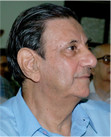
A retired Indian Administrative Service officer, Jamsheed G. Kanga held senior posts in government including that of the municipal commissioner of Bombay. He is at present a senior corporate advisor to the Tata group of companies. A former trustee of the Bombay Parsi Punchayet, he is on the board of several companies and is active in heritage conservation and town planning.
◆ ◆ ◆
From the archive