
Comment
“The right freely to profess…”
The views expressed by Fali Nariman and Berjis Desai on entry into fire temples are analyzed
We are witnessing an interesting debate in the Press and in various circulars regarding the role of the trustees in the discharge of their duties vis-à-vis religious aspects.
In my last article ("Consequences of change,” Parsiana, August 21, 2008) I had observed that Bombay Parsi Punchayet (BPP) trustees certainly have a role to play in religious matters as they had in the cases of Neville Wadia’s navjote and Joseph Peterson’s navjote outside India.
One school of thought is that religion has nothing to do with these trusteeship elections because the BPP is only a charitable trust whose trustees are strictly bound by the provisions of the relevant trust deeds, e.g. entry to a fire temple is governed by its trust deed, and no trust can go beyond it. Almost all the trust deeds provide that entry to the temples is restricted only to Parsi Zoroastrians. Accordingly, children of Parsi mothers and non-Parsi fathers cannot have access thereto.
However, the views expressed by my friends Fali S. Nariman and Berjis Desai in their respective articles ("The right freely to profess…” and "A cardinal human right,” Parsiana, August 21, 2008) show some divergence from the above. According to Nariman, relying upon the cases of Petit vs Jeejeebhoy decided by the Bombay High Court in 1908, and Saklat vs Bella decided by the Privy Council in 1925, although the trust deed may restrict the entry to the fire temples only to Parsi Zoroastrians, the child of a Parsi mother and a non-Parsi father whose navjote is performed by ordained priests is entitled as of right to be recognized in law as a Zoroastrian. There can be no dispute with this proposition, but can it be stretched further to say, that notwithstanding the provisions of the trust deed restricting entry only to Parsi Zoroastrians, they should have access to the fire temples to profess and practice the religion? Cannot one practice the same without going to the fire temple? True, the Privy Council has observed that although such a child would not be entitled to admission in the fire temple as a matter of right, the trustees could lawfully permit the child to enter the place of worship, and in doing so they would not be committing a breach of trust because the trustees of a religious trust are not bound to exclude persons who may have no legal title to or in the trust premises. Nariman goes on further to say that after 1950 such a child also has a constitutional right to enter the temples by virtue of Article 25(1) of the Constitution of India.
Desai also supports this contention on another ground when he observes that equality of gender is a cardinal human right which is universally accepted and equality between the sexes is included in the equality "in dignity and rights” of all human beings declared by Article 1 of the Universal Declaration of Human Rights. He also goes on to observe that Article 2 of the Declaration specifically states that all persons, without any distinction of sex, are entitled to the human rights set forth therein and Article 16 of the Declaration stipulates equal marital and family rights of men and women. He also refers to equal treatment of men and women in Articles 14 and 15 of the Constitution as an integral part of public policy, and any discrimination would be repugnant to the Constitution of India, contrary to public policy and opposed to several declarations of basic human rights.
Bella’s case does enable the trustees without committing a breach of trust to allow such children an entry into the fire temples notwithstanding the provisions of the trust deed. However, which trustee would be foolhardy enough to permit the same, against the views of a preponderantly large majority in the community on this religious issue and perhaps his own view? And here the trustees have to take recourse to the religious aspect of the matter whilst taking the decision, as they have done in the past.
A similar situation also arises in the case of Doongerwadi properties and the right of the child of a non-Parsi father and a Parsi mother to be entitled to the paidast and uthamna ceremonies. In spite of the aforesaid two landmark judgments, as also the provisions of the Constitution of India, it has been the consistent practice of the trustees of BPP to take the view on such issues only after seeking advice and guidance of the high priests and scholars of the community on religious matters. A large section of such high priests and scholars still take the view that the relevant observations in Petit’s case (this issue has still not been tested by a judgment of the Supreme Court after the promulgation of the Constitution) are in the nature of obiter dicta.
Even counsel Rafiq Dada while giving his opinion, supported also by the opinion of another senior advocate Bomi Zaiwalla, on the issue whether relatives of a deceased Zoroastrian could make use of the bunglis at Doongerwadi for cremation or burial after the prayers according to Zoroastrian religion are recited, observed in specific terms that if the Zoroastrian faith does not permit such act, then the bunglis and the separate prayer halls at Doongerwadi cannot be availed of for the aforesaid purpose. It should be noted that use of the Doongerwadi property is essentially only for the purpose of religious ceremonies, as fire temples are also essentially and wholly entwined to religious obsequies.
Therefore, to say that religion has nothing to do with the election of trustees does not seem to reflect the correct position. If the voter is keen to see that our religious institutions, practices and traditions are preserved and protected, his choice should naturally go to those who would stand by the community in any such hour of crisis threatening the same.
In the circumstances, though the issue — whether the trustees of a religious property such as a fire temple may allow the entry of children of non-Parsi fathers and Parsi mothers into such institutions — is essentially governed by the provisions of the relevant trust deed, the religious aspect thereof cannot take a complete backseat. If the benefits of such institution are available only to Parsi Zoroastrians, as that term is understood in law, which trustees would want to make a breach of trust reposed in them and act to the contrary? Further, one can also practice one’s religion without going to a fire temple. I know of several cases where people seldom go to the fire temple but recite prayers every day at home and follow the religion.
So far as the constitutional provisions are concerned, Articles 25(1) and 26(b) of the Constitution are relevant. Article 25(1) provides that all persons have the right freely to profess, practice and propagate religion. As held in the case of Saifuddin vs State of Bombay, reported in A.I.R. 1962 Supreme Court page 853, the protection of these articles is not limited to matters of doctrine or belief, but they also extend to acts done in pursuance of religion, and therefore contain the guarantee for rituals and observances, ceremonies and modes of worship which are integral parts of religion. It also observes that what constitutes an essential part of religion or religious practice has to be decided by the court with reference to the doctrine of a particular religion and includes practices which are recorded by the community as parts of its religion, and no outside authority has any right to say that certain aspects relating to the ceremonies to be performed and in a particular manner are not essential parts of religion, and it is not open to the secular authority of the State to restrict or prohibit them in any manner they like under the guise of administering the trust estate.
It is not for nothing that the trustees of the BPP are styled as Akabars of the community. From times immemorial, the trustees had a say on religious matters, whether on their own, or with the assistance of others, and the same will continue in future too.
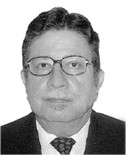
Former president of the Bombay Parsi Punchayet and a senior partner of Mulla and Mulla and Cragie, Blunt and Caroe, Eruch B. Desai is a director of around 15 companies and trustee of the General Electoral Trust formed by the House of Birlas and some other trusts. He has also made representations before the authorities for the amendments to the Bombay Rent Act.
◆ ◆ ◆
From the archive