
Comment
“To break a tradition…”
Appeasing a minority by changing time-tested practices is unacceptable
Dr Kersey Antia of USA visited Bombay recently carrying with him a volcano and leaving behind a sizzling tornado. His meeting at the Y. B. Chavan Auditorium on February 2, 2008 was well attended — thanks to the organizing ability of the Association for Revival of Zoroastrianism and the Association of Inter-Married Zoroastrians, which mainly represent the higher echelon of the community. However, as the late B. K. Boman-Behram, former chairman of the Bombay Parsi Punchayet (BPP), used to say, the backbone of the community ventilating its real voice is the middle class, and that was indeed noticeable at the very well attended gathering at the Framjee Cawasjee Institute Hall on February 15, 2008. The master stroke was the erudite speeches at this meeting by reputed priests and scholars of our community, as also messages sent by the high priests who could not attend the meeting exhibiting exemplary solidarity and rebutting with one voice the contentions of Antia in support of his newly propounded theory of "acceptance.”
The impression that I gathered at the meeting at Y. B. Chavan Auditorium was that Antia did not actually advocate conversion in India but laid stress on acceptance by the community of non-Parsi fathers and mothers and their children into its fold. It was in support of this theory that he cited certain extracts from our religious textbooks and scriptures in support of conversion to buttress his arguments. This was refuted by the priests and scholars by citing references from the same religious text books and scriptures, giving their interpretation of the texts. It was left to members of the audience to draw their own conclusions as to whose version should be accepted considering the quality and scholarly achievements of the speakers at the two meetings. However, the purpose of this article is not to enter into a debate on this issue but to explode the myths and concentrate on the realities on the issue of conversion/acceptance, particularly in India.
To assess the above, we have to consider whether Antia’s proposal is likely to achieve the desired results in India, viz, increase in the numbers of the community and secondly whether such acceptance would enable the non-Zoroastrian spouses and children of non-Parsi fathers to enjoy the same rights and privileges as born Parsi Zoroastrians. I think not.
Inter-communal marriages are a much smaller percentage as compared to marriages within the community. Further, a large majority of non-Parsi spouses, particularly the husbands, would not be ready to forsake their own religion and become Zoroastrians. Indian society by and large is still orthodox and believes in tradition. How many of the parents of such non-Parsi spouses would be prepared to allow their sons and daughters to embrace another religion? How many of them, leave aside the parents, would permit their grandchildren to be brought up as Zoroastrians? A very small percentage. Is it then worthwhile to cater to the demand of the above two Associations, and by one stroke of the pen bring about a radical change in the community’s time-tested customs and traditions extending over a very long period of time, with a strong possibility of disastrous consequences not only to the customs and traditions but also to our valuable properties and institutions?
Although the judgment in the case of Petit v/s Jeejeebhoy affirms that Zoroastrianism not only permits but enjoins conversion, no right thinking member of the community can advocate the same in India for obvious reasons. If that was done, the present day Parsi Zoroastrians would be reduced to an insignificant minority. Will the community then be able to live with its head held high, trusted and admired by the authorities and other communities, as is the case at present?
The next issue is whether by such acceptance of non-Zoroastrian spouses and children of non-Parsi/Irani fathers into the fold, they will be able to enjoy the same rights and privileges as enjoyed by those born as Parsi/Irani Zoroastrians. Will they be able to enter the fire temples? No. Will they be able to stay in the housing colonies? No. Will they be able to avail of the Doongerwadi facilities? No. Will they be able to enjoy the other trust benefits meant for Parsi/Irani Zoroastrians? No. As all concerned should be aware, valuable properties and institutions, including housing colonies, the Doongerwadi property, various fire temples were settled by our ancestors on trust only for the benefit of Parsi/Irani Zoroastrians and, according to the above judgment, the beneficiaries can only be born Parsi/Irani Zoroastrians and their children; and children of Parsi/Irani fathers and non-Parsi mothers, and not vice versa.
Any relaxation by the trustees would tantamount to a breach of trust. Which trustees would be willing to open the doors to non-Parsi fathers and spouses or their children? Do we not see the boards hanging outside the fire temples: "Admission restricted to Parsi Zoroastrians.” Apart from the above, even if all the trustees of the BPP were to agree to such a proposal, it cannot have any binding efficacy even in respect of the properties under their control. Would the trustees of other trusts owning fire temples or properties be prepared to toe the same line? No independent minded trustee would be a blind follower of a lead taken in this behalf by the trustees of the BPP.
Incidentally, in order that the trustees of the BPP may be able to think in the right direction in accordance with the law, he/she should be a person imbued with learning, acumen, enlightenment and experience. I doubt whether the recently talked about system of election through adult franchise would result in bringing such persons on the board of the BPP. This system is most likely to usher in trustees of much inferior quality and less enlightenment, akin to youngsters in the current Indian cricket team who give many a hiccup and cause tension whilst achieving victory. Seasoned and experienced players like Rahul Dravid, Saurav Ganguly or V. V. S. Laxman would have been able to achieve the victory without causing much concern. Here, I recall with great interest, a very enlightened and excellent article which Jamsheed Kanga, my esteemed former colleague on the BPP wrote in the Jam-e-Jamshed some time back explaining what the duties and responsibilities of the BPP trustees are and what sort of person should adorn the chair.
So to all those who profess "acceptance,” I would say that if they love our religion, sacrifice is the first element of religion. To break a tradition merely to cater to the wishes of a minority section is not likely to work either for the happiness of those individuals or for the welfare of the community. Customs and traditions govern the world. Immemorial custom is transcendent law. It is the tyrant of our feelings and our way of life, and rules the community with the law of a tyrant. If we let in one little break in tradition, we will have let in the whole monster, horns, tail and all. Customs and traditions are deep rooted in the community, and rightly so, and are not yet on the wane.
Antia’s lecture has therefore raised a hornet’s nest without the possibility of achieving the desired results. If all the beneficiaries of the various trusts concerned were agreeable to his suggestion (a vast majority opposes it), any relaxation in this behalf would lead to the classic scenario of digging the mountain to find just a rat. The debate, therefore, generated by Antia should be given a decent burial, but not at the Doongerwadi property.
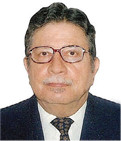
Former president of the Bombay Parsi Punchayet and a senior partner of Mulla and Mulla and Cragie Blunt and Caroe, Desai is a director of around 15 companies and trustee of the General Electoral Trust formed by the House of Birlas and some other trusts. He has also made representations before the authorities for amendments to the Bombay Rent Act.
◆ ◆ ◆
From the archive