
Books
No compromises
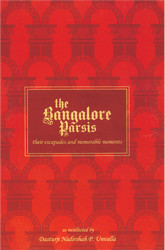
"Mine has been a journey of ups and downs. My objective has always been clear and well defined — ‘To further the aims and objectives of our great religion.’ My commitment to our Anjuman has been complete and I have served my community and my Anjuman to the best of my ability. In this I have never flinched nor have I made any compromises. Whilst there are many who criticize me for being ultra-conservative, others have branded me a fundamentalist. However, my greatest satisfaction stems from the fact that there are many who have stood by me, appreciated my stand and valued my principles,” states Dastur Nadirshah P. Unvalla in his recollections of the Anjuman published in his 108-page book The Bangalore Parsis: their escapades and memorable moments brought out in end 2007 and distributed gratis.
The book offers the only written history of the contemporary Zoroastrian community in Bangalore. Interspersed with Unvalla’s personal narratives, the text is easy to read while photos offer glimpses of the institutes and institutions that shaped the Anjuman.
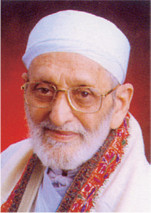
Nadirshah Unvalla
Acknowledging Unvalla’s unbending orthodoxy, the Bangalore Parsee Zoroastrian Anjuman (BPZA) while conferring on him the designation of Dastur in 1996 stated: "You have been a staunch orthodox Zoroastrian and have never compromised your views and principles, and at times even stood up to the anger and criticism of many a member, but in spite of that, your uprightness and honesty and equal treatment to one and all has won our highest respect. You have been a man of all seasons; the first to be beside the ill and infirm and also the first to give advice and guidance on happier occasions.”
This best describes the quintessential Unvalla. Driving the more liberal elements to despair yet appearing by their bedside in times of need. The Anjuman’s decision to name him dastur had then met with opposition from some High Priests who countered that the prerogative to nominate a dastur lay with the clergy, not the laity. They also stated in order to become a dastur a priest has to be either a scholar, the son of a high priest or a priest heading an atash behram. Bangalore’s fire temple is a dadgah, the lowest in the three grades of consecrated fire.
The High Priests’ opinion having been carried in Parsiana and cited in a subsequent letter to Unvalla had caused him much heartburn then. Even in a recent hour long conversation he referred to it, looked away and was silent for a moment. Repeating that the reservations were not raised by the magazine but his fellow clergymen was not going to smoothen ruffled feathers. Any slight, real or perceived, would set the nonagenarian into a sulk. That duality in the character of Unvalla may explain both the reverence and disdain this dedicated but controversial priest has invoked amongst his fellow brethren.
The book narrates the establishment of the Bai Dhunmai and Cawasji Dadabhai Daremeher in 1925, the appointment of the first priest, Unvalla’s father Pestonji who belonged to the Sanjana Tola of Udvada, the construction of the Lady Kothari Memorial Hall through the munificence of Sir Jehangir and Goolbai Kothari of Karachi, establishment of the dharamshala through the generosity of Burjorji Entee and his wife (name not mentioned) and so on.
Regarding the opening ceremony of the agiary, Unvalla notes, "To consecrate the agiary with a new dadgah, two mobeds, Ervad Behramji Unvalla and Ervad Jamshedji Katila were transported from Udvada by car with Bareshnum and Alat… They came in a car (1925 model) driven by Seth Dinshaw Cawasji himself, all the way from Udvada. In those days it was not possible to cover the distance within a day. These priests first halted in Bombay at the Dadiseth Atash Behram compound, next day they drove on to Belgaum and kept the Alat in the Belgaum Agiary. On the third day they reached Bangalore.”
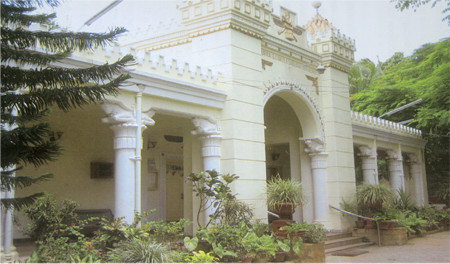
Bai Dhunmai and Cawasji Dadabhai Daremeher
Aramgah vs dakhma
The Bangalore Anjuman earned a place in the community’s legal annals when in 1940 after consecrating a dakhma in the garden city, the Anjuman resolved to close down the aramgah established around 1896. "It was (also) resolved that the clergy not perform death ceremonies of persons who opt for burial.”
The aramgah-dakhma controversy ended up in court. "The District Court case went on for four years,” notes Unvalla. "The religious part was ably put forward. But on the legal side, the Anjuman’s local lawyer had committed a big blunder. While pronouncing the judgment, the District Judge did not even consider the expert witnesses’ evidence. He informed the Anjuman that the section under which the case was argued against the Government was wrong and the case was dismissed on legal and technical grounds.”
But the division between the two groups continued and vitiated the community’s bonhomie. "As and when there were deaths in both sections, although not seeing eye-to-eye, they thought of meeting each other and attending each other’s funerary prayers. It was thus, that one fine day in the year 1952 Ms Kothawalla came to Ervad Nadirshah Unvalla and requested him to perform a jashan ceremony in her estate at Rustom Bagh with his father Pestonji Unvalla. Ervad Nadirshah acceded to her request and performed the jashan ceremony. Please remember that the burial group had severed their connections with the Panthaki, Pestonji Unvalla from 1937. They even stopped performing their family prayers, marriages and navjotes and were doing these by calling priests from Bombay and other places. So, this jashan asked for by them after a period of nearly 20 years was a significant move. Soon after the jashan ceremony both groups started meeting each other cordially and settled their differences amicably. This friendly atmosphere continued until the early 1990s, and everyone had forgotten their differences. From 1990 onwards this controversy has resurfaced and again the Parsee community has been polarized.”
Concerning the Bangalore Anjuman not rejoining the Federation of Parsi Zoroastrian Anjumans of India following a spat in 1979 when the Bombay Parsi Punchayet walked out in a huff but rejoined four years later, Unvalla notes, "Our Anjuman did not see any benefit in joining… the main reason being the Delhi (Parsi) Anjuman wanting to have an upper hand in all matters, social and religious.”
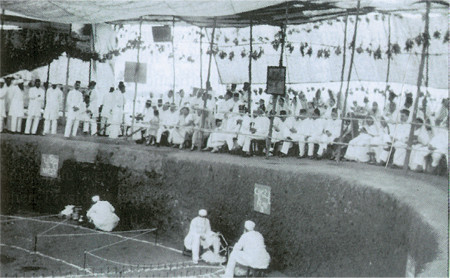
The Tana ceremony for consecrating the Bangalore dakhma
Unvalla’s book also narrated personal episodes from his life including how he once delayed an Indian Airlines flight in October 1978 so that the corpse of a Parsi woman from Bombay who died on a trip to Ooty could be sent back. Rushing to finalize all the myriad formalities required, Unvalla found to his chagrin the that Indian Airlines flight for Bombay was ready to depart. "Nadirshah jumped over the cordon and frantically signaled the pilot to stop the engine. He refused and started moving the aircraft. Nadirshah kneeled in front of the plane and shouted and pleaded that the plane be stopped. After much persuasion the pilot stopped the aircraft” and the body was finally loaded on the plane.
Unvalla’s dedication to his profession almost cost him his life. While reciting the first month’s (masisa) prayers for a friend his "robe (jama) caught fire as it accidentally made contact with the batti (flame lit on a wick in a glass of oil). Within seconds I was engulfed in flames. The severity of the accident took everyone by surprise and it was a while before anyone could come to my help and douse the flames. It took over five minutes for the fire to be brought under control. By then my life had been severely endangered and I had been scarred for life.” The loving care of his family and support from the Anjuman, both emotional and financial, saw him through this trauma. Even today one of his sons is with him on the rare occasions he travels out of Bangalore.
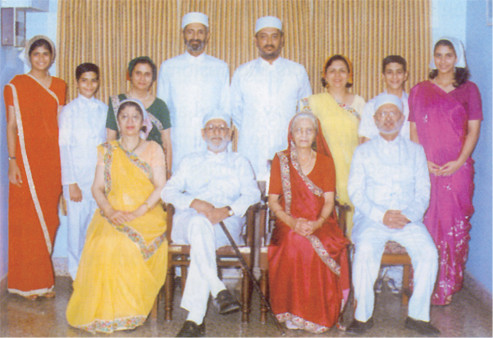
The Unvalla family with Nadirshah and late wife Manijeh at center (seated): close-knit and supportive
Dedication
A few errors occur in the book such as the Poona Parsi population being cited as 10,000. The census figures put the figure around 4,000, but the Poona Panchayat trustees themselves keep inflating the figure, hence the error.
Unvalla mentions the first Zoroastrian came to the old Mysore state (now Karnataka) around 1888. But Marzban Giara quoting from Parsee Prakash notes, "Rustamji Ratanji Billimoria — first went to Bangalore to work with his maternal uncle (mama’s) Seth Nusserwanji Hormasji Gandevia’s firm. Thereafter in 1844 he undertook miscellaneous contracts. From 1851 onwards he along with Seth Jamshedji Dorabji Naigamwalla, Pestonji Rustomji Cama and Sorabji Cursetji Thoothi started a partnership firm Jamshedji Dorabji and Sorabji Cursetji and Company and undertook railway contracts.”
Unvalla states in his defense that old age infirmities prevented him from being able to check and verify all the necessary gazettes and other documents which would have allowed for a more thorough historical narration. Also many of the Anjuman’s old records and files were disposed of during the presidentship of Behramshaw Sidhwa. But still for a 91-year-old author and amateur historian, Unvalla is to be greatly commended for taking up such a daunting task.
The book is dedicated to the three generations of the Adenwalla family who "have always been active in preserving the tenets and customs of our religion” and also makes note of Unvalla’s gratitude to Dinshaw Cowasjee a benefactor of the Anjuman and Unvalla’s father, Pestonji.
Most Zoroastrian associations and anjumans are bereft of archival records and information because nobody cared to preserve the documents, traditions and recollections. Unvalla has shown them that even a lay person, unschooled in the academic rigors of research and analysis, can make a substantial contribution to community history.
◆ ◆ ◆
From the archive