
Precepts vs priestcraft
Zarathustra: The Man and the Message by Meheryar N. Rivetna. Published in 2021 by the author, Zoroastrian Association of Houston, 8787 W. Airport Blvd., Houston, TX 77071, USA. Pp: 343. Price: Rs 733.
Meheryar Rivetna (pictured) offers a refreshing alternative to the ongoing debate between the so-called orthodox and reformist points of view in the Parsi community. A retired sales manager of a multinational pharmaceutical corporation, he dedicated his 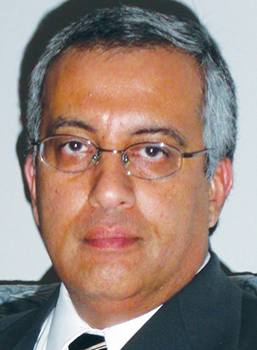 retirement years to study Zarathushtra’s teachings. In the process he realized that, like himself, his co-religionists were unaware of the underpinnings of Zarathushtra’s teachings, and was motivated to share his learnings. He states: "It is with the hope to spark an interest in Zarathushtra, the man and his wondrous message, that I write this book.”
Besides a listing of historical facts, Rivetna references the work of many prominent research scholars, writers and commentators of the past two centuries.
The starting premise of the book is that modern day followers of the religion of Zarathushtra, that influenced similar faiths, do not have access to basic knowledge and understanding of its teachings, its history and its mythology. With thousands of years of extraneous influences on the teachings, the followers have often adopted some of the very practices the Prophet eschewed. Today, the Parsis of India and our 21st century diaspora across the world practice the faith by watching priests performing rituals and reciting prayers with little understanding of either.
Rivetna takes the reader on a unique journey, deciphering origins of myths that have crept in. He is constantly searching for the truth. While he helps the reader separate the ritual from the teachings, he does not dismiss the rituals. Instead he attempts to interpret their origin.
The fundamentals of the faith are that laws of nature supersede all laws. We gain the knowledge of nature through observation, experience and positive mind power that the Prophet termed Vohu Mana. Hence, a good life is one that follows nature’s rules, while habits that violate these rules, termed Aka Mana, throw one’s life into chaos and misery. Thus, the basic tenets of the faith emerge — good thoughts, words and deeds.
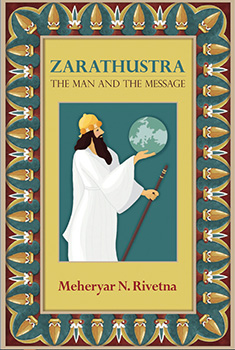 The teachings of Zarathushtra, do not fall under the exclusive ownership of either the "orthodox” or "reformist” camp. Very early in the book, one realizes the author’s claim that there is only one unquestionable set of Zarathushtra’s teachings that defies any alternate interpretation. By the same observation, all disputes between the two camps relate to social and ritual traditions and not to Zoroastrian scripture, or to any practices propounded by the Prophet.
Labeling any point of view as "orthodox Zoroastrianism” or "liberal/reformist Zoroastrianism” is very disrespectful to the fundamental teachings of Zarathushtra that need no caveats. So, Parsis will be proper followers of the faith by living a life with no qualifiers, adjectives or labels to describe their adherence to Zarathushtra’s Gathas.
Much after the time of Zarathushtra, the pre-Zoroastrian Magi, with the support of atharvan Zoroastrian priests, designed rituals to manage the faith. These were documented as Zarathushtra’s teachings in the Younger Avesta which includes the Vendidad. However, many of these dictates have no basis in the Gathas.
For example, the book discusses disposal of the dead via dakhmenashini. The pre-Zoroastrian Persians had adopted a method of burying the deceased encased in wax. While the scientific reasoning that the body should not defile the earth can be acknowledged, it is important to note that the practice of dakhmenashini has no mention in the Gathas.
The book also highlights several other issues that have been barnacled on to Zoroastrian teachings and not mentioned in the Gathas and are in fact contradictory to them. For instance, the unacceptable premise that the religion of Zarathushtra is exclusive to those born in the faith. Such a position hinders the dissemination of the teachings and is contradictory to the concept of universality of the faith.
To separate the grain from the chaff and to present the faith in all its simple purity, the author probably hopes that readers will take away a better understanding of the teachings of Zarathushtra, and boldly resist getting caught up in the meaningless orthodox/reformist quagmire.
Rivetna is donating 100% of the sale proceeds to the Library Committee of the Zoroastrian Association of Houston, Texas, USA, where he serves as a member. The committee’s mission is to promote and advance the teachings of Zarathushtra — a religion for all humankind. YEZDYAR S. KAOOSJI
Kaoosji is a retired management professional in the field of national and international non-governmental organizations and non-profit organizations.