
Books
Patel’s poetic pursuit
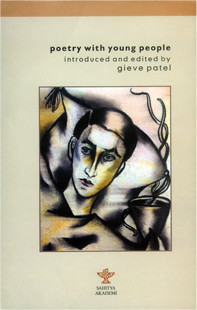
Poetry with Young People, introduced and edited by Gieve Patel. Published in 2007 by the Sahitya Akademi, Rabindra Bhavan, 35 Ferozeshah Road, New Delhi 110001. Pp: 134. Price: Rs 80.
For over a decade now Gieve Patel, poet, playwright, painter and retired medical practitioner, has been conducting an annual three-week poetry workshop for students of the Rishi Valley School, located a four-hour drive from Bangalore city in the state of Andhra Pradesh. This anthology of over 150 poems embodies the fruits of their combined labors. The students, in the 12 to 18 age group, initially "looked bewildered at the prospect, quietly resentful” and Patel admits to feelings of guilt when he started on the project. "Why was I subjecting them to this extra study?” he wonders in his introduction, "and I was not even a bonafide teacher in their school.”
Patel was finally reassured that he was on the right track when, during a conversation, a teacher mentioned that education today, being "excessively technophillic,” was alienating students from the deepest sources of their being, and that the corrective could come only from exposing them to the arts and humanities as well.

Gieve Patel: firing young imagination
Reading aloud to his young charges from wonderfully suggestive poems by poets like A. K. Ramanujan, Robert Frost, W. S. Merwin and Wang Wei, he encouraged them to pen their own thoughts starting with familiar territory — things they had seen, known, were familiar with and emotions they had personally felt or been touched by. Writing at "second hand” was to be avoided. Students needed to go to their own lives to seek potential material for good writing. Cliches were a definite no-no, as were fancy, fantasy or falsehoods. Imagination, however, was to be encouraged. "Imagination is... empathy, it lets you into worlds other than your own, ultimately leads you to understand that there is nothing out there that does not belong to you as well.”
Justifiably pleased by the quality and range of these poems, Patel arranged for them to be read out before the school assembly, an exercise some of the students initially found "painful.” They would rush through the poem and then run away! But the readings gave legitimacy to a poetry culture within the school and underscored the truth that poetry is both a private and a public affair. It needs to be read aloud, to oneself and before others. The next step was to introduce the idea of editing. Some poems come to a writer intact, even to beginners, while a vast majority may need some cleaning up for the "heart of the poem to come blazing through.” Sometimes poems that ran into 10 or more lines had just two or three lines of perception in them, embedded in material of lesser interest, Patel noticed. He helped students to recognize and preserve the useful lines, discarding the rest.
Had he included every poem worth including, Patel reveals that the anthology would have been much, much longer. The subjects are wide ranging and have not been segregated but woven into a medley as "a surprise from one poem to the next is always welcome.” Some of the "hard-hitting poems in this collection come from a conscious decision to release inner violence on paper… the only restraining condition being that… the violence should be controlled within the structure of the poem.” Curiously, there were several poems on mothers, but only two on fathers — and not all of them were laudatory. "The critical ones were lively and carried bite… One writes critically when one feels involved.” Skilful fish catcher has been written by Zarir De Vitre, the only poem by a Zoroastrian student in this anthology. For reasons unknown, the school has attracted very few children from the community, Patel informed Parsiana.
Indeed the range and treatment of the subject matter is amazing. From parents, grandparents and siblings, teachers and classmates, animals and experiences, the students have explored a wide gamut of themes and emotions. In Trapped Natasha Vakil is philosophical: "I stared at myself in the mirror,/ wanting to free myself./ Yet, hard as I tried/ to peel off the layers/ accumulated,/ I couldn’t;/ Trapped/ by my own biases,/ and those of my peers.” Athang Jain’s mixed feelings come out in My sister: "I hate her./ She irritates me when I’m working,/ She interrupts me when I’m reading,/ She argues with me about everything./ But, she helps me when I need it,/ She comforts me when I’m sad,/ She cares about me, likes me,/ And I like her.” Another comment, Younger sister by Vinayak Uppal describes a modern day reality: "She seems to have evolved into a being/ with a telephone fused to her ear.” Of Brothers an exasperated Adithi Manohar pens: "Bully, bully, and only bully,/ Is that all that’s there in a brother’s vocabulary?”
Gautum describes the Car of My Dreams: "As I waited to cross the street/ the morning traffic rushed past./ All the cars that were whizzing by,/ I didn’t give them a second glance./ But then/ came a Jaguar S-type, four-door saloon./ With oval head lamps, a circular grille/ and the driving force of a V8 engine./ Its flowing lines and curves made/ it look like an aristocrat among peasants.” Bombay records Payal Kapadia’s ambivalence toward her city: "I listen to the sounds of the city,/ The shouts of people,/ The noise of vehicles./ The odor of pollution and garbage is everywhere./ I also watch the polluted sea./ Do I like living in the mess?/ I don’t know./ But when I am away I miss this city.”
A poignant reality is reflected in Vigyan’s The smiling doll: "My boat skimmed over the stagnant waters/ Of the ill-fated village./ I came to a hut,/ And drifted past the shattered door./ A doll came into view./ As I looked upon the smiling face/ I realized/ That this piece of plastic/ Was the only smile/ This open-roofed room/ Would see/ For a long long time.” Soulfully, an anonymous student’s In Afghanistan reads: "The room lies empty,/ A cradle forlorn,/ Two piles of clothes freshly stitched,/ washed with love and ironed with care,/ never to be worn:/ blue for a boy, pink for a girl.”
Poetry will always mean different things to different people, being the "most misunderstood of genres among the arts,” but that is the key to its democratic appeal. Exposure to great poetry is the very basis of his project, Patel feels. Only by reading master poems aloud, and to oneself, can students imbibe a sense of form and cadence.
Elegantly produced, this is the first book of poems written by children to be published in India. Released in Bombay in August 2007, the volume has been printed on good quality paper in a type face which is easy on the eyes. Greatly enriching its visual appeal are illustrations by four of India’s prominent contemporary artists: Nilima Sheikh, Anju and Atul Dodiya and Sudhir Patwardhan. And priced at a ridiculous rate of just Rs 80, the book should find a place on every poetry enthusiast’s bookshelf.
◆ ◆ ◆
From the archive