
Zoroastrians Abroad
Global distributorship
The grandson of renowned Zoroastrian painter Jehangir Ardeshir Lalkaka has been carving a niche for himself in Zug, Switzerland, as chief executive officer of Guild Gmbh, a distributor of books and music CDs, both classical and light. Undertaking the global distributorship of the book Zarathustra by Sina Vodjani, a professional photographer and musician of Iranian and French descent, led Kaikoo Lalkaka to seek out Zoroastrians and Parsiana in the aisles of the IV North American Zoroastrian Congress in Toronto.
The 230-page volume includes a music CD and a DVD embedded in its cover for the fuller enjoyment of Vodjani’s eye-filling photographs of Iran, both Zoroastrian and Muslim. The music bears titles like Ashem Vohu, Persepolis, Chak Chak, Zarathustra, Ahura and the Rising Sun, Asha, etc. The bi-lingual — German and English — text "presents a short overview of Zarathushtra’s teachings and says something of his significance. It stresses the idea that ‘Zoroaster did not need to provide evidence of miracles or similar mystic events to spread his message; he appealed directly to the intellect, logic and common sense of his listeners.’ Emphasis is also placed on the role of ‘Asha’ in Zoroaster’s thought, defined here (as) ‘that which conforms,’ a kind of universal law of creation, the principle which unites all things in harmony. Human understanding of ‘Asha’ can be approached through meditation and imagination, but also through obedience to the code of ‘good thoughts, good words, good deeds’ — the code which Vodjani’s book carries as its subtitle,” notes a review by Glyn Pursglove, forwarded to us by Lalkaka.
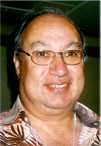
Kaikoo Lal-kaka: music march
"By including pictures of Islamic life and buildings, Vodjani perhaps intends to make the point that beneath the obvious Islamization of Iranian life there is a substratum of Zoroastrian tradition and mindset — Zoroastrianism was, after all, the official religion of the great empire of ancient Persia — which survive still, and which even now condition many dimensions of life in Iran, helping to define and create its people’s sense of their national identity. That, at least, is the impression I have carried away from the time I have spent in Iran,” writes Pursglove, adding, "Sina Vodjani’s Zarathustra offers an introduction to Zoroaster and Zoroastrianism which may well whet readers’ and viewers’ appetites for more…of a world very unfamiliar to most in the West and increasingly demonized and falsely represented by those in power in the West… (The book) can be warmly recommended.”
Among recent offerings from Guild is a CD titled Marching and Waltzing, a selection of melodious music alternating between marches and waltzes, some imaginatively transformed into something special, no matter what kind of basic rhythm it may possess. Another is Light Music While You Work, originally a BBC program designed to provide uplifting non-stop music to factory workers during the Second World War, which Decca launched as a series of 78s: "Today these rare 78s provide a fascinating example of the way in which music was employed as an important ingredient in the war effort,” notes the Guild website.
The distributor is also into musical history. For example, Charles Munch (1891–1968), Live Recording 1954 deals with the music of a brilliant concert violinist who became one of the greatest French conductors of his era — first in Paris in the 1930s and 1940s and then, after the War, in the United States, where he was chief conductor of the Boston Symphony, notes the website. "The three composers represented — Debussy, Ravel and Roussel — were contemporaries of each other and of Munch himself, which gives his interpretations a unique insight,” it adds. Guido Cantelli (1920-1956) — Live Recording 1951-1953 is a representative selection from broadcasts, featuring the conductor with the New York Philharmonic and NBC Symphony Orchestras. Cantellini, an Italian hailed as one of the greatest musical talents to have emerged in Europe since the end of World War II, was killed in an air crash near Paris in 1956 at the age of 36 with few commercial recordings to his name, informs the website. Classical music buffs and votaries of history can access more information on info@musik traum.ch and www.guildmusic.com
In 1962 the Birlas had just opened a company in Switzerland and Cawas Jehangir Lalkaka was their liaison man, the only Parsi looking after all their concerns on foreign soil including Canada and England, recalls his son. Then all of 16 years and having finished schooling at Bombay’s Cathedral and John Connon, Kaikoo migrated with his family to German speaking Zug, an international finance center and tax haven, and found himself having to start all over again, learning German! Beginning life with an apprenticeship in a freight forwarding agency meant three days’ work per week along with study, earning the Diplomiate Forwarder title after three years, he tells us. However the field did not hold his interest for long. He joined the Minnesota Mining and Manufacturing Company in Zug but faced redundancy after a while and for nearly two years was without a job.
"There is a portrait of my grandmother painted by my grandfather in our home. In my desperation I turned to it for inspiration. The feedback I got was ‘wear the sudreh-kusti’ which I hadn’t worn since leaving India. Since then everything is fine!” Married to Silvia, Lalkaka has three children who had initially been keen to get their navjote performed but the interest dwindled in this Swiss town of 40,000. Father Cawas and mother Roshan (née Mhowdawala), now in their nineties, continue to live there. The Tatas have a big presence in the city — Tata Holding Company — and while Farokh Kavarana was posted there, it was good to have a fellow Zoroastrian around, says Lalkaka who hopes to come to know many more.
◆ ◆ ◆
From the archive