
Observation
Dosabhai’s destiny
Dosabhai Kothawala, who came to Ahmedabad in 1780 with the British army, left behind dozens of distinguished descendants
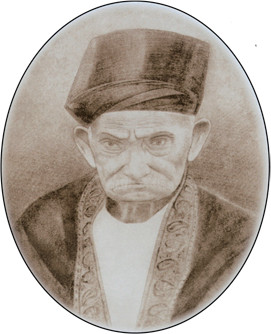
A red robe of honor was bestowed on Dosabhai Hormazdji Kothawala (reverently called ‘Dosabapa’ by all those who knew him and loved him) when he was 84 years old. His 50 years of service to the East India Company government had earned him the title of Khan Saheb 160 years ago, making him the first Parsi to receive this rare honor. It was presented to him in 1847 by E. G. Fosscett, Collector of Ahmedabad, at a public function attended by the city’s luminaries.
When only 16 years old, Dosabhai’s father Hormazdji Adil encouraged him to join the army. At that time matters in Gujarat were in an unsatisfactory state. As war broke out between England and France, the Peshwa, ever jealous of the rise of the English, eagerly grasped the opportunity of entering into an alliance with the French. Governor-General Warren Hastings saw the danger from this combination and promptly sent an army to Bombay from Bengal which arrived at Surat on February 26, 1779, under the command of Colonel William Thomas Goddard.
On January 1, 1780 Goddard, now promoted to Brigadier General, moved his army from Surat while leaving a detachment under Boddam. A battery from Bharuch joined them at Dabhoi fort which was found to be abandoned during the night. Goddard now marched on Ahmedabad arriving before it on February 10, 1780. The place was strongly garrisoned by 6,000 Arabs and 2,000 cavalry. Goddard received evasive replies from the Peshwa’s Suba, Raghu Pandit Taltia, who defiantly fired upon the general’s tent with a heavy mortar. Fortunately, the shell did not burst.
As recorded in The Sanj Vartaman Special Papeti Number of September 13, 1910: "A random shot from the ramparts of Ahmedabad fell where the Colonel was standing. Dosa Boy with his great presence of mind and usual alacrity shoved the ball into a ditch full of water close by. The ball did not explode. Colonel Goddard asked, ‘Well Old Young Man (Dosa Boy) what reward should I give you?’ Dosabapa replied in joke, ‘The cannon ball.’ The shell was taken out afterwards and it has been kept as a relic in the Kothavala family. And it has been named Dosabapa… He was in his teens when he followed the Colonel. He was tall, handsome and wiry.”
The next day Goddard’s force opened a battery and succeeded in effecting a breach at the South West corner of the strong Ahmedabad fort near the Khan Jahan gate. When no offer of submission was tendered, a storming party formed under the command of Colonel Hartley advanced to the breach on the morning of February 13, 1780. The garrison offered stubborn resistance until 300 of their numbers had fallen. During this battle the Suba and his party had fled by the Khanpur gate. Inhabitants of Ahmedabad were apprehensive that the city would be given to plunder. A deputation led by Nathusha Nagarsheth, Mohammad Saleh Kazi and the Badshahi Divan Mirza Amu met the General who promised to maintain peace after his occupation. A hundred and six soldiers were killed on the British side.
Goddard decided to leave a detachment of eight companies of sepoys, one from each of his eight battalions, with two heavy guns, under the command of Major Fullerton. Goddard left on March 30, 1780, after handing over the city to Fatehsingh Gaekwar, the first. The troops were stationed in the Bhadra Citadel. Dosabhai Adil stayed on in Ahmedabad with the troops till 1799 when he got married at the age of 36 to Cooverbai then 19, the youngest daughter of Behramji Boman (Vakil) of Surat.
In 1817 the Peshwa entered into an agreement to hand over permanently the lease of Ahmedabad to the Gaekwar for a sum of five lakhs rupees. The Gaekwar owed the East India Company a similar sum and so Ahmedabad was handed over to the East India Company by the Gaekwar under a fresh lease on November 30, 1817, in lieu of the sum he owed them. The Company appointed Andrew Dunlop as the first collector and Edmond Ironside as the first Judge of Ahmedabad. Dosabhai, who had received only primary vernacular education in Surat, joined the Company Government because of his good command over the English language picked up during his service with the army.
The earliest British settlers of Ahmedabad remained within the fortified area known as Gaikwad’s Haveli on the riverbank at Raikhad. Their earliest church, cemetery and other social buildings were built there. Within 10 years of their entering Ahmedabad, they built their first factory or kotha in Lal Darwaja, immediately adjacent to the Lady Bachubai Nowroji Vakil Parsi Dharamshala, built one century later (April 27, 1893). Soon thereafter the European community moved outside the city limits along with other Europeans serving with the Company in various capacities in the Bombay Army. It moved to the more spacious and sylvan surroundings of what is now generally termed Shahibaug.
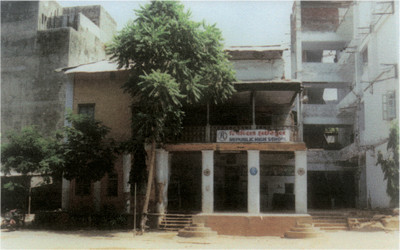
What remains of Kothawala’s Bungalow
Roots and routes
Dosabhai was born in Bharuch at his mother Jijibai’s home in 1763. His father was at that time working for the East India Company factory in Surat. Hormazdji Adil’s father Adil Aspandiar was the first of the once famous clan of mariners from Olpad to give up their tradition of seafaring and join the East India Company. But they were considered notorious by the British. The family had descended from a maritime stock who had their own ships. During the 16th and 17th centuries, they were trading under the charter or Cartaz of the Portuguese. After the Rebellion at Bombay, the group of islands which were part of the dowry of King Charles II’s Portuguese queen, the Infanta Catherina, were made over to the Company in 1668 by the cash strapped English monarch. The East India Company’s merchant ships were frequently engaging in battles and skirmishes. The Marathas held the mainland and the Moguls had lost their grip on Surat and most of Gujarat. The Portuguese were well established and strongly fortified in Daman and Diu, which straddled the important Gulf of Cambay. The vital harbors of the East India Company lay exposed to freebooters and merchantmen. The ancestors of the Kothawalas who had sided with the Portuguese were wrongly branded as pirates, or colloquially "chan-chias,” which stigma continues as a family joke. Nevertheless, they had gained the enmity of the British.
It is said that Dosabhai, whose given name was Darius (pronounced Darayas) was so good looking that in order to ward off the evil eye his parents called him Dosabhai or old man. This custom which still prevails in Gujarat was quite common in those days even amongst Parsis. Dosabhai grew up to be tall, strong and very fair, like his forefathers before him and his descendants who succeeded him.
By the time Dosabhai had risen to the rank of superintendent of posts, he had moved into a huge building as a tenant of the East India Company. It was a beautiful old mansion with 16 rooms, where the Kothawala family lived and thrived for three centuries. After being tenants there for several years, his grandson Ratanji Kothawala (b. 1840, d. 1900) purchased it from the East India Company while he was serving as jail superintendent. The jail was then located close by. (This 400-year-old building in the heart of the city was sold by Roxi Gazdar, daughter of Paul Kothawala, great-great-grandson of Dosabhai and its last owner, to her tenants, the Republic High School, for a paltry sum on March 29, 1992. It now stands two-thirds demolished.)
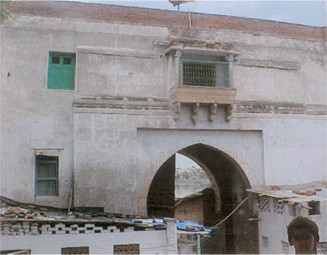
Khan Jehan Gate through which the British army entered Ahmedabad in 1780
After the cession of Daskroi by Fatehsingh Gackwar in 1818 to the East India Company, Dosabhai was appointed as the first Mamlatdar of the newly formed Pargana (now Taluka). It is said that the Resident, Captain Carnac, who had negotiated the cession by convincing and spirited arguments with Dhakji Dadaji, the Agent of the Gaekwar, had personally recommended Dosabhai’s name for this vital post. Dosabhai was the man who translated the entire negotiations. After three years in that position, he was seconded to Colonel Alexander Walker’s daftar (office), where he rendered invaluable service. He was promoted to deputy commissioner, land revenue in 1821 till he retired in 1825 at the age of 65. Dosabhai, still physically active and mentally alert, continued working in the sphere of social and community service. By this time there were several Parsi homes in the city. He helped his wife’s nephew Pestonji Framji Vakil in the formation of the Parsi Panchayat. He helped Behchardas Ambaidas in his early struggle to eradicate the baneful practice of female infanticide, then widely prevalant mainly in the Kadwa Kaubi sect.
Soon after Dosabhai married Cooverbai and the couple was well-established, many of their Kothawala relatives came and settled in Ahmedabad. Dosabhai and Cooverbai had four sons and four daughters. There were 64 grandchildren and several more great-grandchildren. His grandson Ratanji and his wife Jerbai had 18 children.
Dosabhai lived till the age of 96. He was much loved and respected by the now flourishing Parsi community of Ahmedabad. He left behind dozens of descendants who served the British Government and native states in very high offices, receiving honors and awards for gallantry in the course of their dedicated services.
◆ ◆ ◆
From the archive