
Observation
Direct action
When priests refused to perform the funerary ceremonies for Sheheryar Kaoosji over 30 years ago, his family and friends recited prayers prior to burial
My late father, Sheheryar Kaoosji, a prominent citizen of Hyderabad and retired headmaster of the Government School for the Blind, worked as office manager of the Parsi Zoroastrian Anjuman of Secunderabad and Hyderabad. In that capacity he administered the dakhma as well, and had occasion to view the conditions inside the structure. His reaction was similar to activitist Dhun Baria’s recent experience. He started a low-key awareness campaign, approaching the trustees and community leaders and was faced with strong opposition. He could have lost his job because of his activism but, as fate would have it, he passed away very suddenly in 1974 after a brief illness, aged 64.
During his last years, he had told the family that there was a consecrated Zoroastrian aramgah or graveyard in Nizamabad which would be a good alternative for those who abhorred the conditions inside the dakhma, and the unsanitary burden it placed on the poor residents living outside its compound walls in Bansilalpet. So we decided that he should be buried in the Nizamabad aramgah. Much to our surprise, the mobeds, following orders from the lay leaders, threatened that they would not perform the funeral rites if we chose burial. They would not accept our entreaties that we wished to bury him in a properly consecrated Zoroastrian aramgah!
The time to drop activism and adopt direct action had arrived, and with the support of my family elders we proceeded with our plans. The family and many Zoroastrian friends joined in a chain prayer session. We were quietly pleased that our kith and kin had joined us in the prayers. We then drove in a convoy to Nizamabad, over 100 miles away. There, under a moonlit sky, we buried my father in the aramgah of his choice, on a night when three major festivals had coincided …Christmas, Ekadashi and Id.
The Hyderabad Municipal Crematorium was built in the late 1970s, and since then my family has used it as the acceptable secular alternative to dakhmenashini. For the past 32 years we have gracefully bid farewell to over 15 beloved relatives, some buried, most cremated and one who exercised the ultimate act of personal charity, donating his body to a medical college for education and scientific research.
Baria’s frustration and her desire to change the system are understandable. But there is no need for Zoroastrians who disagree with an archaic system to wait for it to change. It will not! On this point the lawyer and former Bombay Parsi Punchayet (BPP) chairman Eruch Desai and I agree! In the penultimate paragraph of his article ("Hurting the feelings,” Parsiana, September 21, 2006), almost as a second thought, Desai writes, "There is also the freedom of choice. Those who do not want to opt for this method are free to choose any alternate method of disposal elsewhere, as some of the community have been doing.”
Yes, Zoroastrianism teaches us to take charge of our own lives and to be responsible for our own actions. Again, the lawyer helps us understand the real problem when he writes: "The trustees (of the BPP) have actually no choice, as they are elected, it is invariably mentioned in their manifesto. They have sworn in an affidavit that they would protect and preserve the customs and traditions of the community. Any deviation therefrom would amount to breach of trust.” In other words, it is not a religious issue, it is an issue governed by trust documents written for a different era.
The only activism needed today is for those who believe in change to adopt and facilitate alternative methods. We need to turn a fresh page and forget the Doongerwadi and other dakhma properties around the world. We can do so by redirecting our charitable contributions to match our present expectations and needs. If necessary we need to make plans to purchase properties that can serve as alternate prayer halls, funeral homes and graveyards, because the existing trust documents prohibit the current properties from being used for any other purpose. We need to hire like-minded dasturs, mobeds and nassessalars to serve the alternative systems. Since the mobeds of Hyderabad are now willing to conduct prayers starting with the dasma (10th day after death) for a Zoroastrian who has been cremated or buried, and since all priests in foreign countries routinely provide these services without being ostracized, it is conceivable that this would not be a problem at all.
As a postscript let me point out that the Winter 2005 issue of the FEZANA Journal is a veritable encyclopedia of information and opinions on Zoroastrian funeral practices. You may contact the Federation of Zoroastrian Associations of North America through their website www.fezana.org The issue contains a practical checklist titled "Overview of Ceremonies for North America” on page 57, which could be immediately adopted as a model for use by those families who choose not to use the dakhma. I quote the following critical steps:The paydus and geh sarna prayers are done at the funeral home in daylight hours (Havan, Rapithwan or Uziran gah); followed by the sezdo when family and friends pay their respects. The body is taken by hearse in a motorcade to the crematorium or cemetery.
Sarosh-nu-patroo is done after sunset (in Aiwisruthrem gah) at the darbe mehr.
So here is a working model that can put this polarized debate behind us. With minimal organizing and redeployment of available and potential resources, a motivated and focused group can establish modest properties governed by new community trusts, written to provide community services more relevant to the 21st century in which we live.
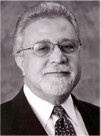
Past secretary general of the Indian Junior Chamber, California based Yezdyar S. Kaoosji migrated to USA in the early 1970s to work at the world headquarters of Junior Chamber International. He served various NGOs in California and currently runs his own management consulting business supporting charitable organizations.
◆ ◆ ◆
From the archive