
Tradition
Doongerwadi: Update on the debate
People opting for alternate modes of disposal due to the breakdown of the dakhmenashini system should not be denied last rites and sacraments
An originating summons asking the Bombay High Court to interpret whether the Doongerwadi lands can be used for prayers for those opting for other means of disposal may be filed. Dr Homi B. Dhalla, whose name has been bandied as the possible initiator of this proposal, says he is still undecided on the issue. Many matters have yet to be clarified legally and he would rather be careful before embarking on any such line of action in this sensitive matter.
Meanwhile, Dhun Baria, who circulated the pictures of bodies rotting inside the dakhmas, and those supporting her are unhappy with the Brihanmumbai Municipal Corporation (BMC) for giving a clean chit to Doongerwadi’s Towers of Silence, ruling out any health hazard (Hindustan Times, November 21, 2006).
"We’ve decided to send a legal notice to the BMC for shoddy investigation without going inside the wells where the bodies are actually disposed,” said solicitor and columnist Berjis Desai. Demanding a proper investigation, Desai warned: "If the BMC fails to respond we will file a writ petition.”
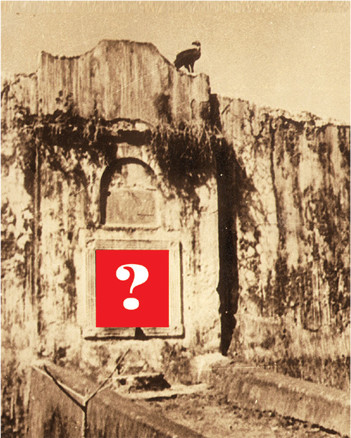
Former Bombay municipal commissioner and Bombay Parsi Punchayet (BPP) trustee Jamsheed Kanga also spoke of a Right to Information Act application to the BMC seeking a copy of the health department’s report.
On November 13, 2006, the BMC’s executive health officer, Jairaj Thanekar, along with BPP trustees Minoo Shroff, Burjor Antia and Dinshaw Mehta inspected the Doongerwadi property (The Times of India, November 18, 2006) after the civic authority got an anonymous letter alleging the Towers of Silence posed "grave danger of disease and epidemic” due to the absence of vultures and that residents of nearby buildings frequently complained of a stench. The inspection team observed that there was no foul odor. "There is no doubt that this place is 100 percent safe. There is no question of any health hazard,” Thanekar said later. He has submitted his report to municipal commissioner Johny Joseph.
"The health officials were surprised at the ambience inside the Doongerwadi. We showed them around and they were convinced that there can be no possibility of a health hazard,” said BPP chairman Minoo Shroff. The health department remarked that the 65-acre forest has been well maintained by the BPP. The team was impressed to see birds like peacocks and peahens. Shroff lashed out at the motley group of Parsis for creating this controversy, describing them as "people who have not contributed anything to the community.”
In a new development, the BPP trustees have appointed Nagpur-based National Environmental Research Institute (NERI) to conduct an indepth environmental impact study of the Towers of Silence, reports Hindustan Times (November 25, 2006). "As trustees, we wanted to carry out a study to wipe out misconceptions about the place,” said Dinshaw Mehta, admitting that there have been repeated complaints about the stench from Doongerwadi. The study will take over four months and US-based biologist Manek Shah will be its project manager.
Earlier, senior counsel E. P. Bharucha had written to the trustees of the BPP, seeking solutions to the problem (a copy of his letter appeared in Jam-e-Jamshed, October 22, 2006). In a reasoned appeal Bharucha urged the trustees to "please lead” the community which has appointed them as its leaders. "The community has not appointed the head priests or the orthodox lobby or the reformist lobby” to lead it.
Despite the visual evidence circulated by Baria showing that the system is not functioning, despite the video images of bloated and rotting bodies within the dakhma, Bharucha wrote: "I still want to have my mortal remains consigned to the Towers of Silence,” hoping that before his time comes the system would become functional again. But that was his personal decision, not the end of the problem.
Unfortunately, the "content of the video has found its way into the secular Press and TV news. Our so-called peculiar customs, instead of being confined within the community, have become the subject of debate and perhaps even the object of ridicule in society…. The response of the community to the pictures… has been typical of a besieged community which does not want to face facts. On the one hand Baria is being … portrayed as the villain and on the other hand there is an orchestrated chorus that everything is fine.”
Regarding the allegation that "bodies which have remained in the dakhma for a period of time are pushed into the bhandar… and ultimately when these bhandars become full of bodies and body parts, these putrefied corpses are removed and buried in the Doongerwadi lands,” he warned: "This, if true, amounts to burial of the dead in a place not registered as a burial ground with the MCGM (Municipal Corporation of Greater Mumbai), unless the trustees have taken the requisite permission… Burial in any place other than a place registered under the provisions of the Mumbai Municipal Corporation Act 1888, is an offence.”
It is just a matter of time before some person, whether Parsi or otherwise, moves the authorities — municipal, state DOONGERWADI: UPDATE ON...
continued from page 19
government or the court — for action, the outcome of which would be difficult to predict, especially since numerically Parsis/Iranis do not form a sufficient vote bank to prevail upon the government on the political front, Bharucha wrote.
The BPP trustees are the custodians of the property of the community. It is "not merely the handful of persons who make a living out of religion; the community is not merely the couple of hundred people who are taken by chartered buses to a meeting to raise their hands at the bidding of their orthodox masters; the community is not merely the reformists who would throw away traditions for the mere sake of change. The last few thousands of Parsi Zoroastrians who lead a normal life, who do not attend meetings, who do not write to newspapers, who try to lead the life of good thoughts, good words and good deeds in their own small way, are also a part of the community… I who choose dakhmenashini in spite of the system’s obvious problems, am also a part of the community and my fellow Parsi Zoroastrians who would have chosen dakhmenashini if the system had worked but do not want their bodies to rot, are also a part of the community,” he wrote.
Bharucha has urged the BPP trustees to "please look into the matter with
your good minds and cater for the common good of the greatest numbers of our community” by:
investigating personally or through persons of unimpeachable integrity by going into the dakhmas and informing the community honestly about the true state of affairs there;
if bodies are found to be rotting, people should be given the option of dakhmenashini or one of the other modes of disposal of the dead;
people opting for alternate modes of disposal should not be denied sacraments according to the Zoroastrian religion and rituals; and
the efficacy of the solar concentrators should be improved and made compulsory in all the dakhmas.
Dinshaw K. Tamboly was the only one who responded when the Jam-e-Jamshed’s editor solicited the BPP trustees’ individual views on dakhmenashini. In his response (Jam-e-Jamshed, October 22, 2006), Tamboly admitted that the efficacy of "dakhmenashini has been completely diluted since the departure of the vultures from Bombay. What was once a highly efficient and eco-friendly system has now broken down” and our age-old system of dakhmenashini is "not the system which is practiced today.”
Though "not in favor of establishing a crematorium or introducing burial on the Doongerwadi lands,” Tamboly feels that since Parsi/Irani Zoroastrians are "opting for alternate modes of disposal due to the breakdown of the dakhmenashini system, and not for any irreligious reasons,” the numbers of those who wish to exercise their choice for alternate modes of disposal is bound to increase. There are already many places in the country where disposal by alternate methods is done, and the necessary obsequies and sacraments are performed, so why should Bombay’s Zoroastrians be denied the last rites and sacraments as per our religion? He sees nothing wrong in allowing the use of the bunglis for recitation of the prayer ceremonies for those opting for alternate methods of disposal. As a trustee, he feels it is his duty "to uphold and protect, without fear or favor, the reasonable sensitivities of all sections of the community as far as they are practicable.”
Sounding a note of hope for the revival of dakhmenashini, Mumbai Mirror (November 21, 2006) reported that the Ministry of Environment and Forests is setting up vulture "handling and breeding” centers at seven locations across the country. In addition to Hyderabad’s Nehru Zoological Park there will be centers in Junagarh, Bhubaneshwar, Bhopal, Calcutta, Pinjore (Chandigarh) and Guwahati. The Hyderabad center would get 25 pairs of vultures for breeding. In fact Hyderabad’s premier research institute, Centre for Cellular and Molecular Biology (CCMB) has embarked on an exercise to artificially inseminate vultures, making it unique from other centers which rely on natural breeding.
But with the drug diclofenac still being consumed by people (veterinary usage has been banned) would vultures consuming human flesh survive? The drug is reported to cause renal failure and subsequently death in the scavenger birds.
Ad: Yezdi Tantra
◆ ◆ ◆
From the archive