
Comment
"Failing in their duty?"
Not taking cognisance of the health hazards involved in the present mode of disposal of the dead could result in criminal negligence
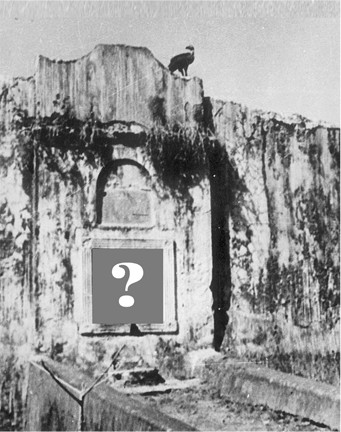
The history of the Bombay Parsi Punchayet (BPP) shows that in times of crisis the trustees had risen to the occasion, and taken bold decisions which were in the interest of the community. Unfortunately at present there is paralysis in the organization with infighting replacing leadership. What was being talked about and discussed in most Parsi circles for some time has now seen the glare of publicity in the national media with the front page story (Mumbai Mirror, August 30, 2006) about the abysmal state of Doongerwadi. In the recent past attempts were made to improve the process of disposal by solar reflectors and other methods. However this was not enough. There is no doubt left that some serious decisions need to be taken.
The question is whether it should be taken by the akabars who have this responsibility, and who face criminal liability if they fail, or the obscurantists and fundamentalists who are using this as a platform for consolidating their vote bank. The reaction of the World Alliance of Parsi Irani Zorthoshtis (WAPIZ) is typical. They are not worried about what is the true situation at Doongerwadi. Instead they want an investigation of how the photos/video were taken . Even one of the high priests has stated everything is normal. According to these wise men it is not how we live on earth, but how our dead body is disposed that will determine if we can cross the "Chinvat bridge” into the next world!
When the late Jangoo Gagrat formed an organization called Disposal of the Dead with Dignity-Action Group (DDD-AG) many eminent Parsis including leading and internationally acclaimed doctors joined this organization. Their request to the BPP was not to stop the present system but to merely facilitate the alternative systems of burial, or cremation, by permitting the use of one of the lower bunglis for the four-day prayers. This was stoutly resisted by the fundamentalists led by Khojeste Mistree and the then BPP trustee Rustom Tirandaz, supported by the present trustee Dinshaw Mehta. Despite a renowned Parsi doctor saying that there was a potential threat of an epidemic occurring if this state of affairs continues, the high priests vetoed this declaring any other system as contrary to our scriptures, even though burial is permitted in many cities. Even land at Ambawadi, which is outside the walls of Doongerwadi, was refused for construction of a prayer hall. Such is the stranglehold of the fundamentalists. It is now again necessary for DDD-AG to start functioning and insist that the facilities be made available for the alternative systems.
In case a resident in a neighboring building complains to the Bombay Municipal Corporation (BMC) claiming the corpses are a nuisance or a health hazard they can immediately start an investigation, and no religious sentiment can prevent it. The BMC which has the responsibility for public health in the city is bound to investigate the potential health hazard and could ask the BPP to stop this system immediately if they find it dangerous. As per the Municipal Act the BMC has the responsibility for regulation of places and provision of new ones for the disposal of the dead [sec 61(e)]. How will the trustees and high priests be able to convince the BMC that there is no risk when eminent Parsi doctors say there is? That the BMC has not done so yet is another story.
Would the Parsis living in a cosmopolitan building allow a goat to be slaughtered in their building or compound for religious reasons on Bakri Id? Are the high priests and WAPIZ leaders prepared to face criminal liability along with the trustees for failing in their duty?
While respecting the sentiments of the orthodox, one has to accept the fact that what was possible in the mountains of Iran cannot continue in the middle of Mumbai. We are told that when there are no dakhmas in a place, the burial system is permitted. So when dakhmenashini is non functioning it is logical that alternate systems should be permitted. Whether the present system is hygienically safe or not is for the trustees to decide after consulting health experts and doctors, not high priests. If the trustees do not wake up soon and do something, they may face a more difficult situation if the BMC acts.
Jamsheed G. Kanga is a former Muncipal Commissioner of Bombay and a former trustee of the Bombay Parsi Punchayet.
◆ ◆ ◆
From the archive