
Observation
On what authority...?
The sanctity accorded to the various methods of disposing the dead is questioned
Reading the interesting article "Dakhma despair” and "The BPP clarification” (Parsiana, May 21, 2006) to maintain and strengthen the dakhmenashini system, makes one wonder whether such a commitment springs from the knowledge of the religion or ignorance of it.
At the outset I would like to make it clear that I am not a scholar of our religion. I am neither a reformist nor an orthodox person. I generally believe in whatever makes sense to me from what I hear and read. Being fond of reading history books (including history of religions), I keep coming across interesting material, some of which I like to share with our community members along with my comments, with a hope that a good consensus can be reached on this issue.
The first extract is from a book called The Wonder That Was India by Prof A. L. Bhasim (Professor of Asian Civilization in the Australian National University, Canberra): "This funeral ceremony (i.e. cremation) that was followed by the upper classes in ancient India, is no different from present day Hinduism. There were other funeral customs, however. The Harappa people buried their dead, whilst the early Aryans did not throw the charred remains into a river but buried them, in the case of important people, under a large burrow… These customs have probably survived from very early days. In most literary references the smasana, or cremation ground, is described as covered with putrefying corpses and haunted by dogs and vultures, rather than as scene of cremation. The descriptions of such places show that many people in ancient India did not cremate their dead, but like the Zoroastrians of Persia, merely abandoned their bodies to the wild beasts. No doubt economic considerations played a big part in this practice, especially in those parts of the country where timber was scarce...”
The above extract shows that since ancient times, people have used these three classical systems — the burial, the cremation and the system of offering the dead bodies to the birds and animals, perhaps depending upon the local conditions. There does not seem to be anything ‘unique’ or ‘sacred’ or ‘holy’ about any of these systems including our dakhmenashini, which other people have also used and are still using in Tibet and some other places.
Sunlight (Khurshed nigarishni) plays only a complementary role of drying up the remnants of flesh left on the bones (without rotting and polluting the atmosphere) till the bones are thrown in the central well of the dakhma. If the body has not been eaten up by the birds or animals, the flesh cannot vanish into nothing even by the "powerful rays of the sun.”
Dastur (Dr) Maneckji Dhalla, who was the High Priest of Parsis, Karachi, traces the history of our religion right from ancient times to present and describes how our religious thoughts and practices have undergone the influences of different doctrines and cults in his History of Zoroastrianism: "Magi, the Zoroastrian priesthood of Western Iran — Herodotus tells us that the Magi formed one of the six tribes into which the Medes were divided and constituted their sacerdotal class. They wore the white robe and covered the head with woolen tiara with long flaps on each side to cover the mouth. The Median Empire was short-lived. Cyrus overthrew Astyages, the last Median king in 550 BC and laid the foundations of the great Achaemenian Empire. The Persians thus conquered the earthly possessions of the Medes and the Magi, their priests; but they were in turn conquered by the latter in spirit. The Magian victory in spiritual domain more than made amends, for the loss of their temporal power… The Magi were the priests of the Medes; they now became the priests of the Persians. This strengthened their position... It seems that Magi took a long time to supplant the religious practices of the Persians by their own. The two races differed very widely on some of the main religious observances. For example, the Magi held the elements of nature sacred. The earth was to be kept pure from defilement. Hence they exposed the corpses of the dead to be devoured by birds; though the Persians, on the contrary, enclosed the corpses in wax, and interred them in the earth… The Persians continued this practice for a considerable time, until finally with the complete fusion of two races they seem to have exchanged burial for the exposure of the corpses.”
It is clear that originally Zoroastrians in Iran, were, in fact, using the burial system. The dakhma system was brought into practice by the Magi, a good 600 to 800 years after Zarathushtra lived.
Let us see what the Vendidad has to say on the disposal of the dead body i.e. naso. Our priests often quote this book as the reference book on our religious practices. Some scholars believe that this was the creation of the Magi.
Vendidad, Fargard V
"44(92) O Maker of the material world, thou Holy One! Whither shall we bring, where shall we lay, the bodies of the dead, O Ahura Mazda?
"45(93) Ahura Mazda answered: On the highest summits, where they know there are always corpse-eating dogs and corpse-eating birds, O holy Zarathushtra!
"46(94) There shall the worshippers of Mazda fasten the corpse by the feet and by the hair, with stones or clay, lest the corpse-eating dogs and the corpse-eating birds shall go and carry the bones to the water and to the trees.”
Fargard VIII
"4(11) O Maker of this material world, thou Holy One! If in the house of a worshipper of Mazda, a dog or a man happens to die, and it is raining, or snowing, or blowing, or it is dark, or the day is at its end, when the flocks and men lose their way, what shall the worshipper of Mazda do?
"5(14) Ahura Mazda answered: The place in that house whereof the ground is the cleanest and the driest, and the least passed through by flocks and herds, by the fire of Ahura Mazda, by the consecrated bundles of Baresma, and by the faithful:
"8(18) On that place they shall dig a grave, half a foot deep, if the earth be hard, half the height of a man if it be soft; (they shall cover the surface of the grave with ashes or cow dung); they shall cover the surface of it with dust of bricks, of stones, or of dry earth.
"9(21) And they shall let the lifeless body lie there, for two nights, or three nights, or a month long, until the birds begin to fly, the plants to grow, the hidden floods to flow, and the wind to dry up the earth.
"10(23) And when the birds begin to fly, the plants to grow, the hidden floods to flow, and the wind to dry up the earth, then the worshippers of Mazda shall make a breach in the wall of the house, and two men, strong and skillful, having stripped their clothes off, shall take up the body from the clay or the stones, or from the plastered house, and lay it down on a place where they know there are always corpse-eating dogs and corpse-eating birds.”
What comes out clearly is that a special temporary grave was made and used, till it was certain that corpse-eating dogs and birds were available to do their job; but the bodies were never thrown away in the open with a hope that Khurshed nigarishni would do the job!
Presently, we have no vultures. Even then should we keep dumping the bodies there to rot and putrefy, under a false and misguided notion that "it is so mentioned in our religious books?” And the putrefied bodies to be dumped again, after a few months, in a pit specially dug outside, for a kind of mass burial, under the label of "cleaning up operations?” One would like to know which of our religious scriptures suggests this practice? And who will stop it? The enlightened high priests, the enlightened trustees of the anjumans/punchayets or the enlightened community members?
A few questions that keep baffling some of us, which one would like to address to our high priests, are:
What is really holy and sacred? The prayers (as being recited after the death, for the departed soul) or the method of disposal of the dead body?
If the prayers and ceremonies are holy, then, why bother about what happens to the corpse and how it is got rid of ? Why not let each Zoroastrian make her/his own choice in this respect of opting for the electric cremation, the burial or donating the body to the hospital?
If the method of disposal of the corpse is also taken to be holy and sacred, then how is it that a burial system (as was used by the ancient Zoroastrians) and as presently used in Madras, Nagpur, Delhi, etc is holy and sacred and our priests perform the ceremonies and the prayers there, but when used in Poona, Surat and Bombay, it suddenly becomes so unholy and so impious that you have advised our priests not to perform the prayers and ceremonies?
Can you justify these double standards either by reasoning and logic or by quoting any of the holy scriptures?
As per the paragraphs quoted from the Vendidad it would be improper to use the dakhma if the scavenging birds and animals are not there.
Can we really count on our high priests to guide us properly and justify the stand taken by them on this issue by quoting from our holy books or through sheer reasoning and logic?
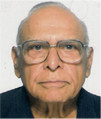
Poona based Kersee K. Kabraji is a business management consultant. A mechanical and electrical engineer by profession, he worked as manager with Atlas Copco for 14 years and was on the board of the Thermax group for nearly 18 years.
◆ ◆ ◆
From the archive