
Cover Story
Baria's battle
Dhun Baria’s one-woman crusade against the present system for disposal of the dead at doongerwadi is creating a stir
"Aa karya ma amné koe swarth nathi. Nathi hamuné doongerwadi pur tower o bandhwa, nathi plot véchwa, ké nathi trustee banvu. Doongerwadi ni jagya no upyog amara ravano maaté thaye éj maatre amaro hétu chè (We have no personal axe to grind. We are not interested in building towers or selling plots of the land or in becoming a trustee. That the doongerwadi land be correctly used for the disposal of the Parsi dead is our only aim),” notes the gritty Dhun Baria in a handwritten circular.
Using the doongerwadi facility correctly means that dakhmenashini should continue for those who are inclined to use it. But simultaneously there should be an aramgah as well as a place for the four-day prayers for those who opt for disposal in a municipal crematorium, she spelt out for Parsiana the reform she hopes to see.
A sparsely built bundle of energy with a highly sentimental core, the middle-aged lady cleans and maintains her own bed-sitter at Marzban Colony, the flower-petal strewn bed of her departed mother and even her wheelchair maintained like a shrine, photographs of family members and friends as well as the first Sir Jamsetji Jejeebhoy on the wall and shelf close to the diva. Stacks of hand-written circulars — the ammunition that has been shaking up the Punchayet — sit neatly on a table on the enclosed verandah.
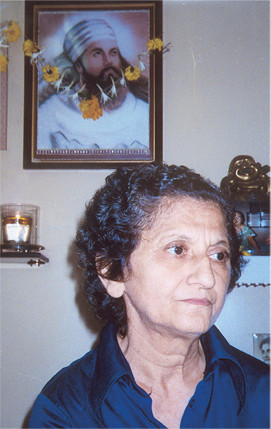
Baria: appalled at callous disregard for the dead
Indeed, the fire-eater in Baria has been released by the very sentimental attachment to her late mother, Nergish. Deeply attached to each other, the two were the only family they had. Father Darabshah had died when Dhun was a toddler and sister Daulat a baby, leaving Nergish alone to raise the pair. Then, at the age of 15 Daulat had succumbed to a particularly virulent case of small pox. Baria was the bread earner as well as help and comforter to Nergish who spent her last 15 years strapped to her bed after a paralytic attack. Baria had cut short her career as a qawwala — a singer of qawwalis and ghazals all over India — to look after her mother, doing everything single-handed. Thus, when Nergish died on November 4, 2005 Baria, utterly bereft, took to spending long hours at doongerwadi, praying.
Being there day after day, seems to have led to a measure of familiarity with the doongerwadi staff. What she learnt in the course of conversations raised in her a sense of guilt for having consigned her dearest mother’s body to what increasingly emerged as irreverent and callous disregard for the dead.
Appalled at what she had perpetrated in ignorance and blind faith, Baria says she has taken it upon herself to educate the community to the reality of what transpires within the dakhma and to ensure that people of sensitivity are provided a choice in the way they dispose their beloved dead.
Baria is most comfortable speaking in Gujarati and the circulars she is distributing in the baugs and colonies are all written in Gujarati. Voluble in both modes of address, much of her circulars rant against the Bombay Parsi Punchayet (BPP) trustees and the higher clergy and scholars, specifically Khojeste Mistree. But at the core of her grievance lies the bitter truth that is glossed over in public relations efforts by the BPP (see "Dakhma despair,” Parsiana, May 21, 2006).
With some photographs and photocopied pictures, Baria notes that only the very heavy bodies are put under the focus of the solar reflectors where they remain for a week. There being only 10 reflectors, some of which are not functioning, Baria alleges that the rest of the bodies are laid out in the circle of pavis closest to the bhandar — originally meant for the bodies of children — whence they are unceremoniously pushed into the bhandar after a month or so, the uneaten flesh often bloated by heat, the innards spilling, the body fluids congealed, acting as glue between the body and the pavi. Baria uses the analogy of a godown, where gunny bags lie pell-mell, to describe the scene in the bhandar. She says the other two rows of pavis — meant for adult males and females — are not used as it is difficult for the khandhias to move the bodies from there into the bhandar. (On checking with dakhma overseer Cyrus Siganporia Parsiana learned that it is the middle row of pavis which are in use.)
When the capacity of the bhandar is exhausted, in a year or so, the dakhma is closed. The rotting bodies stuck to each other, numbering according to Baria, anywhere over two to three hundred depending on the dakhma in question, are then shoveled out, a congealed group at a time tied in cloth and tossed (they are placed — editors) into a pit dug in the periphery of the dakhma. (Originally, when vultures ate the flesh and sunlight calcified the bones, it was the bones from the bhandar which were removed at long intervals into clay-lined pits referred to as astodans.) According to Baria’s information there are now so many such pits around the dakhma that digging a mere foot into the earth would reveal their presence (the pits are dug deep so this is unlikely — editors). According to Baria, the nassessalars/khandhias are paid about Rs 5,000 each when this work is undertaken. These men, though hardened by experience, have said to her that they need to be in a state of inebriation to enter the dakhma even normally. (According to Siganporia some of the men do drink but he has not seen anyone drunk on duty.) As for emptying the bhandar, they prefer to arrange for kharwas from other states (talk would get around if local people were conscripted) to do the work to whom they pay part of the money they receive from the BPP.
Baria also says she has learnt that the rainwater drains provided in the bhandar of the dakhma are no longer functioning efficiently, perhaps because of the dynamiting of the hill for the foundations of new buildings on the doongerwadi periphery. The result is that the bhandars fill up like wells, the bodies bloated and floating in the water, leading to the foul smell everyone complains of during the monsoons, alleges Baria. (According to Siganporia this had only happened in one bhandar last July when all Bombay was flooded.)
Shocked by this information, Baria says she went to the Punchayet in an effort to persuade the trustees to provide an alternate system to the community members who are loath to accept such a mode for the disposal of their dead. She feels that providing an aramgah at the doongerwadi would serve another purpose simultaneously: As this vast estate is often coveted by builders and the government, the establishment of an aramgah would show that all the land is needed for the community’s use.
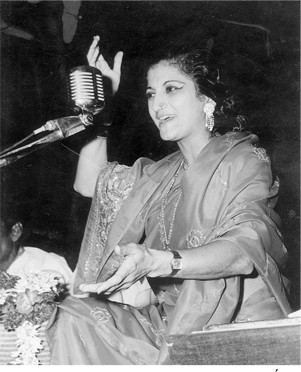
Qawwali and muqabla performances all over India
The Punchayet has been stalling her on the basis that the trust deed of doongerwadi does not envisage the provision of an aramgah on the property, says Baria. Ditto with the question of providing bungli space for the funerary prayers of those opting for cremation. The two options, if provided, would take some of the pressure off the dakhmas and enable them to cope better, she says. In the alternative, she feels that the temperature of solar concentrators be enhanced so that they can use solar energy (Khurshid nigarashni, after all) more purposefully. (It is Mistree who has prevented the BPP from doing so, complaining that the bodies would be "tandoorised — editors.”) When one of the trustees told her that the pictures she was showing around were old, Baria says she retorted, "They are old pictures, yes, but if you see the new ones you will faint!”
Though the trustees as individuals are known to be a rational lot, the BPP has closed its doors to Baria’s pleading and participation (she was thrown out unceremoniously when she gate-crashed the meet, called to discuss this very issue, in the BPP boardroom on May 3, 2006) in an area of activity deeply concerning the community as a whole. When she spoke to one of the high priests she says he told her rudely: "Jaavni, baroni, Hinduoni Chandanwadi per. Kai jaroori chè ké doongerwadi paraj barwanoo (Go, burn at the Hindu crematorium at Chandanwadi. Is it necessary that the cremation be at doongerwadi)?” Another high priest, whom she described as more civil than the first, gave the usual gaffe about how effective the dakhmenashini system is adding that it is alright even if a body lies decomposing there for two years ("bé varas bhi ravan pari rahé tau pari rahé”)!
It may be noted here that votaries of dakhmenashini are prone to dismiss the callous inefficiency of a once noble and environmentally friendly system on the gounds that the body is no more than a discarded garment once the soul has flown.
Referring to the BPP trustees’ sympathy for the DDD-AG (Disposal of the Dead with Dignity — Action Group) comprising some of the top doctors and lawyers of the community who had, in 2001, sought a bungli for funerary prayers for those opting for cremation, a president of one of the Gujarat anjumans, a chartered accountant and one of the staunch orthodox who had opposed the move, asked Baria, "Who put you on? What did they pay you?...Did the Punchayet trustees give you money to start this issue again?” Losing her temper Baria says she told him: "É tau dastoorjionu kaam. Lakh rupia lainé maathu hilaavvanu (That work is for the high priests – to accept a lakh of rupees and nod agreement with whatever they are asked to certify)! People like me don’t take money.”
While some of the general clergy understand and commiserate with Baria’s crusade, there are also those who have told her to fall dead and get buried in a Muslim graveyard, she recalls. She says a sympathizer carried her plea to a senior trustee. Baria says he was told that the Punchayet feared that if they set up a graveyard in such a posh locality, the government might ask them to move to an alternate area in the suburbs and acquire the Kemps Corner property. Snorted the lady, "If you are occupying a building in Breach Candy, can the government say ‘We need it to house a minister. Please move to the suburbs?’”
Baria says she often receives calls late at night saying "Tunéj pahlé doongerwadi par daatsu (You’ll be the first we’ll bury on doongerwadi)!” The orthodox insist that where a dakhma exists a cemetery has no use. They are also prone to advancing the argument that an exhumed grave is as devastating a sight as any you see in a dakhma – an argument that begs the question: How often are graves exhumed? Except in the gravest (no pun intended) of legal necessity, nowhere in the world does one walk through a yard full of decaying corpses open to the wind.
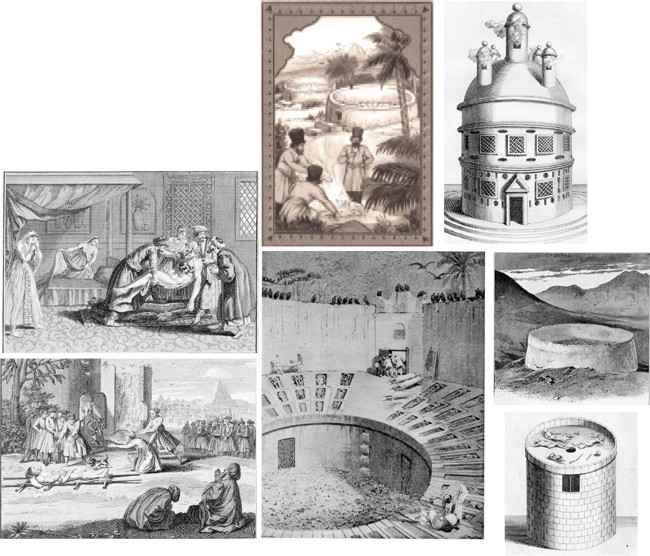
Western conceptions of Zoroastrian funerary practices. Below are folios from "Ceremonies et coutumes Religieuses des Peuples Idolatres.” Right (clockwise from top left) "Parsees and the Towers of Silence,” a postcard issued by Liebig, a German company; engraving of a firetemple; from an article "The City of Tehran,” an engraving of a Tower of silence; dakhma from "Leslie’s Illustrated Weekly, New York 1897. From the contributions of Ardeshir Damania and Cyrus Rivetna, courtesy, FEZANA Journal, Winter 2005
"The real religion is care for humanity. If there is no daya (kindness) in your heart, if you can do nothing for another, life has no meaning. Maaro dharam insaaniyat chè (Humanity is my religion),” says Baria who had been a singer and character artiste in her youth. She had studied sangeet at the Bharatiya Vidhya Bhavan but she needed to know Urdu to sing qawwalies which the Bhavan did not teach. A friend introduced her to Ustad Abdul Kader Dawood who taught her the language and, in the face of denigrators who scoffed at the idea of a Parsi girl singing qawwalis, took it as a challenge to create a Parsi qawwali artiste. Going through the ceremony of tying the ganda (string) denoting the guru-pupil relationship, she says she became his shagrid (pupil). Undaunted by stage fright, Baria, taking the stage name Mehjabin, learnt to give qawwali programs which last all night, from 10 p.m. to 6 a.m., initially in the shadow of the master, then on her own with him present as part of the team. She also learnt the art of muqabla (questions and answers) where two teams of musicians and singer sit side by side to challenge each other in song.
For over 12 years Baria says she gave programs upto the borders of India, even after the Ustad passed away. She mourned his loss, going to the kabrastan (Muslim cemetery) at Charni Road to pray with flowers and joss sticks – she says he was the only father she had known. Then, Nergish suffered a paralytic stroke. Baria says she gave up her career to tend to her mother, spending the morning of each day in cleaning, housework and in ministering to her. When Nergish died six months ago Baria felt abandoned.
But now she has a purpose to live for. Not one to hide her head in the sand – a quality endemic in our community, judging from the state of doongerwadi – Baria quotes an old Gujarati ditty where a dog says, "I can reach Kashi in a day but my fellow dogs won’t let me proceed.” Despite the community dogs and crabs, Baria affirms, "I will pursue the matter. I will go to the health department, to the municipal commissioner, to the media…”
It is not the first time that the BPP’s mandate on doongerwadi has been challenged. The DDD-AG comprised the crème de la crème of the community with much at stake. More than 30 years ago the late Dara Cama had written extensively in the columns of the now defunct Kaiser-e-Hind and published a number of monographs. And in the 1970s the late solicitor and director of Tata Sons Shiavax Vakil had opted to resign as BPP trustee rather than retract his statements criticizing dakhmenashini after he had seen the innards of a dakhma. If Baria succeeds where these have failed, it might underscore what one determined woman can achieve.
◆ ◆ ◆
From the archive