
Comment
"Internal threats"
Search for ways to heal the community's self-inflicted wounds
Eckehard Kulke’s pioneering study, Parsees in India: A Minority as Agent of Social Change, admirably sought to answer a unique sociological question of the past: How could such an insignificant minority in India’s hundreds of millions rise to such conspicuous distinction on a national scale in so many walks of life in a couple of hundred years after 800 years of inconspicuous silence? He went on to answer his question with scholarly revelation. Too scholarly for an unintellectual community to absorb and remember? It should have been required reading in every Parsi home, with copies in every public library in India.
He also left us with a prescient forecast of future "internal threats,” which have been sadly mounting since 1970. The gathering storm in the little Parsi teacup has been hotting up recently. Before it boils and spills over, could a successful community show its sanity by the resolution of a conflict deteriorating in tone, behavior and mindset? Ninety-nine percent of the community don’t want the Koran-Kalashnikov culture, even if the two Ks are of mind, mouth and print, not the gun.
This article is an attempt to initiate an objective, long-term analysis of a social malaise which is surprising our fellow Indians though they have the highest opinion of the community’s amazing contribution to the country over a century. We have an inherited reputation to maintain. We cannot afford to retreat into a hole of hostile porcupines.
All educated Parsis know the big names of their history of the last 200 years, from the Wadias who came out of Gujarat as early as 1750s to plunge into the then high-tech of dockyards and large sea-going ships, to Dadabhai Naoroji, the father of Indian nationalism and self-government to Jamsetji Tata laying the foundation of one of India’s largest industrial empires, to Homi Bhabha who pioneered India’s entry into the nuclear age; apart from many others. But what was at the root of this exceptional upsurge of a tiny minority, who were once small farmers, small artisans, small traders, like other Indians? I believe the basic reasons were: the challenge of change which the earlier European powers offered in the 18th and 19th centuries; the Zoroastrian ethic of honest enterprise and a good life and the Vohumanic mind to do good with wealth, and, in so doing, to go beyond self and the community. It was a truly ‘Frasho Keretic’ revival of a large spirit with a large mind and heart. We basked in that solar age of the community till about 1950-60.
Thereafter we seemed to slowly lose self confidence, self-esteem. After J. R. D. Tata, Bhabha and Sam Bahadur (Field Marshal Manekshaw) that psychological sustaining halo of the community seemed to fade. A sizeable proportion, perhaps 15 to 20 percent migrated to old empire countries and the USA – as much a mark of a loss of confidence here as of a new enterprising spirit. The new leaders from the professional classes seemed to lack the earlier charismatic leadership. A period of mediocrity seemed to seep in. By 1990, there seemed an awareness of a serious demographic threat, even to future survival. In the absence of big achievements, small issues arose: the rumpus over a single Peterson conversion (engineer Joseph Peterson was navjoted in 1983 in New York), the boiling point of growing mixed marriages after Roxan Shah’s (a Parsi married to a Gujarati) fatal accident raised the question of the disposal of her body. Now the fear of ethnic dilution in a world body has reared its ugly head. Neither the Bombay Parsi Punchayet (BPP) trustees, nor the Federation of Parsi Zoroastrian Anjumans of India leaders, nor high priests have been able to lead the community out of mounting conflicts created by narrow, hardening mindsets. Could someone give us a fair, objective record of what the Federation and BPP have achieved since 1975? If anything, acrimony has increased in the absence of big-minded, big-hearted, conflict-resolving leadership in the last 30 years or more. Ennui seems to have set into the community as a kind of social malaise. There is tiredness in the indifferent majority, and signs of hate in two contesting minorities, the traditionals and the liberals. To me the saddest part is that in the absence of an earlier charismatic lay leadership the high priests have failed to emerge as healers of the torn community spirit. It could have been their historic moment, after a century of ascendant lay leadership. Have they only been technocrats of ritual? They could have been doctors of the soul in a world of global and compulsive change when big traditional and liberal minds must find healing, pragmatic, future-oriented answers in a scientific, multicultural age.
What is the real, underlying nature of the community’s divisive problem, nurturing a growing hostility at the beginning of the 21st century, for Indian Parsis and the global Zoroastrian community? Are Indian Parsis infecting that global community, or setting an example for the new century? What is at the heart of the crisis beyond persons? Can we rise to such questions objectively?
The community seems to be divided into three, not two, broad divisions, with no constructive dialog between them. The first is a modern western syndrome in which a majority of the indifferent, more secular, nominally religious turn their backs on community problems and in their silence seem to say, "A plague on both your houses,” traditional and liberal. This apathetic, indifferent majority seems to have been forgotten in any analysis of the community’s problems. I would put it as the first, as they seem to number more than half the community.
The second is the rising articulate, increasingly agitating traditional group, a ‘redeemer’ minority. In the absence of a strong, performing, healing leadership of laity and priests, it is becoming more assertive, more aggressive, and more divisive. Perhaps it is now aspiring to community power. After the Ahmedabad session of the Federation in 2004, it is suspected of declining into fascist mindsets and ways. Are we going to see a teapot Afghanistan, Taliban and tribal?
The third is a liberal group, increasingly on the defensive, with no statesman-like vision to take the community forward in thought and action in the problem areas. Is it enough to be a liberal individual? Is there a significant liberal collective, as there once was for a more democratic electoral system in the BPP?
These two minorities, perhaps no more than about 10 or 15 percent each of the community, are the articulate voices in an imperfect democracy. The democratic electoral system of the majority in Bombay (BPP) is perhaps the most dated in a world of adult franchise. And all now in autonomous, far-flung national and global pockets seem unable to form a global body.
In this milieu, the three major problems appear to be:
the question of mixed marriages and its children, with so-called ‘conversion’;
the demographic threats to the community’s growth and even survival, apart from the impact of Parsi migration from India after 1970;
prolonged conflict over a global body.
With strong big-minded leadership, I am convinced the global body problem could have been sorted out after the Fifth World Zoroastrian Congress (5WZC) in 1990. The factual dimensions of the demographic problem could have been ascertained by the institution of a demographic cell — an idea suggested, but ignored. That demographic problem is largely self-inflicted with a century of delayed marriages, and increasing number of the unmarried even within the community — apart from sizeable migration in the active reproductive group and long before the recent spate of mixed marriages. The proposal for a demographic study cell on a global scale — to include the impact of migrations — proposed at the 5WZC was not taken up by the leadership. Nor that of a bridging agency between World Zoroastrian Congresses to give effect to recommendations of earlier Congresses, when there have been hundreds of recommendations in them over the past decades. These are but two conspicuous examples of the failures of constructive leadership 15 years ago.
The problem of the hot issue of ‘conversion’ requires cool, humane clarification. The great religious innovators of history — Zarathushtra included — preached, taught and lived their innovations. With the exception of Muhammad, for whom conversion was part of the policy of power in a unique religion knowing the politics of the state from the founder’s generation using the economic penalty of the ‘jazia’ tax, all other religious founders left it to people to accept. Later, it was the power and authority of the ‘converted’ ruler which either compelled conversion, or propagated missionary activity, as in the cases of the Christian church and state and Ashoka’s Buddhist missions.
In contrast, all societies have internal ‘initiation’ ceremonies and practices for young children, which is hardly in the category of the ruler’s ‘conversions’ by force, example, missions and economic means. So family ‘initiation’ practices should not be confused with the harsh world of ‘conversion.’ In this multifaith and interfaith globalizing world, the problem is that of educated, meaningful, voluntary ‘initiation’ of children by parents within families of one or more communities. This, to my mind, is a special humane, healing area for Zoroastrian high priests, without inflicting human suffering on parents and innocent children. Surely, the avoidance of suffering should be the first consideration of any humane, Vohumanic religion, in contrast to the inhuman violent ‘jehadic’ traditions – of both Christianity and Islam which have killed more people, including their own co-religionists, than any other religion.
And in the absence of long queues of Petersons for navjotes, where does the conversion problem lie, except in fevered imaginations, and in the unrealistic apprehension of depletion of community funds; which in any case is an economic, not a religious motive?
Both humanity and genetics debunk past ethnic fallacies. The father of Aryan ethnicity, Max Mueller later admitted that his theory applied to language, not physical ethnicity. Julian Huxley, the famous biological scientist of the early 20th century, dismissed Hitler’s Aryan/German ethnicity as pure bunk. The latest Genome researches at the end of the 20th century show a half percent difference in genes between apes and humans, and confirm 99.9 percent of humans are genetically alike. So linking ethnicity to religion flies in the face of scientific "Asha” or the Truth, and so is un-Zoroastrian in our time. Science could also solve the problem of disposal of the body after death, in the absence of vultures. We then pray for souls, not bodies!
At the end of the day, many balanced realistic Parsis may wonder how far community problems are real and remediable with good leadership; and how far are they in the unreal, fevered imaginations of some whose real motive is power?
Humane, objective, constructive letters or articles for the solution of the major community issues in the Parsi Press in the next three months will benefit the healing process. If Zoroastrianism was the first ecological religion and the very foundation of ecology is bio-diversity and the interdependence of all life in nature in the three nurturing flows of nutrients, water and energy – what nutrients, what water, what positive energies can we bring to stop ourselves from inflicting wounds on our community and heal with ‘Vohuman’ for a Frasho-Keretic future in the 21st century?
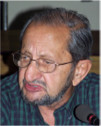
A management consultant, Aspi Moddie is a former Indian Administrative Service officer who early in his career opted for the private sector. His voice was evident at the Fourth and Fifth World Zoroastrian Congresses. His book, Zar-thushtra’s "Frasho-Kereti”: Renewal in Our Time was published in 1996.
◆ ◆ ◆
From the archive