
Comment
"The duty of every Zoroastrian..."
Citing from scholarly and legal authorities, a strong case is made for selective conversion
When Galileo, the famous astronomer discovered that the earth moved round the sun and not the other way round as the Church claimed, he was threatened with dire consequences if he continued his heretical belief and made to retract his claim. Thus by doing so the Church prevented any scientific discussion on this issue for decades and the truth was suppressed. Only when this ban was lifted there was true research and progress in the science of astronomy. By claiming that conversion is prohibited in our scriptures, our clergy and the fundamentalist lobby have also prevented any debate on the important issue of our diminishing population as it is linked to the issue of conversion. Anyone questioning this has been subjected to vile abuse by the rabid section of the Parsi Press and some so-called scholars. It is time now to start an open debate and treat it as a social and demographic issue as our survival on planet earth depends upon it. For this reason it is necessary to examine whether conversion is permitted or prohibited based on the true interpretation of our scriptures, as only then can this issue be debated rationally.
The question as to whether conversion is forbidden or permitted in our scriptures tends to divide the community to such an extent that even genuinely good Parsis who are kind and loving are prepared to disown their sons or daughters if they get married outside the community, and are not prepared to do the navjote of their grandchildren as they consider it as a conversion. A recent book has been published by Parsiana called Judgments. In this book the most important legal decisions on this subject have been reproduced, including the famous case of Petit vs Jeejeebhoy, where after extensive examination of the most prominent scholars the court came to the conclusion that our religion did not prohibit but enjoined conversion, and Saklat vs Bella where the Privy Council considered the right to use community assets. Surely such an important and emotive issue merits careful examination based on true facts and an open debate. I hope this book will enlighten the community and generate this debate.
Whether conversion is permitted or not is something that has to be clearly prescribed in the scriptures. So to set this controversy at rest we need to see the original scriptures and find out what they say. Did Prophet Zarathushtra prohibit conversion explicitly, or is it permitted? What is his exact direction in the Gathas or other holy books? If there is nothing said about it then can it be assumed that it is forbidden? The best source for this are the text and the various interpretations by our great scholars of the past and their actions in this regard as undeniably they were more learned than our present scholars and did original research in Avesta, Pahlavi, unlike most present day scholars who rely on translations!
When I examined the old records to see what the most eminent scholars of the 19th and 20th century have said and done, this is what I found:
In 1882 the great scholar and Shahenshahi High Priest Dastur Jamaspi Minocherji Jamas Asa, one of the two senior High Priests of the Shahenshahi sect had himself done the navjote of nine children of intercommunal parents, five females and four males whose ages ranged from 35 to 77 years, after satisfying himself that they were the progeny of Parsi males by non-Parsi females. These persons had petitioned the Parsi Punchayet that they were of Parsi olad (seed) and were desirous of being formally admitted in the religion. The trustees took no interest in the petition (as trustees do even now!) but about 200 leading Parsis collected a fund, and the eminent Dastur performed the ceremony, in the presence of a large gathering, not surreptitiously as is done now. Ervad (Dr) Jivanji Modi himself a learned scholar and priest, stated this in his evidence in the case Petit vs Jeejeebhoy and is quoted in the judgment.
Similarly, the navjote (conversion) of Suzanne Briere, a French lady and her marriage with R. D. Tata, by Zoroastrian rites was also done by the High Priest Dastur Jamaspi in 1906, in front of a large gathering in Bombay. This is a clear case of conversion from Christianity to our religion, which the eminent Dastur obviously considered as permitted.
The eminent Shahenshahi high priest Dastur Peshotan Sanjana also supported the navjote of children of mixed marriages (with Parsi father). He also published a pamphlet stating therein the necessary ceremonies to be performed before admitting juddins into the Zoroastrian religion. (Please note, he did not say that conversion itself was wrong!) The pamphlet is called "Explanation of the ceremonies that should be performed for the admission of juddins to the Zorastrian religion” and is in the library of the K. R. Cama Oriental Institute (KRCOI).
In order to settle the controversy whether the religion permitted conversion or not, at a meeting of the Samast Anjuman held at Allbless Baug in 1906 an expert committee consisting of 11 of the leading experts and scholars, and including one of the most eminent Avesta scholars of the day, Dr K .R. Cama and many others including the two high priests, was appointed to advise whether conversion was permitted in the scriptures and if so what ceremonies were to be performed for this. After extensive research and deliberations the committee came to the unanimous conclusion that conversion was actually enjoined and not prohibited in the scriptures. On the questions posed to the expert committee regarding the ceremonies that should be performed for conversion, to quote Justice Davar, "We find that seven out of 10 experts in the report relied upon by the plantiffs, including both the high priests deliberately lay down that the three ceremonies including the bareshnum are essential for the proper admission of a juddin to the Zoroastrian faith.” This clearly shows that conversion after proper ceremonies is permitted.
In Petit vs Jeejeebhoy, filed by Sir Dinshaw Petit against the Parsi Punchayet, claiming all the rights of a Parsi for a person converted to the religion, in this case Suzanne R. D. Tata, the evidence of over 200 persons was painstakingly recorded and they were cross-examined by the most eminent barristers of the day. These witnesses included the leading scholars and high priests of that time and, for the first time the eminent judges also concluded that conversion was not prohibited but enjoined in the Zoroastrian religion. However the judgment stated that Parsis ceased to practice conversion, in the interest of self preservation, after coming to India, not because it was prohibited in the scriptures, and except in the cases of children of Parsi fathers and non-Parsi mothers no conversions took place.
In his evidence Dastur Darab P. Sanjana states, "There was no conversion because at first there were difficulties in the way of the emigrants who found a safe refuge in India, as Jadav Rana gave them refuge under certain conditions. Those conditions were not favorable to converting his subjects, or anyone else in India…it would have been ingratitude towards the Rana who had given them refuge to try to convert his subjects.” According to Davar, "If the truth is told, they made no attempt because they knew not only the utter hopelessness of any attempt, but they knew further that any such attempt would have been so seriously resented that it would have resulted in ruin to the community…” One can find a detailed account of the case and the various committees in a Gujarati book by Ervad Nadirsha Hormazdji Sukhia printed in 1905 which is at the KRCOI library.
Dr K. R. Cama had in a letter to Seth Rustomji Dosabhai Sethna, the then trustee and vice chairman of the Anjuman Atash Behram, stated as follows: "In reply to your letter and the question asked therein, I take leave to briefly state that if any juddin, by his understanding, or being convinced by any Zarathushti, gets to know the deficiency of his own religion and, by his own free will admits this in public, and openly wants to be a Zarthustrian, and just for this gets his navjote done, and by his desire to be identified as one belonging to the Zoroastrian faith, and as a symbol thereof wants to wear a sudreh and kusti, there is no prohibition in admitting such a person to the Zoroastrian faith. Not only that but it is the duty of every true Zoroastrian to accept such person in the Zoroastrian faith, and thus to spread the Zoroastrian religion.” I cannot find a more categorical statement about the permissibility of conversion from any scholar and cannot imagine how such a statement could have been made without evidence of conversion being permitted in our scriptures. These are a few of the examples where the permissibility of conversion has been clearly demonstrated. These high priests referred to above were all without exception the most learned and revered scholars of Avesta of that day and are still held in veneration and were descended from an illustrious line of scholars. Here are their brief biographies.
Dastur Jamaspi Minocherji Jamas Asa (1830 -1889) came from a line of illustrious Bhagaria priests from Navsari. Appointed high priest of the Shahenshahi sect in 1861, he was the president of the Society for the Promotion of Research in Zoroastrian religion for 23 years, a member of the Royal Asiatic Society, and a fellow of Bombay University, on whom the honor of a Doctor of Civil Laws (DCL) honoris causa was conferred by the Oxford University. The trustees of the Bodelian Library in Oxford had commissioned his oil painting by a famous artist, which is on display at the library. Several fire temples were consecrated under his guidance. He published many books including a Pahalvi Dictionary in four parts and laid the foundation for the Anjuman Atash Behram in 1897. Obviously he was held in high regard in his life time. I am quoting this from A Zoroastrian Tapestry edited by Pheroza Godrej and Firoza Punthakey Mistree.
Dastur Shams–ul-Ulama Dr Peshotan B. Sanjana, the other high priest, was renowned in India and Europe for his efforts in spreading knowledge of Pahlavi by publishing books in Gujarati and English translations. After his death a memorial volume was published in his honor contributed by eminent Indian and European scholars. His son Dastur Darab Sanjana was an equally distinguished scholar and succeeded him as high priest. In his pamphlet entitled "Explanation of the ceremonies... for the admission of juddins to the Zorastrian religion” he explains all the kriyas (ceremonies) necessary to be done before a conversion can be deemed valid.
Dr K. R. Cama’s reputation as an eminent scholar is well known. His biography has been written by the eminent scholar Shams-ul-Ulama Dr Jivanji Modi, himself an outstanding Avesta scholar who was his pupil, and also by S. M. Edwards, a very famous historian of Bombay. Modi writes, "I admire Mr Cama for his Iranian and other learning, for his services as a teacher, a preacher, and a reformer, and for his other public services in all directions, but I admire him more for his upright character, his good disposition, his affable manners which led him to behave well even with his enemies in the true spirit of the Zoroastrian benediction… He was one of the few leaders of thought in the community. In many questions affecting the good of the community, people liked to know the views of Mr Cama… Though he was unpopular amongst the orthodox in his young days for his advanced views, as if he were a kind of heretic, those very gentlemen later on sought his views. We often come across great men but it is rare that we come across great and good men. Mr Cama was a great and good man… His work both as a social and religious reformer was very useful. He was a reformer of the constructive type and not of a destructive type.” (Some of our so-called scholars please note!)
Can one ever imagine that such distinguished scholars and learned high priests would openly disregard an express prohibition against conversion in our scriptures? Would they perform conversions, and write pamphlets stating that conversion is permitted? Would an expert committee unanimously decide to disregard an explicit injunction forbidding conversion? Is this not what is being implied by the present lot of high priests and pseudo scholars when they state that conversion is against the tenets of our religion, thereby implying that these eminent persons have misled the community and done wrong? If they believe this they should say so openly. Have any new scriptures been discovered in some caves in Iran (like the Dead Sea Scrolls) which say that conversion is barred? Is it in the Gathas which is the word of the Prophet? Or are these later misinterpretations by priests? In a case where evidence is being assessed, the eminence and reliability of the witness based on the documents is the main consideration for arriving at the verdict. I leave it to you to judge whose evidence is more reliable: these eminent dasturs and scholars, or the unsubstantiated statements of our so-called scholars, as also the current high priests.
How can one explain that conversion was permitted and practiced by the most learned and eminent high priests and scholars in the past when Parsis were more orthodox and devout, and is forbidden in this more liberal era of today? It is my belief that the priests and scholars of the 19th century were men of integrity, and were world renowned scholars like K. R. Cama, who knew that the scriptures did not prohibit conversion and were not afraid to say so publicly. But the lay public did not want conversions to be permitted. They felt that the lower caste persons such as ‘dubras’ and ‘lalias’ would get converted to raise their own status as Parsis and grab the assets in Parsi trusts and their housing. My belief is that when the present lot of high priests and scholars realized that the lay public would object to the correct interpretation of the religion about the permissibility of conversion, they supported the orthodoxy which is their logical constituency. And the only way they could justify their opposition was by asserting that our scriptures prohibit conversion. Those who had the courage to openly state and practice conversion like Dastur Framroze Bode were ridiculed and ostracised. Since the average Parsi cannot read the original scriptures, they accepted what the high priests and pseudo scholars told them.
The two main arguments that are perhaps causing fear and disquiet among the average Parsis is the following: We Parsis have preserved our separate racial identity over the centuries, and have distinguished ourselves in so many spheres so that we are proud to be identified as Parsis. We should not allow our identity to be diluted or submerged in this vast country by allowing open conversion. There will be many takers for this. The second fear is that if conversion is permitted openly, our community’s assets such as housing, funds, etc will have to be shared with the new converts. However the fear that if conversion takes place, the new converts will be able to share our assets is totally misplaced and false. This issue was considered in great detail by Justice Davar in his judgment and this was his conclusion: "For the reasons I have recorded above, I have come to the conclusion that even if an entire alien — a juddin is duly admitted to the Zoroastrian religion after satisfying all conditions, and undergoing all necessary ceremonies, he or she would not as a matter of right, be entitled to the use and benefit of the funds and institutions now under the defendants’ management and control; that these were founded and endowed only for the members of the Parsi community.” Thus it is clear that the fears that the community would be swamped by Africans and Brazilians, as Khojeste Mistree’s fertile imagination predicts, is unfounded and there would be no sharing of our assets which are safe from converts.
Once it is clear that our religion does not prohibit conversion then the debate becomes one of the desirability for conversion from the social stand point. Even if it is permitted should we encourage it? This is a legitimate point of view and I would have more respect for our high priests if they had said that though permitted it should not be done for certain reasons. To say that it is prohibited is untrue and misleading. Now this issue needs to be examined from the pure social aspect, viz the issue of the survival of the community as its numbers are diminishing rapidly. Hence what measures, including selective conversion, should be considered? The debate should be among sociologists and demographers and medical experts and not amongst priests and religious scholars, as it has been so far.
In my opinion there is a strong case for selective entry into the religion, starting with children of Parsi mothers and their spouses. But this can be debated from the social angle and not by barring it as against the tenets of our religion. I am extremely happy that this is now possible as Parsiana Publications’ recent book, Judgments covers the entire issue, by reproducing in full the judgments of Petit vs Jeejeebhoy (1906), and Bella vs Saklat (1915). It also has extracts from two relatively recent judgments on this issue viz Yazdiar vs Yazdiar (1950) and Irani vs Irani (1960). Thus in one volume all that one needs to know is now available, and I urge all my friends who are interested in the truth but did not have access to the true facts about conversion to read this book.
In a recent book, Breaking the spell: Religion as a national phenomenon the author Daniel C. Dennett explains by an interesting analogy how religion can indoctrinate the mind. "An ant climbs a blade of grass over and over again, seemingly without seeking food or home because its brain has been taken over by a parasite, a lancet fluke which over the course of evolution, has found this to be a particularly efficient way to get into the stomach of grazing sheep or cows where it can flourish and reproduce. The ant is controlled by the worm, which equally unconscious of purpose, maneuvers the ant into place. This is how religion works. People will sacrifice their health, their reason, their family, all in the service of an idea that has lodged in their brain. That idea is like a virus or a worm and it inspires bizarre forms of behavior in order to propagate itself. They do this in spite of evidence, and in thrall to biological and social forces they barely comprehend.” I believe that it is very important to break this spell,” Dennett writes, as he tries to undermine the claim and authority of religious belief. Dennett would like the coolness of reason to replace the commands of faith. The recent violence over the Danish cartoons shows that reason does not serve the interests of preachers. Emotions enable them to exercise control over the believers’ minds like the parasite controls the ant’s mind. This is precisely how our orthodox have been indoctrinated. It is therefore necessary for us educated Parsis to question those who try to mislead them.
My only intention in writing this piece and inviting the abuse of the fundamentalists is because I feel that as an intelligent community we should bring out in the open the question of conversion, and encourage a healthy debate. We are a lazy lot and will not do our own research to discover the truth but believe what we are told. As an educated and intelligent community let us therefore at least read what has been painstakingly assembled for our guidance on this subject in this book Judgments. It is also necessary for intelligent Parsis to question our high priests and those who claim that conversion is against the tenets of our religion to produce hard evidence and to contradict the facts stated above. Surely we have many courageous persons who will seek the truth as even our Gathas urge us to think for ourselves and not be misled by others.
"Listen well with your ears to my best teaching/Consider with enlightened mind all ye before reaching/a decision on choice between two paths shown./Each man to himself, his decision his own./Well before the ushering-in of the great event/ Wake ye all, and spread well this message I have sent (Yasna 30.1-2).”
I feel that it is very necessary to start a movement to consider how we can go beyond the traditional remedies to slow down the decline in our population where sociologists and demographers like Dr Armaity Desai as well as fertility and medical experts and intelligent leaders could discuss the problem as a social and medical issue, not a religious issue. It is not in our interest to allow the community to get wiped out just to satisfy the ego of bigots and false scholars. We need out-of-box thinking for our survival. Wake up, as it is already late, and try to save our community from extinction.
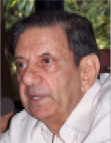
A retired Indian Administrative Services officer, Jamsheed G. Kanga held senior posts in government including that of the municipal commissioner of Bombay. He is at present a senior corporate advisor to the Tata group of companies. A former trustee of the Bombay Parsi Punchayet, he is on the board of several companies and is active in heritage conservation and town planning.
◆ ◆ ◆
From the archive