
History
Country baron Byramshaw
Khan Bahadur Byramshaw Kerbadji Illava's life is a rags to riches story, writes his son
With no experience whatsoever, of making liquor, or keeping accounts or constructing a building or even letter writing, young Byramshaw Kerbadji Illava’s determination and industry saw him own four distilleries and become a benefactor to the local Mhow community.
After honoring the Dhar Maharaja’s contract for manufacturing and supplying liquor from a central distillery constructed at Dhar, he got the contract for Holkar State and constructed a distillery at Barwaha, followed by another distillery at Alirajpur State, a bottling contract at Barwani State, and ultimately by 1919 a distillery at Mandore in Jodhpur State. He was thus instrumental in introducing what was then known as the Madras System of Central Distilleries in Central India which formed a large part of what is now known as Madhya Pradesh, and a part of what is now Rajasthan.
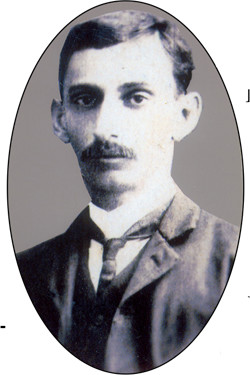
But this self-made man never forgot his humble beginnings. Born in the rustic village of Illav, 26 miles from Surat in the year 1872, Byramshaw lost his mother at the age of six months. Brought up by his unlettered and penniless, but largehearted fui (paternal aunt) Veerbaiji who already had seven children of her own, in the then small town of Broach, he grew up literally like a street urchin, perpetually hungry, wearing clothes stitched from gaadi-paat (cloth used for making mattresses), without any parental care, guidance or supervision. He was known to consume even utaar, the offerings left at road junctions to ward off evil spirits from ailing persons, and often slept on an empty stomach. He was twice rusticated from school for unscholarly, rude and violent behavior. He managed to struggle up to the seventh standard, whereafter he joined his elder brother, Bejonji, an excise inspector based in Vasai (Bassein).
In his spare time, Bejonji used to make crude herbal medicines, one of which was very effective against cholera, a mighty killer in those days. Byramshaw traversed the whole of India, pedaling Bejonji’s products, barely managing to keep body and soul together.
Once on his travels he visited a distant relative, living in a small village in the Dang forests of south Gujarat. This relative was even less lettered than Byramshaw, yet Byramshaw observed that every day this man was raking in silver coins by the fistful, selling homemade liquor. Every night, the relative stored his earnings in a huge wooden box and he slept on top of it.
Duly impressed, Byramshaw went back to Bejonji and announced his decision to start the business of manufacturing liquor. He approached several princely states stating his interest in distilling and supplying liquor. Fortuitously, he was summoned for an interview at Dhar State, near Mhow. It was thus that Byramshaw arrived at the Mhow Railway Station one fine day in 1901 with just the princely sum of Rs 11 in his pocket, the entire capital gifted by Bejonji. He took a tonga (there were no cars then) to Dhar, 31 miles away.
After winning the confidence of the Dhar Maharaja he went to visit a British run distillery known as Beg Sutherland and Company at Kanpur, and managed to get his first consignment of spirit on loan, transported it in barrels via rail to Mhow and from there by bullock cart to Dhar. His business took off from there. He single-handedly supervised nearly 300 small liquor shops situated all over the widely forested Dhar State. He worked all day and travelled through animal infested forests at night, barely getting any sleep for days. In his first three months of working, he found he could deposit the whole year’s excise duty in the Dhar State Treasury. The rest was his profit-cum-working capital. Greatly encouraged, he redoubled his efforts, and was gradually able to employ a supervisor/manager, a clerk and so on. A Parsi engineer was employed, and with State funding the Dhar Distillery gradually started taking shape.
He had hordes of experiences to relate to us children: Some time around 1915, Illava was once traveling in a bullock cart laden with household utensils down a narrow steep forested ghat road. He was going to establish a warehouse, and was expected to be camping in some small town for a few months. Just around a blind corner, the bullocks started shivering and refused to budge. The cart driver, suspecting something, walked around the corner, and returned with fear writ over his face. He informed Illava that just around the corner, a tigress with two cubs was sitting right across the road. Illava was provided with an armed guard by the State because he often had to deposit State money in treasuries. When Illava asked the guard to be ready with his gun he very sheepishly replied that he had forgotten his ammunition powder pouch behind. They had to think fast. Night was fast approaching. All three got off the cart and built a bonfire around which they danced the Indian jig, beating the copper utensils with sticks and stones, and making as much noise as possible. The tigress snarled and bared her teeth, but being burdened with the two small cubs, she could neither attack nor run away. Ultimately she got up and nudged her cubs along the road, away from the noise. Thus the cavalcade continued for quite some time, the tigress with the cubs in front, and the three dancing, yelling Homo sapiens bringing up the rear. Only when she found a gradual slope leading away from the road, which her cubs could negotiate, did she step off the road with her cubs and thus vanished into the thick forest around. The humans ventured forward, now in complete darkness, guided only by the diffused light from the stars, not knowing if and when the tigress or her mate would strike, breathing a sigh of relief with the advent of dawn.
Mhow being partly circled by the Vindhya mountain range, which separates the Malwa plateau of Central India from the Nerbudda valley, 1,200 ft. below, Illava used to take the contract of cutting and baling the grass (hay) from the entire hills visible from Mhow, and supplying mainly to the armed forces. On one occasion as the British troops were advancing through Meso-potamia, they used Illava’s baled hay to fill up the undulated land and make it level for the railway lines they wanted laid in a hurry.
Illava used to employ Bhil (Adivasi) labor for this work. Mukadams (sub-contractors) used to arrange for the labor from far afield such as Jhabua and Alirajpur. In those days of the First World War Illava used to advance Rs 5,000 to 10,000 (equivalent to about Rs five to 10 lakhs today) to each of those loin clad Adivasi mukadams without any security whatsoever — only their good faith. In all those years, only one of the mukadams reneged on the amount. He too, after many years, suddenly turned up and throwing himself at Illava’s feet presented him with a cloth wrapped bundle containing the principal amount with interest. Illava gratefully accepted the amount (which he had incidentally written off as a bad debt) and promptly donated the amount to charity. This just highlights the extent of honesty and loyalty that prevailed amongst even the so-called lowly natives of those days as compared to the present rampant corruption to which people right at the top stoop. In the 1950s, the Illava group of concerns, started by him were included amongst the top six income tax payers in India.
In between, he found time to marry and sire six children of whom four attained adulthood. A simple man, shunning pomp and splendor, the story goes that on his wedding he wore his father-in-law’s pugree, half-soled shoes and a borrowed dagli. He sent off wedding invitations such that even his nearest family members would receive them after his marriage. His elder sister Jerbai never forgave him for that.
Ever grateful for even the smallest favors done to him, Illava made it his mission in life to earmark at least 25 percent of his earnings for charity. He looked after and cared for his Veerbaiji fui and her children and their children as long as they lived.
His average annual charities amounted to about Rs 75,000 as early as the 1940s – quite a princely sum in those days. Among his other charities were a donation of Rs 1,00,000 towards setting up a large modern Government Hospital and Medical College at Indore in the 1940s. A large female ward and two private wards for the benefit of Parsis in memory of his mother Dhunmai, and a Hematology Department bear testimony to his munificence.
In 1954, he donated Rs 6,00,000 to the B. D. Petit Parsee General Hospital. The Khan Bahadur Behramshaw Illava Charities for Zoroastrians that he established has a corpus of about Rs 10,00,000 and today gives annual aid of about Rs 1,00,000. Further the B. K. Illava Public Charity Trust for cosmopolitan purposes gives an average annual aid of about Rs 2,50,000 from its corpus of about Rs 25,00,000.
He donated nearly 37 ½ acres of land situated near the NH3 – Bombay Agra Road, just outside Mhow, to the Shri Radhakrishna Gowshalla Mhow as pastureland for the cattle. The five-storeyed "Illava Building” at Mori Road in Mahim, Bombay was constructed and handed over to the Bombay Parsi Punchayet for use of poor Parsi families. The Yashwant Club at Indore was donated Rs 50,000 for setting up a covered tennis court.
The treasurer of the Parsi Zoroastrian Anjuman, Mhow since its inception in 1933 up to his death on July 8, 1968, Illava’s portraits grace the agiaries at Mhow and his native place, Illav.
By dint of his honesty, hard work, largeheartedness and of course God’s grace the ragmuffin, street-smart urchin was able to rise to such heights that his name is still respected in this small town of Mhow, almost 38 years after his death.
◆ ◆ ◆
From the archive