
Religion
Cusrow Baug's "jewel in the crown"
The Karani Agiary salgirah was observed with several events and festivities
It was my friend’s 159th birthday. The sacred fire at Cusrow Baug’s Seth Nasserwanji Hirji Karani Agiary has been my best friend through life’s ups and downs and I’ve never missed its salgirah since1945.
This year, on February 5 (Bahram roz and Shahrevar mah) the 159th salgirah function began with a Havan gah maachi and jashan ceremony followed by a speech by Dastur (Dr) Firoze M. Kotwal in which he delineated on a Pazand extract from our scriptures. It will interest the reader to know that our marriage ceremony prayers are also in Pazand with a sprinkling of Sanskrit (viz dhan-vaan, putra-vaan, etc).
The same evening, after the hambandagi led by Ervad Yazdi Aibara, the panthaky of the Karani Agiary, Bombay Parsi Punchayet (BPP) president emeritus Jamshed N. Guzder released the book Power of Prayers written by BPP trustee Ervad Burjor H. Antia and published by the Kookadaru Trust. It was distributed (free of cost) to the vast audience present on the occasion.
The book contains a wealth of information and discusses why one should pray, how one should pray, when and what should be prayed, etc. The chapter on "Manthravani” explains the etymology of the term and in his speech, Antia went on to explain the similarities between Vedic-mantras and Avestan-manthravanis (both potent spells) which calm and compose the mind. Without prayers, a distracted mind falls prey to all sorts of mental disturbances, schizophrenia, anxieties and depressions. The chapter on the theory of vibrations explains how cosmic vibrations are constantly evolving upward in spirals when we pray. It is up to us to swim or float in these positive energies and enjoy its constant flow, or remain immune to them.
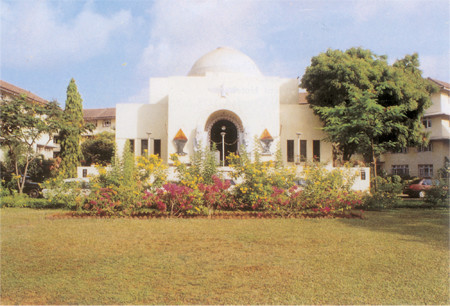
Karani Agiary Photo courtesy: Global Directory of Zoroastrian Fire Temples
Antia further elucidated the Avestan theory of creation when Ahura Mazda uttered the Ahunavar which produced cosmic vibrations so that step by step, all creation, including sentient beings came into existence (Yasna 19.1-4). He ended his speech by citing miracles through prayers in the lives of the Peshdadian King Jamsheed, our Prophet’s healing of King Gushtasp’s horse, also Prince Shiavax, Dastur Adarbad Marespand, Nairyosang Dhaval, Meherji Rana and Kookadaru saheb.
The keynote speaker Dastur Khurshed K. Dastoor addressed the audience for the first time in the Karani Agiary. He started by saying that his flat overlooks the agiary which is one of God’s blessings. His topic "The A to Z of Zoroastrian Religion” seemed simple and elementary when he started with "A stands for Ahura Mazda, C for charity, D for deen and F for fire” but as his speech progressed, it conveyed a deeper and more profound meaning. This sort of speech would be ideal for targeting youngsters and "marketing” our religion to them at their level in an attractive way.
The keynote address was followed by speeches by Karani Agiary trustees Homi Ranina and Bomi Hansotia, as also by Aibara. The program was well compered by Mani Vajifdar who announ-ced a surprise speaker Nos-hir Bulsara, introducing him as the "resident poet of Cusrow Baug.” He read out some lovely poems in Gujarati composed by him in praise of the holy fire, the Agiary and the distinguished personalities on the stage and in the audience.
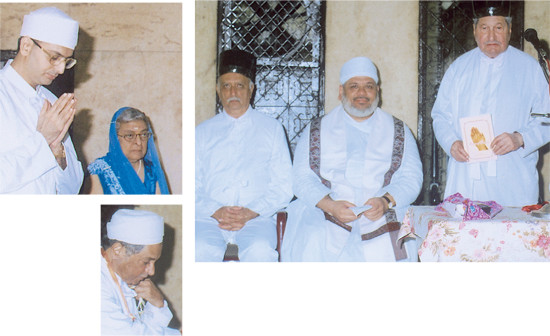
Above left: Yazdi Aibara and Ratu Dastur; Alongside: Burjor Antia; Above (L to R): Bomi Hansotia, Khurshed Dastoor and Jamshed Guzder
The second function to mark the 159th salgirah was held on February 9 at Sir Cusrow Wadia Pavillion. It started with Zoroastrian Studies founder Khojeste Mistree’s speech on "Relevance of Zoroastrianism for the modern youth,” the supreme irony being that the youth were conspicuous by their absence. Noticing this, Mistree had very good and practical suggestions to target the young and restless "now” generation and get them interested in our religion.
"Religion means different things to different people,” said Mistree, elaborating and categorizing people into those who pray, are ritualistic (what we term bhannar-gannar) without understanding theology, those who want an intellectual understanding (that’s today’s youth), those who pray to ask for favors (like children during exams) and those for whom religion is a way of life. Hope is common to all who pray, the hope that prayers will protect one against the vagaries of life in today’s knowledge-based society.
Citing Ahura Mazda as the Lord of Wisdom and his attribute of omniscience, Mistree explained that when we try to gain this wisdom, we are in the zone of spirituality and goodness. On the other hand, since evil is the absence of divine knowledge, those who shun this knowledge (which is acquired through vohu mana, the good mind) are in the zone of Ahriman (evil). Vohu mana is the same as Bahman.
The divine order in the cosmos is thanks to Ardibehesht while the sense of power comes from Shahrevar who blesses one with material happiness. There is no monasticism, asceticism, giving up of anything, or fasting in our religion. In fact, fasting is a sin and sex within marriage and even the institution of marriage is preferred to a life only lived for oneself. Generating wealth (albeit honestly) and circulating wealth, doing charity and spending to give happiness to others is encouraged. Balance in life (Aspandarmad) and standing up for truth (Khordad), come what may results in immortality (Amardad). If these seven principles are followed, it leads to the best and purest way of religion (Majestacha, Vahishtacha and Shreshtacha), he said.
Our forefathers never ever compromised on religion under the guise of convenience or ‘we have to move with the times’ or ‘we must adapt because we are on foreign shores.’ India was foreign shores then when our forefathers landed here to escape religious persecution in Iran. Summing up, Mistree said that our religion teaches us to be happy within and consciously promote harmony (as delineated in Ushta Ahmai, Ushta Ahmai Chit) in every area of one’s life.
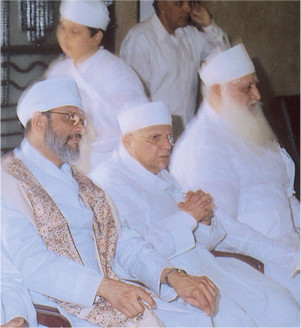
From left: Dasturs Peshotan Mirza, Kaikhusroo JamaspAsa and Firoze Kotwal
There were some questions from the audience, some intelligent, some inane, but Mistree answered them with ease in his own inimitable style. The dignitaries on the stage included Karani Agiary trustee Dr Philly Karani who came specially from Poona where he serves as consulting surgeon at Ruby Hall and the Jehangir Hospital. In the audience were some trustees and executives of the BPP.
The evening function included dances by Alysha Khodaiji, choreographed by Hormuz Khambatta and a one-act play written by the late Firoze Antia and enacted by Dinyar Tirandaz and his talented troupe in spite of certain technical set-backs. Finally Mehelly Bhumgara’s magic show was followed by Tanaz Godiwalla’s (contributory) dinner which had several unusual dishes.
Thus ended the two days of celebrations for the atash padshah which was consecrated in 1847 in an agiary built on Nizam Street at Null Bazaar. The holy atash was shifted in 1875 to Marine Lines’ Sodawaterwalla Agiary but it was never merged with the fire there. When Cusrow Baug was built in 1934, the brothers, Sir Cusrow and Sir Ness Wadia, presented a plot of 1,400 square yards to the trustees of the Karani Agiary for a handsome sum of one rupee per annum. The brothers further donated Rs 20,000 to construct the fire temple. Today, it has nine priests and six staff members under Aibara who took over the panthak in 1989 after the demise of his father, the late Nadersha.
One of the best-kept and most frequented fire temples in Bombay and the "jewel in the crown” of Cusrow Baug, the Karani Agiary is one place where you can catch a few immortal moments during the fleeting hours of your life.
◆ ◆ ◆
From the archive