
Comment
A source of solace - II
For beneficent vibrations, prayers should be recited in the language they were composed
Most of our prayers are in Avesta, the language of revelation. Some people make a grievance that Avesta is a dead language and almost all of us do not understand it. Hence we should recite English translation of these prayers. Prayers should be recited in the language of revelation. They are so composed as to create beneficent vibrations. They have their own resonant frequencies made up of many waves producing "manthravani.” We should not recite our prayers as if we were reading a letter or a novel.
Prayer cassettes and a good English prayer book (e.g. Kanga’s Khordeh Avesta having detailed scholarly translations) are available in Bombay (e.g. the office of the Bombay Parsi Punchayet). All this will no doubt take some time and need determination to pursue, but it will virtually become an easy way to learn prayers in Avesta.
Most of our prayers in Avesta are transliterated into Gujarati. Gujarati is a more phonetic language than English and would therefore be closest to the original pronunciations in Avesta. After the formation of the State of Maharashtra on reorganization of states Gujarati language is not taught in schools in Bombay (having the largest concentration over 46,000 of Parsis throughout the world), Poona and other places in the said state with the result that many Parsis residing in these places are usually unable to read the Gujarati language. They have to rely on prayer books in English as the next best alternative. To understand what we are praying, literal translations in English of all prayers are easily available and that enables the readers to gauge the depth of our religious philosophy. Our children have to learn Hindi, the national language in schools. Hindi, being also a phonetic language, it becomes easy to pray from prayer books in Hindi rather than in English. Now some of our prayers in Avesta are available in the Hindi language as well.
On muktad and such other solemn days ceremonial prayers are recited by mobeds simultaneously, one reciting Ashem Vohu, the other reciting Yatha Ahu Vairyo, etc, each one reciting different scriptures at one and the same time. At times relatives and friends of the deceased attending the agiary for participating in the prayers recited by the mobeds are at a loss to know whether the prayers are for the soul of their dear and near ones. Brig Noshir Grant in his recent letter in Parsiana has made a grievance that prayers so recited create "a discord amounting to bedlam.” Relatives and friends make a grievance that they are deprived of participation in sacred prayers and feel frustrated by their visit to the agiary for prayers for their deceased. This calls for an effective alternative in the matter.
Prayers recited in unison (just as recited in Christian churches) or by way of hambandagi give peace of mind and create zest in the body. Persons attending an agiary should participate in such prayers and thereby purify themselves physically, mentally and spiritually. Prayers so recited invoke the idea of humility, submission and service to God.
To celebrate the death anniversary or other solemn occasions like muktad, Farvardian and Farvardegan days relatives and friends of the deceased usually have the religious ceremony of jashan performed involving the recitation of important sacred prayers such as Afringan, Farokhshi and Satoom no Kardo, to invoke Fravashis or Farohars of our dear and near ones. Those attending the agiary worship and revere departed souls of the righteous united to their guardian spirit. These prayers are symbolic, showing some kind of communication, mental as well as spiritual, between the living and the dead. When such sacred prayers are recited it is customary for those present to be only Zoroastrians and that is the reason why non-Zoroastrians are not allowed on the occasion. Through the jashan the link with the spiritual world is established. By performing a jashan the living offer thanks and seek blessings from the spiritual world. The ritual gives us strength and serves as a spiritual tonic for all parts of our body. When the jashan is performed it serves as a reminder to all present on the occasion not to stray from the path and practice of the Zoroastrian religion.
To enhance the efficacy of sacred prayers in agiaries a system of allotting turns (first, second, etc) for reciting such important prayers adopted in some agiaries is strongly commended and should be adopted and followed to create the feeling of participation in the prayers recited by the officiating mobed for the deceased (see the author’s article "A source of solace,” Parsiana, August 21, 2005 issue).
For muktad ceremonies the Zoroastrian Trust Funds of Europe (ZTFE) adopt in London the tradition whereby mobeds recite prayers in common mentioning names of all departed ones for remembrance given by participants at the ceremony. Prayers are recited by arranging silver karasias (traditional containers) and vases full of white flowers in front of a long table. The ceremony ends with a hambandagi where all devotees participate in the prayer. To maintain the sanctity of the occasion chasni (consecrated food) and food offerings brought by the devotees are served along with tea. These muktad prayers (for 10 days) are observed with a great sense of piety, purity, devotion and satisfaction in remembrance of the souls of departed dear and near ones.
Agiaries and participants in muktad ceremonies should emulate the well recognized tradition adopted by the ZTFE for these ceremonies as aforesaid. This will definitely enhance the efficacy of muktad prayers.
Those who are unable to attend an agiary on solemn occasions may offer prayers at home in front of a small afarganyu ignited by consecrated fire, incensed with the intoxicating scent of sandalwood and loban, mingled with the perfume of roses or such other flowers. Fire is merely a symbol, a creation of Ahura Mazda that symbolizes Him the best. Fire, the cosmic energy, is referred in the Khordeh Avesta as "Atash puthro Ahurahe Mazdao,” the son of Ahura Mazda, the all powerful son of an all powerful Father. Zoroastrians call their consecrated fire as "Atash Padshah,” a spiritual monarch. Fire is a medium that helps us to focus our minds on communion with Ahura Mazda and is a vehicle that carries our prayers onwards to Ahura Mazda. It is not merely a flame; it is the spark that ensouls all planes of existence, physical, mental and spiritual. It is usual to keep a diva lighted next to the fire on solemn occasions.
Prayers so offered are also efficacious just like prayers offered in an agiary, if recited with full trust and faith in our Lord, Ahura Mazda, described in Hormuzd Yasht as "the Creator, the Preserving Nourisher and the Smiter.”
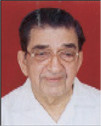
Rustom S. Gae, former law secretary to the Government of India, is presently a senior advocate practising in the Supreme Court of India. He is known for his expertise on subjects relating to fiscal laws, company law and constitutional law. He writes frequently on legal issues pertaining to the community.
◆ ◆ ◆
From the archive