
Books
'The Day of the Tiger'
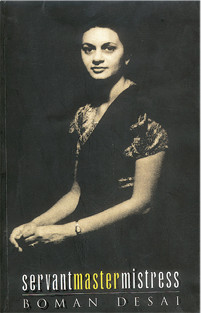
Servant, Master, Mistress by Boman Desai. Published in 2005 by Roli Books Private Limited, M-75, G. K. II Market, New Delhi 110048. Pp: xi + 424. Price: Rs 395.
Servant, Master, Mistress by Boman Desai. Published in 2005 by Roli Books Private Limited, M-75, G. K. II Market, New Delhi 110048. Pp: xi + 424. Price: Rs 395.
Servant, Master, Mistress is Boman Desai’s fifth novel and if there is one word to sum up his literary output till date it is ‘wide-ranging’ as no two novels he has written till date are similar and even when themes overlap, each of his novels has a distinctive quality that sets it apart from its predecessors.
The plot of his latest novel is complicated as compared to A woman madly in love which deals with a single protagonist and her search for a stable relationship. In Servant, Master, Mistress, the plot centers around two generations of the Sanjana family, their friends and their acquaintances. Desai has already created a gallery of vivid women characters who continue to people our imagination long after we have closed his novels; to this he adds another memorable and passionately etched character of Dolly Dalal. Dolly marries twice into the Sanjana family. Though she is first courted by the dreamy and unpractical Savak and even has a protracted correspondence with him for over a year, she eventually marries Kavas who is decisive, realistic, matter-of-fact and has even been called to the Bar. When Savak meets Dolly after a year of epistolary courtship, he dithers and prevaricates and instead of proposing to her, confides in her of his unrealistic plan to go to Australia and study the sky of the Southern Hemisphere. He is evidently no real husband material and Kavas in the meanwhile proposes and wins Dolly’s affections.

Boman Desai: creating vivid characters
Dolly’s grandmother, Dinbai, advises her not to be romantic. "If you like him now, you will love him later. What you think love is coming full speed like an engine train breathing fire and smoke and going so loudly khut-khut-khut-khut? Nono, love is like a tree. First you have got to plant the seed, then you have got to water the ground. Then, after some years, there will be a tree. That is how love is coming.” But Kavas is a manic-depressive and though Dolly tries her best to make her marriage work and even gives birth to a son, Sohrab, her life is fraught with unhappiness and tension and she realizes that affections still lie with Savak.
Desai moves his focus to the second generation: Dolly’s sons, Sohrab (who is Kavas’s son) and Rustom (who is Savak’s son). If there is enmity between the father and the son in the Persian epic, the same reappears in the relationship between the two brothers. Desai presents Daisy, a young English girl who comes to Bombay in search of her English lover, Basil Ballard. The genes of the fathers course through the veins of the sons/brothers who are fated to act in a similar manner and repeat the mistakes of the previous generation. Though Daisy is at first courted by the idealistic and totally unworldly Rustom, she eventually marries the practical Sohrab. The reader wonders if history will repeat itself; it does, but not quite.
Through these parallel relationships, Desai returns to a theme which he examined in A woman madly in love. He is very interested in the concept of romantic love and its validity in a stable marriage. He seems to be questioning the ingredients of a happy marriage or a healthy relationship. Just as Farida Cooper (the protagonist in A woman madly in love) goes through a passionate affair with the young Cyrus after her marriage with the pedantic and philandering Horace breaks up and eventually finds happiness in the arms of a mature Percy Faber, Daisy as well as Dolly realize that to make a relationship work takes a degree of maturity that comes through learning how to love through the inevitable disappointments and problems of marriage.
The bare bones of the plot don’t do justice to the theme, but what carries the novel through is the structure and the manner in which the title gathers meaning as the novel progresses. The implications of the title are most evident in the relationship which, during a sea journey from England to India, Alphonse, a former servant in the Sanjana household and playmate to Sohrab and Rustom during their childhood, forges with Daisy who later marries Sohrab. The title is also reflected in the relationship between Guy and Lavina Collins and their servant Kalpana, with her "juicy buxom bronze torso amply revealed between the high rim of her choli and the low waist of her sari, a brown Venus by Rubens.” In fact the novel begins with the murder of Dolly’s mother by a servant. The manner in which the servants take revenge on the masters and mistresses seems to reflect the relationship between the Indians and the British; this is also mirrored in the political discussions which take place in pre-Independence India. One wonders if the title is also echoed in the relationship between the two successive generations of the Sanjana family where on account of their timidity and cowardice Savak and Rustom are forced to play the role of the servant or the underdog and see their mistress, Dolly/Daisy, being won by the courageous and practical Kavas/Sohrab.
The structure of the novel is extremely fascinating as well, as the entire story is wrapped around a single breakfast which takes place at the Sanjana residence at Navsari. The progress of the breakfast is broken up into four sections each entitled ‘The Day of the Tiger,’ the tiger being Victoria. Desai skillfully brings each of these sections to a close with a particular character who then narrates his or her story. Victoria is a tiger cub presented to the Sanjana family and though they had decided to give her away to a zoo when she became an adult, no provision has been made for the adolescence of the animal. During the breakfast, Sohrab cuts his thumb while buttering a piece of toast and Victoria gets her first taste of human blood.
The blurb on the rear cover of the novel tells us that "The story spans the years from 1910 to 1945, encompassing scenes in which a yogi’s ‘spirituality’ is exposed by a monkey, a 10-year-old English girl seduces an eight-year-old Indian boy, and a young Englishwoman meets her first lover at the silver jubilee of George V. A family secret lies at the heart of the story…two lovers escape from Stalin’s Soviet Union to India and a soldier meets with tragedy during the Kut-al-amara campaign of the Great War in Mesopotamia.” Perhaps 424 pages is too short a span for even a consummate artist like Desai to thoroughly examine all the various strands of the novel. Occasionally, the novel meanders forcing the reader to contend with elaborate discussions on astronomy, the coelacanth, communism, and the relationship between the Indians and the British. Though these are relevant to the novel they sometimes break the narrative thread.
However, if interest flags, it is only momentarily and Desai manages to cast a spell and inveigle us into the world of the Sanjanas. The bungalow in Navsari is called ‘Truth,’ which is ironic, as most of the relationships in the family are based on a lie. However, the bungalow ‘Truth’ is situated on Ashapuri Road and as the name of the road suggests, the novel ends on an optimistic note of reconciliation and hope.
◆ ◆ ◆
From the archive