
Politics and Policy
“We seek your understanding”
Both Rohinton Rivetna and Homi Ranina put forth their views on a world body at the Federation of Parsi Zoroastrian Anjumans of India meet
"You ladies and gentlemen…hold the future of our worldwide community in the palm of your hands. The bird is in your hands: you may crush it to death or you may allow it to fly. And if it is allowed to fly, think of the heights we can reach together. The possibilities are endless.”
Rohinton Rivetna, founder president of FEZANA (Federation of Zoroastrian Associations of North America) who was addressed in London as the "father of the World Body (WB) movement,” was tracing the process of the WB through its various stages from idea to development to propagation to convergence to consensus to implementation. For the moment it is apparent that it is stuck at stage three with convergence evading its grasp.
Whereas the original problem of finding a modus vivendi with the World Zoroastrian Organisation (WZO), with its mixed membership of individuals and anjumans, in an effort to create a proper representative organization had seemingly been overcome, the WB boat was now encountering the shoals of orthodoxy.
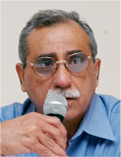
Rohinton Rivetna: "safeguards and filters”
Making a valiant attempt to convince people determined not to be convinced, Rivetna addressed the executive council meet of the Federation of Parsi Zoroastrian Anjumans of India (FPZAI) at the Banaji Atash Behram Hall on September 3, 2005. He came with responses to all the "fears and requirements” expressed in a note to the Federation president and Bombay Parsi Punchayet (BPP) chairman Minoo Shroff at the FPZAI’s raucous meet in Ahmedabad on December 19, 2004.
Addressing the demand that the WB’s membership criteria synchronize with those of the FPZAI — namely that its membership be restricted to Parsi Zoroastrians descended from the original Persian emigrants and born of both Zoroastrian parents, an Irani from Iran professing the Zoroastrian religion coming to India temporarily or permanently, and children of Parsi fathers with alien mothers — Rivetna said, "Your membership requirement is our biggest challenge and we seek your understanding.” He explained that FEZANA is a coordinating and facilitating body whose charter ensures complete and unfettered autonomy to its member anjumans whose membership clauses "run the whole spectrum… there are some having a few members who are Iranians converted back to their ancestral Zoroastrian religion. One or two associations may have a very few converts with no Iranian lineage…Most of the associations have some children of Zarathushti mothers and non-Zarathushti fathers… Surely we cannot disenfranchise all such associations and essentially disband FEZANA?”
In the inability to regulate membership by definition Rivetna spoke of "safeguards and filters” to guard against manipulation and takeover by any individuals or special interest groups: the guarantee of complete autonomy for all members is further reinforced by the ‘Notwithstanding clause’ according to which any member can opt out of any inimical majority decision. Any new region of Parsi-Iranian Zoroastrian presence would have the right to apply for membership of the World Zoroastrian Organization of Federations (WZO-F) but would be accepted only if all member regions unanimously agree to do so.
Voting weightage in the WZO-F has now been reworked so that India has 35 percent, Iran 23 percent, North America 22 percent, Europe 11 percent, Middle East, Pakistan and Australia, two percent each and New Zealand, South Africa-Sri Lanka, Singapore-Hong Kong-Malaysia-Macau, one percent each.
Clauses regarding the IZO and WZO-F’s potential involvement with "defunct anjumans, places of worship, towers of silence and burial grounds” have been deleted.
To ensure that converts cannot become office-bearers, a new clause declares that they "shall be individuals of maternal or paternal Parsi or Iranian Zoroastrian lineage.”
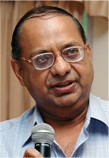
Homi Ranina: values"do not change
Regarding the bogey of 2.2 million converts cited from the World Christian Encyclopedia, Rivetna quoted a few at random – 304,454 in Afghanistan in 2000, zero in Britain, 212,661 in India, 25,037 in Pakistan, 52,721 in USA, 24,917 in Canada — and asked "How can one give any credence to a source that gives such grossly incorrect figures?” As for aspersions of "hidden agenda” so vociferously chanted by the orthodox, Rivetna said, "It took a different mind to see any such hidden agenda in our actions — none of us had ever contemplated anything of the sort.” Nonetheless, to placate people who thought differently three clauses have been added to the WB’s draft charter:
"The International Zoroastrian Organization (IZO) (and WZO-F) shall not engage in proselytizing of the Zoroastrian religion in any part of the world.”
"To safeguard and perpetuate the Parsi/Irani Zoroastrian identity as practiced in any region of the world;”
"Nothing in this constitution shall be interpreted and/or construed in any manner to impair or otherwise jeopardize the independence or functioning of Parsi/Irani institutions nor any individual or entity comprising this organization shall in any manner utilize any portion or part of this constitution to assert any rights or demand any privileges or entitlements consequent to the individual’s or entity’s membership, that will in any way compromise or undermine Parsi/Irani institutions, customs or traditions, practiced anywhere in the world.”
In this context Rivetna further argued that as a result of the WB "our institutions will have an additional layer of protection, rather than making them vulnerable.”
Reiterating a clause in the preamble that the WB is being formed "to further the economic, educational, cultural and welfare requirements of Zarathushtis” and that "the IZO shall not act as a religious or edictive authority of the Zoroastrian religion in any part of the world,” Rivetna maintained, "From earliest times the Zoroastrian priesthood has maintained its independence and that must never change.”
Protesting against the vicious remarks against the North American diaspora in various public meetings addressed by the leaders of the orthodox lobby, Rivetna said, "You will be hard-pressed to find anyone striving harder to instill Zoroastrian values and traditions in our children, more reverent and more observant of our traditions and trying to preserve, protect and perpetuate our religion and community than those of us who have chosen to settle in the Western diaspora. Within the past few decades they have built the darbe mehrs and associations, they travel 100 miles to bring their children to religious classes… They make positive attempts at getting their youth to meet and mingle, against great odds.”
Adding that a consecrated dadgah in Toronto is likely in the next few years, Rivetna said, "We are all influenced very much by the environment we live in… Zarathushtis in India have developed differently from Zarathushtis in Iran. In North America the Parsi and Iranian streams have come together after a 1,000 years of separation, and may develop a bit differently in our customs and practices… The converts comprise a minuscule fraction of the total population (17,000) of practicing, observant Zarathushtis of the Parsi-Iranian ilk in North America. Are you willing to cast off 99.9 percent of us for fear of some future takeover?...A rejection by the mother country is a rejection of one’s own child by its parent.”
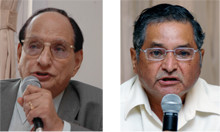
Dadi Engineer: "Indian conditions are different” ; Burjor Antia: "the community is being misguided”
Similarly Rivetna questioned the Federation members’ disrespect for Zoroastrian leadership around the world that has contributed to the drafting of the WB constitution: "Each one of our leaders has the best interest of our community at heart. They make great sacrifice of time, and money and family life to serve the community, with no expectation of reward. Zarathushtis the world over are known for their volunteer service to the Zarathushti community and the world community of humankind… Let us pause and consider what message we are sending to our younger folks! Seeing what they see, would the brightest and best among them want to serve, only to suffer this kind of humiliation?”
Referring to the "Coming Together” session at the Eighth World Zoroastrian Congress in London where regions and institutions from around the world spoke of the challenges they face, Rivetna said 65 issues emerged, the major ones being Zarathushti networking and infrastructure, education and the preservation of traditions, world demographic study, shortage of mobeds, socio-economic welfare and political situations and growth of business enterprise. "This session was a demonstration of a Global Alliance …It conveyed the benefits of coming together in hamazori for discourse and dialog…I envision such a meeting to be convened by the WB (which would be responsible for the follow-up).” He mentioned in passing that South Africa’s crying need for a mobed was being addressed by sending one from North America.
"We are too few in number to each go our way. Association breeds similarities… It is time now to go out and heal the wounds of the past…” Rivetna concluded in his gentle, idealistic way. Much of his audiovisual presentation was accompanied by a Gujarati commentary. We have quoted from his handout in English.
The first response came from WAPIZ (World Alliance of Parsi Irani Zarthoshtis) trustee and supreme court advocate Homi Ranina, noting that the primary object of WAPIZ was to bring together the traditional Zarathushtis of the world. "Traditionalism is on the back burner… We are aware of changing circumstances, we certainly want to take the changing scenario into account. But Zoroastrian values are too precious to be thrown away. They do not change… Rohinton Rivetna is right. We should all come together. Then what is the problem? There is no difficulty at all if you are only bringing Parsi Irani Zarathushtis together. Then why is there no definition of ‘Zarathushti?’ Zorostrianism is fundamental to the WZO. It means exactly the same whether it is (in) a religious, social or cultural context. Then why feel shy to adopt a definition? Why not the same definition as in FPZAI? We are told there are different ethnic groups. I once looked up the 1990 edition of the Encyclopædia Britannica. The title to the chapter was ‘Zoroastrianism and Parsiism.’ It shows that religion and ethnicity are interlinked. They can’t be bifurcated.
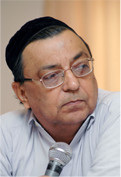
Hoshang Wania: " who constitutes the 35 percent?”
"Rivetna said converts are one percent. For that one percent why are you dividing us?...You say ignore them. Then why do you want to do this? It is the only issue that divides us.” He described the WZO as "a cosmopolitan organization even today” because it accepts non-Zoroastrian spouses who continue to follow the religion of their birth and their children and noted that the same applies to FEZANA. "You say that there are clauses in your constitution which cannot be altered but you ask us to alter our constitution!”
Referring to the WB safeguard which stipulates that the office bearers will always be Parsi Irani Zoroastrians, Ranina said the clause can be challenged in a court of law. Offering the example of the Indian Parliament he noted if one is eligible to be a member of an organization, he is eligible to be an office holder. "It is one of the clauses which can be amended. In five to 10 years they will take control…We have to know what is in store for us…”
BPP trustee Dadi Engineer spoke of his own traditional background and upbringing but which had led to no conflict with his position as president of WZO-India. "At the 2002 international meet of the WZO many had tried to convince me that in India too you should have a similar provision – the admission of non-Zoroastrian spouses as members. I argued that Indian conditions are different. To their credit that WZO-India was exempted from this provision. In India every single member and every office bearer is a Parsi Zoroastrian.
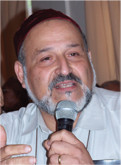
Khojeste Mistree: "ethnicity has kept us together”
"I am not expecting you to change your views. Let us have unity in diversity. Ranina says we have put tradition on the back burner. But there is need for mingling tradition and change. As Rivetna has said, we are ready to accept and change as required. Only in unity we can go forward. A house divided cannot stand. A community divided cannot stand.”
Emphasizing the need for unity in diversity, Rivetna noted that the "constitutions circulated show the urge for it.” He also reminded the gathering that the membership of the IZO and WZO-F was not open to individuals and "only individuals can be converted… Read the two (IZO and WZO-F) constitutions together. They will safeguard Parsi Irani identity as practiced in any part of the world. They will not be an edictive authority. The WB will not engage in conversion.” However, the non-Zoroastrian spouses who are life members of the WZO "have vested rights. Are we asking them to give up their rights? Most importantly, the control including finance will remain with India,” Rivetna stressed the system of checks and balances that had been incorporated. "All of us are traditional. Yet we say, let us progress with this. It’s the best thing that can happen to the community… Let us talk like Zoroastrians. Our credo is spread happiness to others.”
Someone shouted, "The Rocky Mountain Association and the Houston Association have definitions that we don’t (accept).” Responded Federation honorary secretary Keki Gandhi, "Rocky Mountain is not joining the WB. Only FEZANA is. All our members have different definitions. They are not the same as that of the Federation. It doesn’t bother us. FPZAI is joining hands with FEZANA. It is not linking you with association members of FEZANA. Our way of life will not change. We are joining hands for things where we have common interests.”
"I think we are confusing the issue. The issue is that we in India are being asked to de-link religion and ethnicity. Of course we are autonomous in India . But we would be joining with people who have total disregard to the vehicle of ethnicity that has kept us together,” proclaimed WAPIZ architect Khojeste Mistree. Noting that the WZO-F constitution of June 2005 speaks of "different culture, ethnic backgrounds” he asked, "Are Parsis in America different from Parsis in India?” Accusing the WB proponents of "camouflaging” the issue of membership Mistree demanded, "How in WZO-F can you stop someone who comes onto the FEZANA board and from there to the WZO-F board?” Citing an item in the Fed Newsletter where WZO president Rustom Dubash had answered the question "Can a convert, who becomes a member, become an office bearer?” in the affirmative, Mistree said, "2,000 Kurds have gone to the British government saying they are Zoroastrians. If they become members, we will cease to have control…We are trying to create a legal entity that will endure beyond our lifetime.” He quoted the North American Mobed Council resolution which says "Parsi is a race. Zoroastrian is a religion. Parsis refer to those born of both Parsi parents. Zoroastrian is one who believes in the precepts of Zara-thushtra. It is recognized that Zoroastrianism is a universal religion. It is recognized that a Zoroastrian is not necessarily a Parsi.”
Slamming Rivetna’s description of converts as a "small sliver” of the North American population, Mistree claimed there are lists of people which go into hundreds (a come down from his earlier insistence of millions). "If it’s only a sliver, why should we Parsis and Iranis accommodate those who wish to change what our ancestors died for?...The WZO-I (World Zoroastrian Organization of Individuals) constitution has not been brought to this meeting. If WZO admits six members as non-Parsis today, tomorrow it may be 60. We want to create a body (that will endure) 50 years from now.” He suggested that the term ‘Zoroastrian’ be removed from the name of the WB if its functions are only socio-economic: "Think of a new secular label.” In passing he strafed the BPP for not objecting to newspaper reports on the activities of the Association for Revival of Zoroastrianism which referred to the private residence where a jashan was held as a fire temple instead of a prayer hall. "We want to make the BPP the strongest body in the world. How can you (FPZAI office bearers) accept 35 percent voting rights in the WZO-F when we have more than 50 percent of the population?...WZO-I won’t have more than 5,000 members yet they have two votes on the IZO and we also have two votes. Is this democracy?”
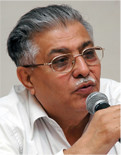
Keki Gandhi: "im-possible demands”
For the nth time Mistree called the draft constitution "structurally flawed,” and questioned, "Have the media gone through the draft point by point like us?” He suggested that India form a WB of Federations where "our Federation takes the lead.” The Zoroastrian Trust Funds of Europe got a pat on its back "because their ancestors were not so arrogant, they kept their constitution in line with India.” Noting that the WB will not be accepted by the Islamic Government (in Iran what the minorities do has to get government permission), Mistree predicted that the converts will take over FEZANA in 10 years as according to him they are already in the forefront of their respective associations. Once again the favorite orthodox bogey that the liberal Delhi Anjuman was thrown out of the Federation was raised. Talking unremittingly of Parsi Irani ethnicity, Mistree said, "We want to be united with our own people (not those who) have broken every single religious law… It is better to respect each other (at a distance)…FEZANA has a wonderful equation with the BPP.” Contesting the WB claim that it was required to represent the community before the United Nations and international governments, Mistree said, "My Zoroastrian Studies has made many representations to the UN...Let us not fool ourselves any longer.”
Turning to Rivetna, Nargol anjuman president and WAPIZ supporter Hoshang Wania gibed, "You say 75 percent vote required for any special resolution, but who are going to be in the 35 percent? Mr Shroff, Mr Engineer, Mr Tamboly, Mr Gandhi…?” He was rebuked by Lt Gen (Retd) Adi Sethna, president of the Delhi Parsi Anjuman Trust, "We are getting into personalities! Stop it.” Added BPP chairman and FPZAI president Minoo Shroff, "We have buffoons even among members of Parliament. We have to lump it. But I want to tell Khojeste that it was he who told us to keep out of religious affairs.” Shroff was referring to Mistree’s criticism of the BPP in not correcting Press reports describing a residence as a fire temple.
Seeking the permission of the chair "to take names because our names have been taken,” an angry Tamboly addressed Wania, "We have been elected... You stood for election and lost.”
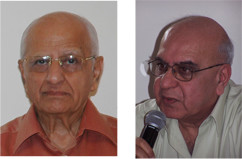
(From left) Minoo Shroff and Dinshaw Tamboly: replying to their critics
Gandhi sought to set the record straight: "Dubash said that a convert has the right to stand for election. Your fear is that he will get elected. But will he?” Turning to the weightier point of only 35 percent vote for FPZAI, he continued, "In our own Federation every member has one vote in the general body (including the BPP). On the executive council the BPP has five votes. If the BPP had insisted that Bombay has 90 percent of the population, therefore they must have 90 percent of the vote, would the Federation have been formed? Today the analogy is the same. There is a certain group of people who do not want the WB to be formed. Therefore they put up these impossible demands.”
Totally out of context Bhicaji Davierwalla, claiming to represent Bhopal (at Ahmedabad he had claimed to represent Mahuva), referred to the DPA’s Mengusi Dharamshala as a "non-Parsi dharamshala,” alleging that Parsi families do not get accommodation there. An agitated Sethna demanded names and dates when any such event occurred adding that the dharamshala has six rooms where Parsi companies or individuals can sponsor a non-Parsi guest but the non-Parsi pays twice as much as a Parsi. (When Sethna bearded Davierwalla later it became apparent that it was no more than a mischievous ploy). In the free-for-all that ensued, Areez Khambatta, president of the Ahmedabad Panchayat and creator of the Rasna line of beverages began recounting his commercial and legal battles with multinationals until BPP trustee and qualified mobed Burjor Antia spoke up: "The community is being misguided, misrepresented on the WB…I am also a traditionalist. I have been speak- ing and writing for 30 to 40 years… not come today.”
Cutting through the "arguments and accusations,” Rivetna said, "The issue is whether or not a WB and I hear people say yes. …There are strengths that we have in North America and which you have. We can combine these strengths. The B. D. Petit Parsee General Hospital can become a world-class hospital… But there are certain constraints. We have to work around them. We can’t do it in a congress like this. There must be few people and a retreat-like atmosphere. If we still can’t, we can say we tried and did not succeed.”
◆ ◆ ◆
From the archive