
Comment
'The obvious choice'
When the British government wanted an upright and able administrator to distribute essential supplies, Astad Gorwala was the prime candidate
=The Second World War broke out on September 3, 1939. Acute shortage of essential commodities especially food and other items adversely affected the common man. The immediate need was equitable distribution of the very scarce commodities available. Procurement, storage, equitable distribution, integrated controls were a must. An officer with great vision, integrity, honesty, planning and implementation abilities was necessary to ensure that the common man was not denied the day-to-day basic essential needs. Astad Gorwala, secretary to the Government of the then Bombay state finance department, was the obvious choice and was appointed secretary to the Government, civil supplies department and supply commissioner. His vision made it clear that integrated controls would need a huge administrative set up and would necessitate selection of officers with highest integrity, efficiency and speed. He had picked his team. Under Gorwala’s dynamic stewardship, the state of Bombay had soon an excellent civil supplies organization and a rationing set up, which most states in India studied and emulated. The writer of this article is personally aware that Gorwala and his senior officers, including D. S. Baluka, ICS (Indian Civil Service), who later worked as the first administrator of the Nizam territories when taken over following independence, and Anthony Dias, ICS who later succeeded Gorwala and also was handpicked by Jagjivan Ram as governor of West Bengal, worked till 10 o’clock at night almost daily.
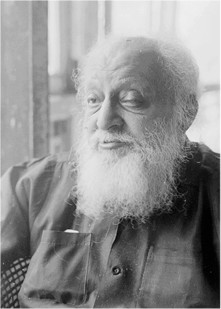
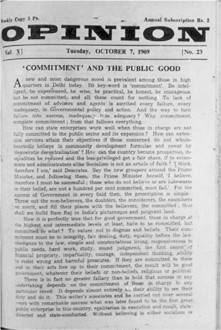
Gorwala: integrity, vision and ability
At a meeting of senior officers, which lasted till about 9 o’clock, a decision was taken to send a steamer full of food grains to Ratnagiri. It was the beginning of the monsoon. Soon after the officers dispersed, Sakharam, the peon told Gorwala, "Saheb, hé tumi kai kéla (Sir, what have you done)?” He explained that the steamer would have to transfer the cargo in mid stream to small boats, which, in monsoon conditions, would be unable to reach the small unorganized jetty and the bulk of the food grains would be lost. Gorwala immediately called back the officers and explained Sakharam’s viewpoint. The meeting decided to cancel the decision and to send the food grains by road. The message was loud and clear. Even the views of a peon had to be given due weightage and very prompt decisions had to be taken during emergencies. Gorwala had always an open mind and he based his decision on available facts, figures and ground realities.
Another true story! The issue of all permits for movements, etc was centralized in one office. I was designated officer on special duty (permits). The concerned departments had to take the decision and I had to issue the permits within three days. A merchant came in a huff, wanting the permit immediately. He flung his application. The printed letterhead had the photograph of Mahatma Gandhi and the company was called "Gandhi Tea Company.” When I adhered to my view, he shouted, "Take whatever bribe you want, but give the permit today.” Merwanji Antia, former principal, Sydenham College of Commerce was the director of civil supplies. I reported the incident to him. He took the application immediately to Gorwala, who in turn took it to Dinkarrao Desai, minister, civil supplies, recommending that the firm be blacklisted. The minister agreed and the next day orders blacklisting the firm were issued by the director of civil supplies. The blacklisting news spread like wild fire and the merchant community got the message and were most circumspect thereafter.
One day, Gorwala received orders from the minister that jaggery should be decontrolled. Gorwala wrote a detailed note fully explaining that decontrol of jaggery would cause great hardship to the poor. The ministry took it as an affront. Relations were not cordial thereafter and soon Gorwala was transferred to a not too important post in Delhi — as chairman of the Commodities Prices Board. Gorwala soon resigned from the ICS. His successor Dias, on the winding up of the Civil Supplies Department, was elevated by Jagjiwan Ram as the governor of West Bengal and was conferred the Padma Vibhushan. It is a great pity that a pioneer in food and civil supplies and one who gave to the state of Bombay, the finest rationing system in the country, was not appreciated in his lifetime — nay even thereafter. India would rarely get an officer of integrity, vision and organizational capacity as Gorwala.
Gorwala’s initial postings were in the erstwhile province of Sindh — then a part of India. He had an excellent rapport with the common man and in due course became the commissioner in Sindh.
Initially, the ICS was the exclusive preserve of the Englishmen. The examinations were held in England and no Indian was allowed to compete. Dr Dadabhai Naoroji took the pioneering lead in continuously agitating, at the appropriate level, in the British Press and in the quarters that count, that the ICS be thrown open and Indians be allowed to compete. He also pleaded that the examination be held in India. If, today, India boasts of a sound and progressive administrative structure, especially in the districts in the sub-continent, great credit goes to the Grand Old Man of India — one who gifted us the simple word Swaraj which, in due course, enabled India to secure freedom from the colonial British rule. The British believed in grooming young civilians in the districts first. Thus they had the benefit of guidance from senior officials like the collector and district magistrate.
After retirement, Gorwala started writing very studied articles, giving facts, figures and supporting evidence, clearly exposing administrative lapses and mismanagement by ministers. Since these were unpalatable to the ruling regime, pressure was brought on leading newspapers not to publish his articles. Soon, Gorwala came out with a four-page Opinion, published once a week. I was privileged to read these and admired his courage in flaying wrong and undemocratic decisions from the Prime Minister down. Emergency came in for very stringent strictures. Gorwala was prosecuted! Such was the reward a very distinguished civilian got for his magnificent pioneering work!
My wife and I used to call him Astad mama. This was because Gorwala was the maternal uncle of two of my best friends Jamshed and Dinsha Chinoy. Jamshed was with me in the Government Law College and Dinsha worked with my brother-in-law Dr Behram Meher Homji at the Breach Candy Hospital. He soon left the Hospital and started private practice at Secunderabad. One day, when he, along with other specialists, was attending to a patient who had suffered cardiac arrest Dinsha under great tension, collapsed at the clinic itself and passed away on the spot. Immediately on hearing the news, I phoned Astad mama. He too had been informed and was in great distress. He asked me about the financial position of the family. Dinsha had left four young kids. I frankly told Gorwala that the widow would find it extremely difficult to manage. Gorwala liberally assisted the family.
We used to visit Astad mama much after he had retired. On one such occasion, my wife took a bowl full of homemade aabakalio, a favorite Parsi dish made from raw mangoes and the "decontrolled” jaggery. Astad mama could hardly wait! He immediately tasted it and complimented my wife that "it was exactly like what my revered mother Mithibai used to make.” A simple, loving, caring, human being!
For several centuries, the common man in India has suffered in silence. Suffered not only poverty but hunger, even starvation. His lot needs to be very substantially improved. We need to rid the country of corruption which has assumed gigantic proportions. Given a strong political will at the top, it could be eliminated – at least substantially reduced. As Gorwala always insisted, this has to be done from top down – not from the peon upwards! Recently, we read that several houses of top officials of various All India Services were raided and assets running into crores were confiscated. Such raiding teams should be organized in all states and union territories to raid the houses not only of government officials, but of all corrupt people starting with the ministers.
Astad Gorwala believed in "Thus let me live unseen, unknown,/Thus unlamented let me die,/Still from the world but not a stone/Tell where I lie.”
Capt Hormazdiar Desai retired from the Indian Administrative Service as joint secretary, finance, Maharashtra state. Thereafter he served many charitable causes, working as honorary secretary of the National Association for the Blind and as founder member of the National Society for Equal Opportunities for the Handicapped. He was joint honorary secretary and trustee of the K. R. Cama Oriental Institute and has been associated with religious institutions like the Anjuman Atash Behram and Sorabji Ranji Agiary as governing council member/trustee.
◆ ◆ ◆
From the archive