
In Memoriam
Contractor's commitments
Died: Zal Kaikhushru Contractor, 76, former chairman of the Cotton Survey Board of the Government of India and community activist committed to social causes, on August 2, 2004 at the Bombay Hospital following brain hemorrhage.
"We always thought very highly of him for the splendid charitable work he did for the blind, the aged and the handicapped. I had told him that when I retire I would like to do a bit of that kind of work,” recalled senior advocate of the Supreme Court, Tehmtan Andhyar-ujina, also acknowledging "the help he gave us at the time of Parsi Punchayet reforms.”
Among the enthusiastic group of young professionals who had banded together in 1980 under the banner of Committee for Electoral Rights (CER) to introduce reforms in the archaic workings of the Bombay Parsi Punchayet (BPP), the soft-spoken, jovial Zal and his wife Roshan had played host at innumerable informal meetings.
"Zal always stood like a rock for the cause of underdogs, Parsis or otherwise...We had the good fortune to work shoulder to shoulder in the days of the CER movement (which) brought about a change in outlook...from autocratic to democratic trustees,” stated Nariman Mehta, president of The Nowroze Baug Play Centre.
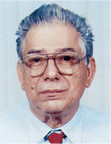
Contractor: meaningful life
"He had this love for the world which many a childless person does... He knew how to love and how to serve. His constituency was the handicapped of the world. Socially handicapped. Economically handicapped. Circumstantially handicapped. And of course the visually handicapped... He was no dull social worker... If a cause fired him, he spared none. During the CER awareness campaign (when CER was in its pristine innocence and truly gallant) Zal went from baug to baug in his hardy jeep spreading the message. Always the backstage guy. But important, more important than the fellows who hogged the limelight in the glare of publicity,” acknowledged columnist Berjis Desai in The Bombay Samachar of August 8, 2004. When CER published its newsletter, The Zoroastrian, Desai was its editor and Contractor its publisher.
"The Parsi community has lost a good worker,” believed Eruch Desai former BPP chairman. After contributing to the success of CER, Contractor turned his energies to the nascent World Zoroastrian Organisation (WZO). "Our memories of Zal will always include his joyful and sociable character and his hospitality at his own home when having WZO committee meetings. His great charisma will be sorely missed,” noted a tribute from Rumi Sethna who retired as chairman of the WZO. "Zal was a kind, helpful and a genuinely good person... extremely helpful to me and WZO in the 1980s,” recalled Shahpur Captain, former chairman of the WZO.
Commending his "zeal and dedication,” the honorary secretary general of the National Association for the Blind (NAB), India, Dr Rajendra Vyas wrote, "The absence of Zal from our midst will be intensely felt by all of us at the NAB.” His association with the NAB Rehabilitation Committee as vice chairman had made chairman Usha Thanawalla comment, "In him, not just our department or the NAB but this very field has lost a great champion and an active member who was always enthusiastic to better the prospects for the visually challenged.” He was constantly endeavoring to improve the conditions at the NAB Home for the Aged Blind in Khandala.
Considered the "backbone” of the Bombay chapter of the People to People International, he was subsequently elevated to the international board of directors. In 1961 he led a group to USA for an experiment in international living which was sponsored by the Rockefeller Foundation. For one year he was trained at Harvard University.
As trustee of Artytoys Industrial Scheme Trust for the last two decades Contractor "had always taken keen interest...and given his valuable time and advice in the management of the Trust,” stated the condolence resolution.
Director of India Peace Corps from 1965-68, for three years he was on a lecture tour in the USA and had represented India as delegate to the conference for voluntary service. From 1967-69 he had served on the social welfare board of the Government of India. The money that he used to pursue his social welfare goals was earned from his practice as an interior decorator, originally with Gogia Interiors and later independently, and from his enterprise, Sterling Fisheries Ice and Cold Storage Company Private Limited where he was chairman.
"How can I forget his help in the setting up of our new home soon after marriage?” queried Singapore resident Rohinton Bhappu adding, "Incidentally we still have many of the same fixtures in our Alibag bungalow.”
Being interested in painting and reading he pursued these hobbies intensively and had a good collection of masterpieces. Every alternate year they traveled abroad, mentions Roshan. During one of his sojourns to Japan he learnt ikebana which taught him the principles of aesthetic balancing which proved invaluable in his furniture designing and lamp making creative pursuits. "He can fashion lamps out of anything, be it crystals, shells, glass, brass, iron, porcelain, aluminum or wood,” noted a write-up in Modele (July-September 1978) adding, "Creativity is his motive but money has never been his goal or a criteria.” He used to even teach flower arrangement at the Indo-American Society.
Born in Karwar, Maharashtra, Contractor had studied at Bombay’s New Era School. "He guided me into social and community work which I took on with equal enthusiasm as he did,” Contractor’s childhood friend Russi Balsara of Canada reminisces. "I always marveled at his thoughts and ideas for the various ways he did good for the community of Bandra where we lived. The Lions Club Child Welfare Centre at the Gobhais’ residence, the milk and food program for the slum children in that area, and then the taking over of the D’Monte Park for an actively run Lions Youth Center, were some of the few projects we were involved in. Our families will attest to the fact that we were out of the house almost every day at 6 a.m. and met and together distributed milk and food to over 300 children and would then go to work and then back again to one of the centers and not get home till the late hours. In 1971, we came home to Bombay for our children’s navjote and it was then that Zal introduced me to the importance of working for our own Zoroastrian community.”
"Zal led a meaningful life assisting several deserving causes,” summed up Capt Hormazdiar Desai, founder honorary secretary general of the NAB.
The good samaritan is survived by his wife Roshan, sister Zenobia Banaji and brother Dady.
P.M.G.
◆ ◆ ◆
From the archive