
In Memoriam
Mistry's ministry
Died: Roda Homi Mistry, 75, member of the Andhra Pradesh (A.P.) Legislative Assembly and first Zoroastrian elected to the Rajya Sabha, on June 29, 2004 at Appollo Hospital in Hyderabad following cardiac arrest and complications caused by vasculitis.
"In the death of Mistry, a former minister and ex-MP (Member of Parliament), Hyderabad lost a colorful social figure of elan who transformed herself into a khadi clad Congress woman for whom none was high or none low, if it meant getting a thing done,” noted a write-up in the August edition of New Swatantra Times. "If she was popular among the elite, the poor were attracted to her for her helpfulness and the way she went all out to their rescue...When Hyderabad suffered from heavy rains in 1971, the alacrity with which she went about first to feed the displaced, then give them shelter and rehabilitate them, got her the paean of the public and the Government alike,” added the article referring to the vast number of common people who turned up to pay their last respects to her. Her body lay in state in front of the new Parsi temple on July 1 after which there was a state funeral and finally the customary Parsi rites before her body was consigned to the Towers of Silence.
A minister in the A.P. Government from 1968 to 1971 and again from 1978 to 1980, Mistry held the portfolios of women and child welfare, tourism, public libraries and protocol. "As a minister she got on well with the officials with tact and practical approach. As director of tourism and joint secretary I received her full support in various schemes to promote tourism. She was a shrewd judge of persons,” commended N. Suryanarayan in the New Swatantra Times.
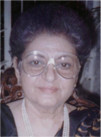
Mistry: practical powerhouse
In Mistry’s passing away "the country has lost a distinguished social worker and an able administrator,” noted a tribute to the lady posted on the web site: councilof states.nic.in. A.P. chief minister Y. S. Rajasekhara Reddy’s acknowledge-ment of Mistry’s services to various sections of society was quoted in The Hindu of July 1, as also the comment of D. Srinivas, president of the Andhra Pradesh Congress Committee who lauded her work for the uplift of women.
"She was a powerhouse at a time and in a place when women were largely considered to be second-class citizens,” notes a tribute from her granddaughter Lylah Alphonse, a news editor for the Boston Globe. Pursuing two simultaneous careers — in politics and social work — Mistry was devoted to both throughout her life.
"My contribution is just a drop in the ocean of humanity. If we look at our society the need for welfare and rehabilitation requirements is much more than the services provided by the government and the non-governmental organizations,” Mistry had remarked at a special felicitation accorded to her by the governor Dr C. Rangarajan at Jubilee Hall on October 14, 2000. Different speakers then had commended her four-decade service from starting a home for the disabled, Aram Ghar, the first mid-day meal scheme launched by her for schoolchildren in the city, and her initiative in setting up the College of Social Work in 1966 as president of the Indian Council of Social Welfare (ICSW). Initially offering a diploma course over the next decades it was recognized for its graduation, postgraduation and doctoral courses. Referring to the renaming of the college as the Roda Mistry College of Social Work, the governor remarked that her life was marked by a concern for the poor and the deprived and it was thus a fitting tribute to her.
To Mistry however, the most memorable moment of her life was the formal handing over of the Cancer Hospital at Red Hills to the State Government in the presence of the first Prime Minister Jawaharlal Nehru in 1955. It was managed by ICSW then headed by her mentor Nawab Mehdi Nawaz Jung who subsequently became governor of Gujarat.
Determined to alleviate suffering and to empower women, in 1955, just a year after the birth of her second child, son Nauzer, she joined the A.P. branch of the ICSW and was serving as its president emeritus at the time of her demise. She set up legal cells for rescue of women and children forced into prostitution and hard labor and initiated the women’s employment scheme giving widows and other shunned women opportunities to earn their own living. In the International Women’s Year in 1975 she reportedly started the first all women superbazar in Secunderabad. Referred to as "Amah,” the well dressed woman "would show up complete with entourage and television cameras to lecture women about hygiene and health in the red light districts of Hyderabad,” recalls Alphonse.
Her political career commenced in 1959 when she marched into Nehru’s office and asked him to give her a seat on the Congress ticket in the A.P. Legislative Assembly as there were no Parsis represented there, relates Alphonse. Her husband Homi who ran a bobbin factory supported her activities in the political and social arena although he did not interfere with her work.
A devout Zoroastrian she was known to be respectful of and interested in learning about other religions as well. She welcomed her children’s non-Parsi spouses with open arms and arranged for the navjotes of all three of her grandchildren, impressing upon them their good fortune to be initiated into the Zoroastrian faith irrespective of whether their link was through the Zoroastrian mother or father, acknowledges the granddaughter.
The youngest of five children, Roda (née Bharucha) was born in Secunderabad and studied at St Mary’s Convent in Secunderabad. At the age of 18 she decided to do "something with her life that was positive and purposeful,” mentions Alphonse.
With her diverse interests and hobbies, at one time she owned and operated a store and cafe in Hyderabad called Tammie’s Nook (named after her daughter Tehmina). As minister of tourism she promoted the traditional arts and crafts. She also encouraged local fashion and textile development through the National Institute of Fashion Technology (NIFT) in Hyderabad and Delhi. An avid collector of antique furniture, jewelry and art she enjoyed traveling and soaking up other cultures.
Never shy about expressing her opinion, whether in public or in private circles, Mistry’s views were often sought. She had served on the board of the World Zoroastrian Organisation and in 2000 was inducted into the Daughters of Mashyani, Hall of Fame at the Seventh World Zoroastrian Congress in Houston, USA.
The champion of emancipation and empowerment is survived by her daughter Tehmina Gerard Alphonse and son Nauzer.
◆ ◆ ◆
From the archive