
In Memoriam
Ponda's pluck
Died: Freny Harshad Ponda, 74, senior advocate and one of the first Indian ladies to practise criminal law, in Bombay on January 22, 2005 following cancer.
"I feel that her passing away brings to a close the era of the first generation of women lawyers in the country,” noted a condolence letter from Justice Sujata Manohar, erstwhile chief justice of the Bombay and Kerala High Courts adding, "She was appropriately made the president of the Indian Federation of Women Lawyers. Her advocacy and legal acumen especially in the field of criminal law and family law will be long remembered.”
Former chief justice of India M. H. Kania noted, "I still remember how full of life and fun she was when she had joined the Bar. Within a few years of practice, she was recognized as a formidable defence lawyer in the Sessions Court. She was also a colleague for a couple of years as a part-time professor at the Government Law College and I remember that it was always great fun to talk to her.”
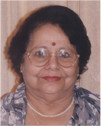
Ponda: art of advocacy
During her legal practice, over 50 years, she both impressed and intimidated her juniors. Dr Justice D. Y. Chandrachud of the Bombay High Court recalled first appearing against her in a matrimonial matter. Facing a formidable lawyer "I was trembling at the thought of opposing someone like her with a reputation of invincibility, knowledgeable and gifted with the art of advocacy. After arguments were over and we left the court, she graciously complimented the young junior that I was with words which meant so much to me…”
"She was the first lady advocate to venture in the Sessions Court in trials of criminal cases… (With) her oratorial powers (she) swayed the jury on many occasions in favor of her clients,” stated M. A. Rane who had appeared against her as an assistant government pleader in many cases in the High Court. "Later she began to appear in the Parsi Matrimonial Court which was as strenuous as criminal trials,” he observed. "It was always a treat to observe her cross-examine a witness and to hear her lucid arguments addressed to the jury with courage and confidence…It was no doubt a (learning experience) for a budding lawyer like me on how a criminal trial should be conducted,” acknowledged advocate G. D. Raje.
"I admired her determination to succeed in a highly competitive profession…” wrote Supreme Court senior advocate Tehmtan Andhyarujina, "Above all, despite trying times she retained a sense of humor. She was always ready to help whosoever sought (it) as I can vouch from my own experience.” Among the condolence letters received was one from a schizophrenic patient who appreciated that she was "a great comfort, mental solace and God’s blessing…showering me with abundant love, understanding…” Yet another colleague from the Bar valued her "quasi parental advice that had a soothing effect on my disturbed mind” following the loss of his wife.
"Never did I realize that the lady who fought so fiercely in the courts would be so gentle, loving and caring,” remarked Dr Praful Desai, consulting cancer surgeon who marveled that "she never gave up, as was her nature, and continued to say that she was feeling better even though her health was slowly declining.” He was also impressed when she personally came to his home "with her religious books and an idol (which adorns our living room as her permanent memory) to wish me all the luck and give her divine blessings… Apart from her resonating voice and a cheerful disposition…the sweet aroma, taste and flavor of ‘Freny Delight (her specially created soft drink concoction)’ will always remain with me…”
"She was a very bubbly woman,” who enjoyed both Indian and western music and dancing, sums up her husband Harshad. At the trips organized by the lady advocates "she was the heart of the party,” recalled advocate Anita Agarwal adding how various court programs were invariably compered by Ponda.
Having known her since 1946 "when we were both at St Xavier’s College,” Soli Sorabjee, former attorney general for India, wrote, "She was a very close and dear friend of mine. I have many happy recollections of our friendship.” At Xavier’s and subsequently at Government Law College from where she completed her LLB, she impressed her peers with her skills at elocution and debating, "her pluck and ability.” Her early education was at J. B. Vachha High School.
On her marriage to Harshad, a Hindu Gujarati Lohana also from the legal fraternity, she had to face opposition from the community especially when she was denied voting rights at the Anjuman Committee elections of the Bombay Parsi Punchayet in 1981. But the relentless warrior and three other Parsi women took the Punchayet to court and ensured that ladies married out of the community could exercise their rights as Parsi Zoroastrians. While continuing to wear the sudreh and kusti and visiting fire temples regularly she encouraged her husband to follow his religious practices. "She was always keen to see the identity of the Zoroastrian religion remain intact,” states Harshad, and although she opted for cremation so that her immediate family could witness the last rites, the after-death prayers according to the Zoroastrian religion were performed for her at their residence. A spiritually evolved soul, according to Harshad, "She was way ahead of us.”
The astute advocate is survived by her husband Harshad, sons Aashish and Aabad, and brother Aspi Parakh.
◆ ◆ ◆
From the archive