
Books
Cricketing heroes
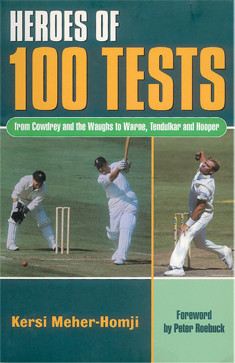
Heroes of 100 Tests by Kersi Meher-Homji. Published in 2003 by Rosenberg Publishing Pty Limited, P. O. Box 6125, Dural Delivery Centre, NSW 2156, Australia. E-mail: rosenbergpub@smartchat.net.au Pp: 168 Price: A $ 24.95 (Rs 854).
"Whereas most writers go for boundaries, Kersi pushes his score along steadily, collecting ones and twos and never mind that the crowd does not notice, till, finally, he reaches three figures,” writes well-known cricket columnist Peter Roebuck in his foreword to Kersi Meher-Homji’s book Heroes of 100 Tests.
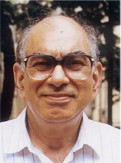
Meher-Homji: 11 books and going strong
This is Meher-Homji’s 11th book on cricket. After humorously and sensitively chronicling the ‘duck’ makers, six hitters, hat-trick takers, dramatic debutants, etc, Meher-Homji profiles 27 greats of the game who have achieved the milestone of 100 or more Test appearances. "He (Meher-Homji) delves into the game with the delight of a child upon a Christmas stocking, and generally emerges with a point that the rest of us had missed,” observes Roebuck. And indeed he does. We see that of the 27 listed in what Meher-Homji calls the Centurion Club, four (Sunil Gavaskar, Kapil Dev, Sachin Tendulkar and Dilip Vengsarkar) are from India, three from Pakistan (Javed Miandad, Salim Malik and Wasim Akram), six from the West Indies (Clive Lloyd, Viv Richards, Gordon Greenidge, Desmond Haynes, Courtney Walsh and Carl Hooper), seven from England (Colin Cowdrey, Geoff Boycott, David Gower, Ian Botham, Graham Gooch, Michael Atherton and Alec Stewart) and seven from Australia (Allan Border, David Boon, Steve Waugh, Ian Healy, Mark Taylor, Mark Waugh and Shane Warne). No cricketer from New Zealand, Sri Lanka, Zimbabwe or South Africa has made it so far to the Club, due to the comparatively late entry of these countries on the Test cricket scene.
Much of Meher-Homji’s observations in the book derive from his regular attendance at matches, meticulous research and logical mind. Roebuck describes Meher-Homji’s annual appearance at Test matches in Sydney where he has lived for several decades after emigrating from India: "Of course he arrives modestly, almost sheepishly, though he is a familiar and respected figure whose warmth is widely appreciated. He joins his fellow writers in the back room, discussing the game... often producing a telling statistic from the depths of his memory... Discretion counts among his strong points. Kersi will not walk up to a journalist and say, ‘What utter nonsense you wrote yesterday!’ Rather he will ask after a fellow’s offspring and congratulate him upon sundry pertinent observations before gently observing that some minor inaccuracy had crept into the copy, doubtless due to misbehavior on the part of the laptop... (Kersi) goes about his affairs in his own quiet way. He is a dove amidst hawks... Kersi never forgets that cricket is a story about the humanity of the players, their mighty achievements and their numerous flaws...”
Meher-Homji compiles his story on 100-Test heroes through statistical research as well as through personal interviews, chats on the phone or correspondence through e-mail. Mundane descriptions are not for Meher-Homji, his comparisons are colorful. Writing about lanky Lloyd, one of the greatest batsmen and captains in the history of the game, Meher-Homji says: "Awkward, stooping, horn-rimmed spectacles on his nose, he appeared more like a university professor, an accountant or a soul singer... the uninitiated might have wondered whether he could reach the middle without tripping himself... the bowler tries a bouncer and the soul singer turns into a ballerina. Twinkle-toed, he would pull the offending hapless quickie for another four.” While fielding in the slips or covers, Lloyd looked "like an absent minded professor on the verge of a discovery... (but) he would propel his hand from nowhere to catch the flier or stop a sizzling cover drive, pick it up and flick it back to the bowler or keeper in one fell swoop... This achieved, he appeared to go back to his reverie, probably on some intricate scientific discovery.”
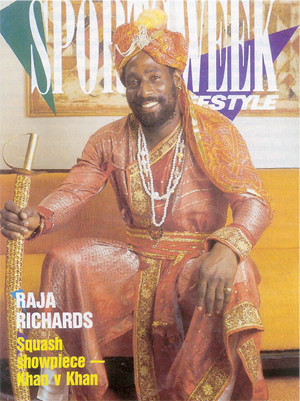
Richards: king among cricketers
"King” Richards resembled both a ballerina and a professional boxer with his graceful footwork and the knockout punches he threw, believes Meher-Homji. Playing a match for Antigua against a St Kitts team in his early days, Richards was wrongly given out for nought. His clear disapproval led to a riot with volatile West Indian fans chanting "No Viv, no match!” The match organizer recalled him, but he was soon out again. With a duck in the second innings as well, Richards had the unique distinction of three zeros in a match ! For showing dissent, he was banned for two years from playing cricket! In his 121 Test career, Richards scored 8,540 runs at an average of 50.24 with 24 centuries.
Meher-Homji lets the reader on to little known facts. England’s Cowdrey was the first to reach the 100-Test milestone in the year 1968, when he was 36 and Test cricket was almost 92 years old! In the next 35 years, however, 26 cricketers booked their berth in the Centurion Club, an indicator of the way matches have mushroomed since the 1970s. "He resembled a cuddly teddy bear with chubby cheeks. He was a kindly uncle you did not have; never an unpleasant word from him for friend or opponent,” writes Meher-Homji of the cricketer whose cricket-crazy father Ernest, a tea planter in the Nilgiris, "taught him how to play with a straight bat at the age of four on a tennis court in Ootacamund in the south of India, his birth place.”
We read the story of Gavaskar, abstracted from his autobiography Sunny Days, of how he may never have become a cricketer due to a mix-up of babies soon after his birth when he was placed into the crib of a fisherwoman’s baby! Given that Sunil’s father Manohar was a better than average club cricketer and Test cricketer Madhav Mantri was his uncle, would Sunny have grown to be a successful cricketer living in a fishing village miles away from a cricket pitch? The first batsman to top 10,000 runs in Test cricket, only Border and Steve Waugh have exceeded his Test aggregate of 10,122 runs, (as of May 2003). Sunny’s 34 centuries are still a record, with Tendulkar close behind. And at his swan song (final Test innings) he scored 96, the next highest contributor being extras at 27! Gavaskar was the first Indian and the fourth cricketer (after Cowdrey, Boycott and Lloyd) to reach the 100-Test mark, Meher-Homji informs us. "My recollection of my 100th Test was that of General Zia-ul-Haq, President of Pakistan, flying down from Islamabad to Lahore specially to congratulate and present me with a carpet on his behalf and a silver salver on behalf of the Lahore District Cricket Association for being the first from the subcontinent to play 100 Test matches,” Gavaskar told Meher-Homji. "However, the Board of Control for Cricket in India did not present me with anything on that occasion.”
Meher-Homji records his admiration for Kapil Dev Nikhanj, the "only Indian fast bowler to dominate the international scene for over a decade, he is the only all rounder to achieve the Test double of 5,000 runs and 400 wickets,” his final tally of 434 in 131 Tests standing as a record till Walsh and Warne overtook him. Bowling his heart out on lifeless Indian pitches, the simple rustic from Haryana with the toothy smile "swung the ball like a boomerang and his snaky breakback struck with the speed of a cobra,” describes the author.
"What can one write about Tendulkar that the cricket world does not already know?” Meher-Homji queries. At age 29, Tendulkar became the youngest cricketer to play 100 Tests, the only under-30 centurion.
Meher-Homji devotes a chapter to each of the centurions. We read about Boycott, the gifted run gatherer who tended to "bore the onlookers and exasperate the selectors;” of blond and curly locked Gower who is currently involved in rhinoceros protection; of Vengsarkar who scored centuries in three consecutive Lord’s Tests; of Border whose achievements included a duck in his first and 100th Test and a total of 11,174 runs in between! Miandad and controversy often went hand-in-hand; Greenidge and Haynes opened the West Indies innings in a record 89 Tests; Botham was a prankster off the field and a gladiator on it. His marathon walks for leukemia sufferers have helped raise thousands of pounds. Gooch bagged a "pair” on his Test debut, yet scored a phenomenal 456 runs (a triple century and century) in a match! Short and stout with a luxuriant mustache, Boon became the second Australian after Border to wear the baggy green (cap) 100 times.
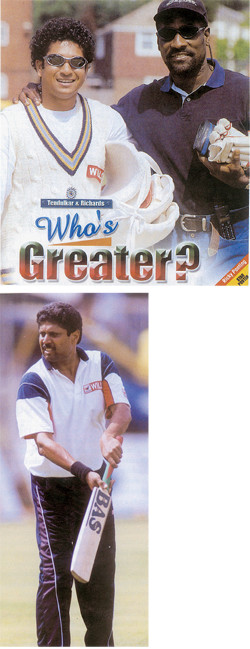
Tendulkar and Richards: greats of the game; Dev (alongside): Wisden’s Indian Cricketer of the Century
Steve Waugh "has been nicknamed ‘Ice Man’ and ‘Tugga.’ To me he is an ‘Asbestos Man,’ ‘Rock of Gibraltar’ and ‘The boy who stood on the burning deck,’” declares Meher-Homji, describing Steve’s twin Mark as "elegant and enigmatic, freakish and lazy, imperious and inimitable.” Healy was the first wicketkeeper to play 100 Tests; Walsh climbed the unscaled mountain peak of 500 Test wickets at the age of 38! Taylor’s mouth always seemed to move, not for sledging but for chewing gum! Malik’s alleged involvement in match fixing earned him a life ban; Atherton and Stewart played their 100th Test together, with Atherton failing to gather a substantial score and Stewart amassing 100 runs! With a landmark 500 plus wickets in limited overs internationals, Akram was "implicated in several scandals, always protesting his innocence with the air of a cat appalled at claims he was responsible for devouring a nearby fish.”
"Face it, Warne is a legend and the most controversial figure in the game’s history. He makes headlines practically every week, and not for performances on the field only,” Meher-Homji describes the champion wrist spinner with the bleached blonde hair. "Hooper is the only 100-Test player who has not been made Wisden’s Cricketer of the Year — triviologists please note!” quips the author.
"The 90-Plus Test Club” features 12 players (up to May 15, 2003) in the 90-99 Tests bracket, with Mohammad Azharuddin leading the pack with 99 Tests.
Heroes of 100 Tests is by no means Meher-Homji’s last book. Currently he is second only to Jack Pollard’s record of 15 cricket books among Australian writers. "But as he died in 2002, it makes me the most prolific cricket author in Australia now alive! Steve Waugh is hot on my heels, he has pubished 10 (mostly tour diaries) and will equal my ‘record’ in October,” says the man who writes for Sydney’s Sun Herald and Inside Edge and is the sports editor of the Indian Down Under.
As Roebuck says, Meher-Homji is "not a man in thrall to fame and fortune.” It’s just that he "finds satisfaction in the peculiar mixture of beauty, violence and mathematics that sets cricket apart.” Illustrated with a sprinkling of color and black and white pictures, Meher-Homji dedicates the book to the "memory of my beloved brother Behram who first instilled in me the love of cricket. A caring physician, he gave generously of his life to one and all.”
Hilla P. Guzder
◆ ◆ ◆
From the archive