
Books
Treasure trove of trivia
Cricket Quirky Cricket by Kersi Meher-Homji. Published in 2011 by the Cricket Publishing Company, Post Office Box W27, West Pennant Hills, New South Wales 2125, Australia. Pp: 98. Price: $ 20 (in India Rs 1,000 including postage and packing).
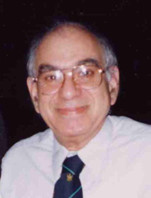
If you are one who enjoys quirky cricket trivia then Kersi Meher-Homji’s 13th book will be a dipper’s delight. As the author notes in his introduction, the book will amuse or intrigue and the stories are "more funny-peculiar than funny-ha-ha” and include items which no other book has covered. Meher-Homji, who is the nephew of Khershed Meherhomji, the cricketer, has contributed 13 books (including this one) on the sport and is known to specialize in offbeat themes normally not touched upon by other authors.
The book is a veritable treasure trove of cricket trivia and is divided into 17 chapters which cover Scoreboard Trivia, Eye-catching Headlines, World Cup Trivia, Ashes Curiosities, Nervous Nineties, and Oddities among others. There are gems on every page of the book and at the risk of taking away some of the fun of reading the book, here are a few: three first class cricketers had historical names: Julius Caesar who played 194 matches for Lancashire and Surrey from 1849-67, William Shakespeare who played 25 matches for Worcestershire from 1919-31 and George Bernard Shaw who played 16 matches for Glamorgan from 1951-55. Other interesting names include Napoleon Einstein who played for Chennai Super Kings in the Indian Premier League in 2008. [The author could also have included the Pakistani player Yasir Arafat (1982- ) who played for Rawalpindi.]
As far as scoreboard trivia goes one of the most famous is the rhyming Lillee c Willy b Dilley during an Ashes series in the early 1980s. Meher-Homji gives us many more including one where the scoreboard resembled inverted commas when in the August 1971 Manchester Test against India Peter Lever was 66 not out and Ray Illingworth 99 not out.
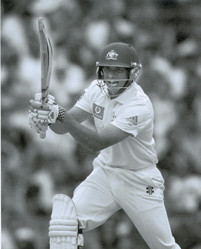
Author Kersi Meher-Homji (above) and Australian cricketer Usman Khawaja in action
The author also tells us about what he calls the Hudson Paradox where South Africa’s first three defeats after reentering Test cricket coincided with opening batsman Andrew Hudson hitting a 100 or a 90. Conversely, till September 1915 he failed to exceed 60 in the four Tests South Africa won. He broke the jinx in the Harare Test against Zimbabwe in October 1995 when he scored 135 and his team won by seven wickets.
In the chapter on Oddities Meher-Homji tell us that July is a good month to be born in if you want to be a record breaker in cricket: W. G. Grace, Gary Sobers, Geoff Boycott, Richard Hadlee, Dennis Lillee, Ian Botham and our very own Sunil Gavaskar were all born in July. In fact Grace and Lillee were born on the same day 101 years apart.
In the chapter on Nervous Nineties Meher-Homji recalls how Eoin J. G. Morgan playing in his first one-day international for Ireland against Scotland scored 99 before he was run out. At the end of 2006 his statistics were one match, aggregate 99, highest score 99, average 99.
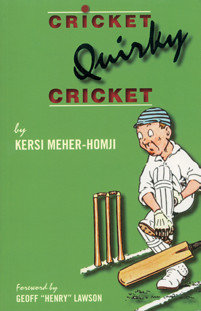
One could go on and on but it would be unfair to take the fun out of this delightful book by revealing more. The book’s foreword has been written by former Aussie quick (fast bowler) Geoff Lawson who voices the hope that Meher-Homji will hunt down the many other quirks and coincidences there are in the ever-expanding cricket universe. One can’t help agreeing with him completely. We hope that the next volume is already in the making.
Being a cricket buff and trivia junkie myself I’d like to add to the author’s collection. The Delhi Test played from December, 12-17, 1984 (against England) was the only one in Test history where both the umpires were Parsis: Dara N. Dotiwalla and Pilloo D. Reporter.
In conclusion I would like to end with a gem, which though hilarious, is not for the prudish: "We have heard of Beethoven, the dog but a dachshund named ‘Typhoon’ Tyson. Why? Explains Michael Morton-Evans in Column 8, The Sydney Herald: ‘Because he has four short legs and his balls swing both ways.’”
BAKHTIAR K. DADABHOY
◆ ◆ ◆
From the archive