
Comment
The Petit case is binding
The authors argue that the historic judgement by Justices Daver and Beaman is not 'obiter dicta'
In Parsiana (April 2003,) I (Kanga) had written an article "Priestly contradictions” in response to the statement issued by six High Priests pronouncing that children born of Parsi fathers by non-Parsi mothers could not be considered as Parsi Zoroastrians even if their navjote was performed and directing the priests not to perform such marriages between Parsi Zoroastrians and non-Parsis, and navjotes of their children. In that article I had explained at great length the correct legal position based on the landmark case of Petit vs Jeejeebhoy, Suit No. 689 of 1906, wherein the two eminent judges Dinshaw Dhunjibhoy Daver and Frank C. O. Beaman had pronounced that children of Parsi fathers and non-Parsi mothers would be allowed to be vested with the sudreh and kusti as this practice was followed in the past. They had also held that "The Zoroastrian religion not only permits but enjoins the conversion of a person born in another religion and of non-Zoroastrian parents. Although such conversion was permissible, the Zoroastrians, ever since their advent into India 1,200 years ago, have never attempted to convert anyone into their religion. However, children of Parsi fathers by non-Parsi mothers would be allowed to be vested with the sudreh and kusti as this practice was followed in the past.”
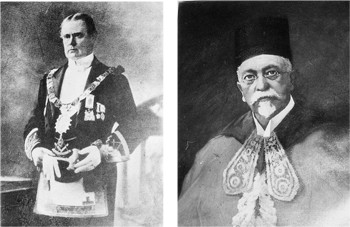
Beaman (left) and Daver
I had also explained that according to eminent legal luminaries such as Justice Jal Vimadalal, a very learned and orthodox religious scholar as well as an eminent judge of the Bombay High Court and a trustee of the Bombay Parsi Punchayet (BPP), the view expressed by some persons that the judgement is not legally binding and the observation of Daver as to who is a Parsi is to be considered as obiter dicta, is not correct. To quote Vimadalal, "When a judge says something in his judgement which is not necessary for the decision of the points that actually arise before him in a case, such statements are called obiter dicta. Such statements as well as statements which are in the nature of mere passing observations, are not binding as legal decisions. It is contended by some people that it was not necessary for Daver or Beaman to define the term ‘Parsi’ in that case and, therefore, their definition of the term is obiter dicta and cannot be said to have laid down law which is binding on us. Without going into the technicalities of the concept of obiter dicta, I must point out that since the trusts in question in that case were for the benefit of Parsi Zoroastrians, or in terms analogous to that expression and it was claimed that the French lady (J. R. D. Tata’s mother) was entitled to the benefit of those trusts, it was absolutely necessary for the learned judges to decide whether she fell within the definition of the expression ‘Parsi Zoroastrian.’ It has been laid down by an authority as high as Lord Halsbury that it is only statements which are not necessary for the decision of a case that can be said to be obiter dicta and, as such, to have no binding authority. Without defining the term ‘Parsi Zoroastrian,’ the learned judges could not have decided the claim made on behalf of the French lady and those definitions cannot possibly be said to be obiter dicta and not binding as such.”
In response to this article columnist Noshir Dadrawala referred to the judgement of Justice Chagla in the case of Sarwar Yezdiar vs Merwan Yezdiar where the learned judge had ruled that Daver’s view was obiter dicta and was therefore not a binding decision. He therefore concluded that Daver’s judgement was irrelevent in the light of this later judgement. Many orthodox Parsis therefore scoff at this important decision and fail to consider it as applicable to Parsis. Some time back when I was discussing this with a friend who is a priest he said that Daver’s judgement is "obiter.” When I asked him what that meant he replied that it meant that the judgement was wrong, juthu chè. I realized that the orthodox lobby has spread this belief that the judgement is irrelevant regarding the question as to who is a Parsi and thereby caused confusion, which resulted in the fatwa some time back. I felt that this issue as to whether the definition of Parsi Zoroastrian given by Daver in Petit vs Jeejeebhoy was binding or not, was of great importance for our community as it has been followed continuously for almost 96 years and it would cause grave damage to a large number of people if this view is now considered as incorrect. I, therefore, requested a number of my learned legal friends for their advice and opinion so that once and for all this issue may be settled and the mischief likely to occur if this view is upheld could be mitigated. I am happy that Rustom Gae, an eminent legal expert and ex-secretary in the law ministry, Government of India, has responded to my request and taken pains to examine this issue carefully in order to find out the correct latest legal position based on the Petit case and subsequent judgements on the subject. In view of the importance of this matter, I am reproducing Gae’s explanation which is extremely clear and exhaustive.
In the famous case Petit vs Jeejeebhoy (1908) decided by Justices Daver and Beaman, the issue was whether the person converted into the Zoroastrian faith could claim the benefits of religious institutions and funds managed by the Parsi Punchayet. The suit was filed on behalf of S. R. D. Tata, a French lady who was married to R. D. Tata and whose navjote was performed by the head priest. They then went through the marriage ceremony according to Parsi rites and customs and Tata claimed that his wife had become a Parsi Zoroastrian and was entitled to participation in all religious events including entry into the fire-temple. In this case filed against the trustees of the BPP the matter was investigated at great length and a large number of witnesses were examined and finally the court held that properties vested in the BPP trustees were only for members of the Zoroastrian religion who were racial Parsis. S. R. D. Tata was not a racial Parsi though she was a Zoroastrian by conversion. Hence she could not share in the benefits of all that a Parsi Zoroastrian of Bombay could enjoy.
As regards the meaning of the expression ‘Parsi’ Daver, after considering expert evidence, drew conclusions that the Parsi community consists of:
–Parsis who are descended from the original Persian emigrants and who are born of both Zoroastrian parents and who profess the Zoroastrian religion;
–Iranis from Persia professing the Zoroastrian religion who come to India either temporarily or permanently and
–Children of Parsi fathers by alien mothers who have been duly and properly admitted into the Zoroastrian religion.
The second case is the decision of the Privy Council in Saklat vs Bella (1925) where the Privy Council took a similar view regarding the expression ‘Parsi’ when it held that Parsis were racial Parsis or people descended after a long lapse of ages to be racial Parsis. Thus the Privy Council emphasized the fact that a Parsi could only be a Parsi by birth and not by absorption or conversion.
This matter rested there till 1950 and children of Parsi fathers by alien mothers were considered eligible to be treated as Parsis if their navjote was performed. The third important case was in 1950 when the Bombay High Court decided Sarwar Yezdiar vs Merwan Yezdiar. In this case briefly the facts were that the husband and wife were both Zoroastrian immigrants from Iran and had been married in Bombay under the Parsi Marriage and Divorce Act (1936). The wife brought the suit against the husband for divorce on the ground of cruelty under the Act. The Trial Judge Coyayee declined to exercise jurisdiction on the ground that the parties were not domiciled in India, though the marriage was contracted under the provisions of the Act.
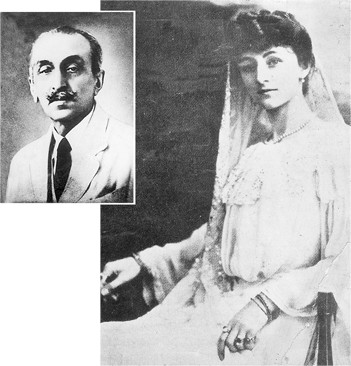
R. D. Tata and his French wife Suzanne
On the wife preferring an appeal the appellate court followed a strange procedure. It did not consider the question of domicile which was the only issue raised in the court below, but raised the issue whether the parties were Parsis. The court (Chagla and Gajendragadkar) held that the term ‘Parsi’ had a racial and not religious significance and is restricted to those who are descendants of the original Zoroastrian emigrants from Iran. An Iranian, who temporarily resides in India and whose domicile continues to be Persian, does not become a Parsi simply because he is a Zoroastrian and his race is the same as that of Parsis in India. According to the court, if an Iranian coming from Persia changes his domicile and becomes an Indian subject, he may be considered as a Parsi so long as he belongs to the same race as the Parsis originally belonged to. Thus the court laid stress on factors like religion, domicile and nationality. This is at variance with the provisions of the Act and the custom followed by Parsis as referred to below.
In Petit’s case Daver came to the conclusion that Iranis from Persia professing the Zoroastrian religion, who come to India either temporarily or permanently, would be included amongst Parsis. Now, so far as that part of the judgement of Daver is concerned, Chagla has pointed out that it was obiter, because the question that Daver and Beaman had to consider in that case was whether by conversion to the Zoroastrian faith a person could become a Parsi. This clearly implies that only the second clause and not the first and third clause of Daver’s conclusions defining the Parsi community referred to above was obiter.
The view expressed by Chagla will have adverse effect on Irani Zoroastrians on questions regarding validity of marriage, legitimacy of children, vested inheritance rights, entry into fire-temples, use of trust properties, etc. Unfortunately none of these matters was even raised by the parties or considered by the court, while giving its decision as aforesaid. It is surprising that in Yezdiar’s case provisions of sections 52(2) and 4 which are relevant were not brought to the notice of the court. Section 52(2) provides that a Parsi who has contracted a marriage under the Act shall remain bound by the provisions of the Act, even though he changes his religion or domicile, so long as the spouse is alive and marriage has not been lawfully declared null and void or dissolved by a competent court having jurisdiction under the Act. Thus a Parsi married under the Act carries his personal law of marriage, divorce, etc with him wherever he goes. Section 4 provides that no Parsi, whether such Parsi has changed his or her religion or domicile, shall contract a marriage under the Act or any other law in the lifetime of the spouse, whether a Parsi or not, unless the marriage has been lawfully dissolved or declared null and void and if the marriage was contracted under the Act was dissolved or declared null and void, under the provisions of the Act. The object of the section is to prevent polygamous marriages which were then permitted by Parsi custom. It is clear that if a marriage is contracted under the provisions of the Act, it can only be dissolved under the Act by a court established under the Act. For the purpose the factors of religion, domicile or even nationality are immaterial for vesting jurisdiction in the court. These aspects of the matter were not considered by the court while deciding the appeal.
In the last case on the subject viz Jamshed Irani vs Banu Irani (1966), the husband filed the suit against the wife on the ground of desertion under the Act. He claimed that both the parties were Parsi Zoroastrians and were domiciled in India. The defendant contended that neither party was a Parsi Zoroastrian and both of them were domiciled in Iran. The plaintiff urged the court to ignore the decision of Chagla in Yezdiar’s case and to follow the observations of Daver in Petit’s case. Mody, hearing the case, allowed the evidence to be taken on the meaning of the term ‘Parsi’ for the reasons mentioned below.
At the commencement of his judgement Mody observed that "I am, however, feeling a great difficulty in following that judgement (Yezdiar vs Yezdiar).” On analyzing the judgement of Chagla with greatest hesitation he came to the conclusion that "I feel myself not bound to follow the ratio of that judgement... on the ground that proper evidence had not been led” on the question whether an Iranian Zoroastrian was a Parsi or not.
He further observed that though the decision in Yezdiar’s case was not obiter dicta, the decision in Petit’s case was obiter dicta. "But that is a decision or rather an observation of Daver whom Chagla himself in his judgement (in Yezdiar’s case) has called a very great authority on Parsi law.” About the judgement of Daver in Petit’s case, Mody observed that the decision although obiter, is an attempt at ascertaining the complete connotation of the word ‘Parsi.’ As observed by Denning L. J. "A judge must not alter the material on which the Act is woven, but he can and he should iron out the creases.” This is exactly what Mody did in the latest case on the subject (Irani’s case).
Relying on the observations made by Daver in Petit’s case, Mody held in Irani’s case, that the word ‘Parsi’ used in the Act includes not only Parsi Zoroastrians of India but also Zoroastrians of Iran. These observations made by Daver, though obiter, were given (as it ought to be) highest respect and cannot be lightly set aside as mere obiter having no force of law as purported to be done by Dadrawala and others supporting him. These observations were made after taking expert evidence and on full consideration of the case. Both Chagla and Mody have called him an eminent judge well versed in Parsi law. Views expressed by him cannot therefore be called mere observations. They have the effect of ratio decidendi (the reason of a judicial decision) of the case and have the binding force of law and should therefore be construed as correctly laying down the law on the subject. It is significant to note that Mody in his judgement did not consider the decision of Chagla in Yezdiar’s case as correctly laying down the law on the subject and followed the principles laid down by Daver in Petit’s case. Thus persons falling in the first two clauses of Daver’s conclusions were held ‘Parsis.’
If there was any doubt regarding the definition of a Parsi pronounced by Daver in Petit’s case that was only regarding persons falling in the second clause of his conclusions namely Iranis from Persia professing the Zoroastrian religion who come to India either temporarily or permanently. That doubt is now resolved by the decision of Mody in Irani’s case. There is no doubt whatsoever regarding persons falling under the first and third clause of Daver’s conclusions.
The question agitating the community relates to persons falling under the third clause. It is significant to note that Chagla in Yezdiar’s case has not considered the conclusion of Daver regarding persons falling under the said clause as mere obiter. It may therefore be considered as ratio of the case (ratio decidendi) having the binding force of law.
It is thus well settled that children of Parsi fathers by non-Parsi mothers, who have been duly and properly admitted into the Zoroastrian religion by performing their navjote ceremony, are Parsis, i.e. Parsi Zoroastrians.
The irresistible conclusion is that the Parsi community consists of three categories of persons as referred to by Daver in the Petit case. That case should be considered as a precedent for correctly laying down the law on the subject and should be followed by Parsis as the law abiding community without any reservation and thereby avoid unnecessary controversy in our minuscule community. Petit’s case decided about a century ago has the binding force of law so long as it is not overruled or set aside by a decision of the Supreme Court. It is not therefore correct to say that the definition of the Parsi community pronounced by Daver in Petit’s case is merely obiter and has no binding force of law.
I am grateful to Gae for this very clear and precise explanation, which cannot be refuted by persons with vested interest to spread falsehood on this very important issue. I sincerely hope Parsis will no longer persist in their false belief.
In addition to this very erudite explanation, I would like to add what Vimadalal had to say in his book, Seven discourses "about the relevance of this judgement.” He states: "There are however some priests who do not accept the law laid down in these two cases (the other being the Privy Council’s judgement of 1925 in Bella vs Saklat) and decline to perform the navjote even of the children of Parsi fathers by alien mothers. It is, of course, open to a priest to refuse to perform the navjote of a particular person without assigning any reason for such refusal and none can compel him to perform it. These priests, however, profess to follow, what they call ‘Canon Law’ in declining to perform such navjotes. ‘Canon Law’ is a body of codified ecclesiastical law, especially of the Roman Catholic Church, as promulgated in ecclesiastical councils and by the Pope. For us, there is nothing like ‘Canon Law’ and there are no ecclesiastical councils or courts to promulgate or enforce any such law and the view taken by these priests has, therefore, no legal basis ... What is more, such an extreme stand is not in the interest of the community for it seeks to unsettle a settled legal position and might cause an undesirable public reaction. I venture to say that the propositions laid down in Petit’s case and Bella’s case in regard to the definition of the expression ‘Parsi Zoroastrian’ are so sound that they would be reaffirmed by any court, however high it may be, if an occasion to reconsider them unfortunately arises in future and I make bold to say this regardless of ‘threats’ to the contrary held out by some interested persons to have the matter re-agitated in courts of law.”
I sincerely hope that after this detailed explanation by two very learned legal luminaries, so called experts would stop interpreting the law and misleading the community. After all it is well known that little knowledge is dangerous and leads to erroneous conclusions as in the present case.
Rustom S. Gae, a former law secretary to the Government of India, is presently a senior advocate practising in the Supreme Court of India. He is known for his expertise on subjects relating to fiscal laws, company law and constitutional law. He writes frequently on legal issues pertaining to the community.

Gae (left) and Kanga
A retired Indian Administrative Services officer, Jamsheed G. Kanga held senior posts in government including that of the municipal commissioner of Bombay. He is at present a senior corporate advisor to the Tata group of companies. A former trustee of the Bombay Parsi Punchayet, he is on the board of several companies and is active in heritage conservation and town planning.
◆ ◆ ◆
From the archive