
Comment
Priestly contradictions
Since the High Priests contend there is no conversion in Zoroastrianism let them present the evidence, states the author
The recent statement issued by the six High Priests — Dasturs (Dr) Hormazdyar Mirza, (Dr) Firoze Kotwal, (Dr) Kaikhusroo JamaspAsa, Meherji MeherjiRana, Noshirvan Dastur Manchershaw Dastur and Nadirshah Unvalla — in the form of a pronouncement defining the very identity of a Parsi Zoroastrian has created confusion particularly among those whose future as Parsi Zoroastrians is affected by their pronouncements. The priests claim that this pronouncement is based on the authority of scriptures. While there is no Parsi ecclesiastical or canon law and the priests have no authority per se to make such pronouncements, the community respects their views as they assume these views are based on an authentic interpretation of the scriptures. Traditionally the people turn to the priests to clarify their doubts about the scriptures, particularly when there are contradictory opinions. Our learned High Priests should explain how they claim that the resolution is based on ‘the tenets of our religion,’ despite the considerable evidence to the contrary. The learned High Priests should enlighten us on the following points:
•Who is a Parsi Zoroastrian has been considered in great detail as far back as 1908 in the landmark case of Petit vs Jeejeebhoy, Suit No 689 of 1906 wherein the two eminent judges, Justices Dinshaw Dhanjibhoy Daver and Frank C. O. Beaman, after examining over 200 witnesses, concluded:
"The Zoroastrian religion not only permits but enjoins the conversion of a person born in another religion and of non Zoroastrian parents. Although such conversion was permissible, the Zoroastrians, ever since their advent into India 1,200 years ago, have never attempted to convert anyone into their religion. However children of Parsi fathers by non Parsi mothers would be allowed to be vested with the sudreh and kusti as this practice was followed in the past.”
This finding was arrived at after a thorough examination of hundreds of witnesses including some of the most learned dasturs and other scholars. If this finding is not correct, what is the scriptural basis for your recent resolution? Is it sufficient to set aside this legal pronouncement?
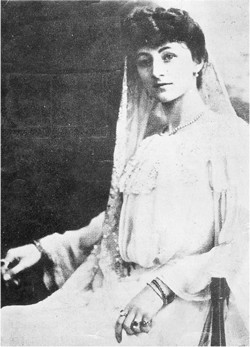
Suzanne (Sooni) Tata was married to R. D. Tata
•Prior to the suit — Petit vs Jeejeebhoy, in 1908, the question of conversion was not objected to on grounds of religion even by the high priests. It was generally not practised so as not to antagonize the other communities among whom the Parsis lived. However there were many such instances of conversion of children of Parsi fathers by non Parsi mothers, some even performed by leading high priests. In fact as far back as 1882 as per the evidence in this case, the High Priest Dastur Jamaspji Minocherji JamaspAsana had converted five females and four males whose ages ranged from 35 to 70 years, and who were the children of Parsi males by non Parsi females. JamaspAsana, one of the two High Priests of the Shahenshahi sect, and a very learned and eminent scholar, was a fellow of the Bombay University who had been awarded the degree of Doctor of Laws honoraris causa by the Oxford University, and whose painting hangs in the Bodelian Library in Oxford. At that time there was rivalry between him and Dastur Peshotan Sanjana the other High Priest. Peshotan alleged in a pamphlet that the navjote was not proper as the bareshum ceremony was not performed. The conversion was not objected to, only the ceremonies to be performed were questioned. If this conclusion was arrived at so far back have any new scriptures been discovered thereafter to suggest that this conclusion was erroneous? JamaspAsana, we are told, is the great-grandfather of one of the High Priests who is a signatory to this resolution. In fact when R. D. Tata, the father of J. R. D. Tata wanted to marry a French lady, Suzanne Briere, her navjote was performed by the learned High Priest Dastur Kaikhooshroo Jamaspji. Obviously he must have applied his mind to the scriptures and come to the conclusion that he was not doing anything contrary to the precepts of the Zoroastrian faith?
•When the community wanted to know the correct position in our scriptures on the question as to whether conversion was permitted in the Zoroastrian religion or not, the anjuman appointed a committee of scholars and experts to examine all the existing scriptures. The committee consisted of the most eminent scholars of the time and included Dr K. R. Cama, who was so highly regarded that his biography was written by no less a person than Shams-Ul-Ulama Dr Jivanji Modi, himself an eminent and highly respected scholar of Zoroastrianism and the secretary of the Bombay Parsi Punchayet (BPP). Another member of the committee was Dastur Darab Peshotan Sanjana, referred to in the judgement as "the High Priest of the Parsis, and Head Priest of one of the most ancient Atash Behrams in Bombay, whose father and ancestors have been high priests before him.” The committee in its report came to the unanimous conclusion that "no prohibition of any sort is found directed in any place in the Zoroastrian religious books against admitting any non Zoroastrian into the Zoroastrian religion, but on the contrary it appears to have been specially directed to admit non Zoroastrians into the Zoroastrian religion.” Do you consider that such eminent scholars would have arrived at such a categorical finding without being certain that this was the correct position according to our scriptures? Do you consider that the opinion of such eminent and highly respected scholars can be set aside by you without explaining to the community why you differ from their conclusion? Is it not patently incorrect to say, as one of you have claimed, that the judicial finding was based on the opinions of reformists? Surely Cama was not a reformist! This report extensively quoted in the judgement and mentioned in the evidence must be unearthed from the libraries of the BPP and K. R. Cama Oriental Institute as it is very important for clarifying this issue.
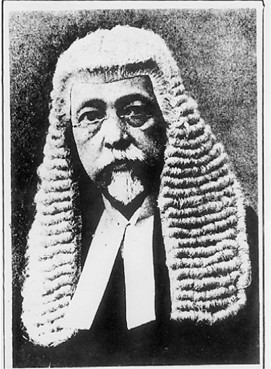
Justice Daver and (below) Justice Beaman
•In the recorded history of the life of Zarathushtra it has been stated that "at the age of 30 years Zarathushtra came down from the mountains and started propagating the new faith against stiff opposition from the magicians and sorcerers who were not prepared to accept this faith. However, Zarathushtra converted King Gustasp and other members of the King’s family to the new faith... Gustasp’s son Prince Asfandyar propagated Zarathushtra’s new faith in far-off lands. After a holy war with Turan’s King Arjasp for not accepting this new religion, Gustasp was victorious and succeeded in spreading the new faith to Turan also (Zoroastrianism by Ervad R. Motafram published by the BPP).” Justice Daver in the judgement has stated "the Zoroastrian religion is a revealed religion. It was revealed by the Supreme Being Ahura Mazda to Zarthost. Scholars differ as to the period when Zoroaster flourished, but they are agreed that he flourished in the time of Kai Vistasp, one of the kings of the Kyanian dynasty. The religion revealed to Zoroaster was by him communicated to King Vistasp who promulgated it amongst his people. It seems to me that all revealed religions must necessarily enjoin proselytization, for otherwise how is the religion to progress beyond the prophet to whom it is revealed?”
How do you explain that the religion revealed by the Supreme Being to Zarathushtra could have been communicated to people who were unaware of this new doctrine without converting from the religion which they were hitherto practising? If this is not conversion from one religion, the old one, to another religion, the new one, what is the meaning of the term conversion?
•There are some so-called scholars who try to explain this by stating that there was no conversion because the pre-Zoroastrian religion which was being practised before Zarathushtra’s birth was similar to the new one and it was merely purified and re-interpreted by Zarathushtra. Hence it is explained that it was more purification of the old religion and not a conversion to a new one. Do you agree with this view? Then how can Zarathushtra be called a great prophet of a unique new religion about whom the poet Rabindranath Tagore says in the Religions of Man, "While all religions of the primitive type tried to keep them bound with regulations of external observances, Zoroaster was the greatest of all pioneer prophets who showed the path of freedom to men, the freedom of moral choice, the freedom from blind obedience to meaningless injunctions, the freedom from multiplicity of shrines?” Is it not devaluing our great religion by categorizing it only as a modification of the old one? Do you accept this view?
•Based on overwhelming evidence, Daver and Beaman have clearly held that while the Zoroastrian religion not only permits but enjoins conversion of a person born in another religion and of non-Zoroastrian parents, the Parsis when they settled in India decided that it was necessary for their self preservation to abstain from conversion. In his evidence before the court, Dastur Sanjana stated, "There were no conversions, because at first there were difficulties in the way of the emigrants who found a safe refuge in India. Jadav Rana of Gujarat, gave them refuge under certain conditions. Those conditions were not favorable to converting his subjects or anyone else in India to Zoroastrianism. During the first century of their settlement in India, the emigrants who settled in India had great difficulties in preserving their own people from going away from their own religion — they had great difficulty in preserving their religion and performing their religious rites and ceremonies and safeguarding their religious books...It was felt besides that it would have been ingratitude towards the Rana who had given them refuge to try and convert his subjects.” Justice Daver therefore concludes that Parsis did not convert after settling in India because it was the only safe course for a small group of immigrants to follow. To quote Justice Daver: "Far from trying to proselytize, the Parsis, as years went on, adapted themselves to the ways of the people they lived amongst, that they earned goodwill.”
•Are you aware that another question submitted to the above mentioned expert committee of which Cama was a member was "What are the ceremonies that shall be performed (for admission of non Zoroastrians to the religion)? To this question, the expert committee has given a very clear and definite reply: "There are to be three ceremonies: firstly, after a year’s probation from the date of the written application of the candidate, he or she, after undergoing the purifying ceremony of nahn, is to be invested with sudreh and kusti in the same way as an ordinary Zoroastrian child; secondly, the candidate is then to be given the bareshnum; and thirdly, the candidate is to be then reinvested with sudreh and kusti.” Would the committee have given such a finding if they were convinced that conversion was prohibited?
•The judgement in Petit vs Jeejeebhoy has been in existence for over 95 years now, and navjotes of children of Parsi fathers by non Parsi mothers has been accepted by the community barring some fundamentalists. There are innumerable instances of children of such marriages being accepted as Parsi Zoroastrians. One such person was the late J. R. D. Tata who was revered by all Parsis as being one of them. The entire community felicitated him at a public function by the BPP when he was awarded the Bharat Ratna. When he died in Switzerland his uthamna ceremony was performed at Doonger-wadi. If he was not a true Zoroastrian why was this done?
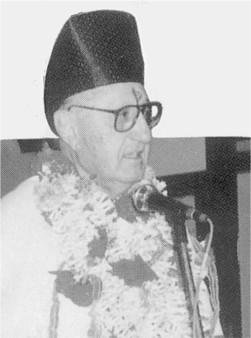
Neville Wadia: accepted into the fold
•In this connection it is interesting to quote what the late Justice Jal Vimadalal had to say in his book Seven Discourses about the relevence of this judgement. Vimadalal was a very learned and orthodox religious scholar besides being an eminent judge of the Bombay High Court. He was also a trustee of the BPP. Hence no one who knew him could ever accuse him of being a reformist. Vimadalal states: "There are however some priests who do not accept the law laid down in these two cases (the other being the Privy Council judgement of 1925 in the Bella vs Saklat case) and decline to perform the navjote even of the children of Parsi fathers by alien mothers. It is, of course, open to a priest to refuse to perform the navjote of a particular person without assigning any reason for such refusal and none can compel him to perform it. These priests, however, profess to follow, what they call ‘Canon Law’ in declining to perform such navjotes. ‘Canon Law’ is a body of codified ecclesiastical law, especially of the Roman Catholic Church, as promulgated in ecclesiastical councils and by the Pope. For us, there is nothing like ‘Canon Law’ and there are no ecclesiastical councils or courts to promulgate or enforce any such law and the view taken by these priests has, therefore, no legal basis... What is more, such an extreme stand is not in the interest of the community for it seeks to unsettle a settled legal position and might cause an undesirable public reaction. I venture to say that the propositions laid down in Petit’s case and Bella’s case in regard to the definition of the expression ‘Parsi Zoroastrian’ are so sound that they would be reaffirmed by any court, however high it may be, if an occasion to reconsider them unfortunately arises in future and I make bold to say this regardless of ‘threats’ to the contrary held out by some interested persons to have the matter reagitated in courts of law. I use the plural ‘courts’ advisedly, for it would mean taking the matter right up to the Supreme Court which would entail enormous waste of money that could be put to better use for the welfare of the community.”
•The orthodox group argues that Daver did not give any legally binding judgement on this issue and his observations are to be considered as obiter dicta. To quote again from Vimadalal: "When a judge says something in his judgement which is not necessary for the decision of the points that actually arise before him in a case, such statements are called obiter dicta. Such statements as well as statements which are in the nature of mere passing observations, are not binding as legal decisions. It is contended by some people that it was not necessary for Daver or Beaman to define the term Parsi in that case and, therefore, their definition of the term Parsi is obiter dicta and cannot be said to have laid down law which is binding on us. Without going into the technicalities of the concept of obiter dicta, I must point out that since the trusts in question in that case were for the benefit of Parsi-Zoroastrians, or in terms analogous to that expression and it was claimed that the French lady (J. R. D. Tata’s mother) was entitled to the benefit of those trusts, it was absolutely necessary for the learned judges to decide whether she fell within the definition of the expression ‘Parsi-Zoroastrian.’ It has been laid down by an authority as high as Lord Halsbury that it is only statements which are not necessary for the decision of a case that can be said to be obiter dicta and, as such, to have no binding authority. Without defining the term Parsi-Zoroastrian, the learned judges could not have decided the claim made on behalf of the French lady and those definitions cannot possibly be said to be obiter dicta and not binding as such.”
•There is also the evidence of the Persian Rivayats, which support this position. To quote Prof Kaikhosrov Irani, "It was popularly believed that contact between the Indian Jarthostis and the Iranian Zardushtis had been severed for several centuries, apart from the occasional brave refugee fleeing persecution and impoverishment in the Fatherland. In India, where conditions were far less harsh, the Parsis of Gujarat had lapsed into an increased adoption of local Hindu customs and beliefs. Certainly Hindu names proliferated among the provincial Parsis, and the ritual had succumbed to much adulteration. Matters having doubtless come to a head, the concerned Davar Changa Asa of Navsari and some co-religionists were determined upon obtaining correct answers to several questions of doctrine, ritual and practices. The first emissary, Nariman Ho-shang was sent, at great risk, along terrifyingly dangerous routes to the priests in Iran in 1478 and again in 1487.
"Among the answers brought back in direct response to questions from the Parsis, one addressed the problem of conversion: ‘If slave-boys and girls have faith in the Good Religion, then it is proper that kusti should be (given to them to be) tied (that is, they should be converted to Zoroastrianism), and when they become intelligent, attentive to religion and steadfast, they should give them bareshnum and it is also proper and allowable to eat anything out of their hands!’ For some who irresponsibly wish to exclude children — legitimately born from exogamous unions or born out of wedlock by Parsi fathers from non Parsi mothers — from the religion of their Zoroastrian fathers, then we must present an even stronger guideline from the 1599 Kaus Mahyar Rivayat whose response includes categories from even lower-deemed persons: ‘Can a grave-digger, a corpse-burner and a darvand become behdins (i.e. be converted to the Mazdayasnian religion)?’ Its answer: ‘If they observe the rules of religion steadfastly and (keep) connection with the religion, and if no harm comes on the behdins (thereby), it is proper and allowable!’” In the face of such categorical statements do you have any evidence that conversion is against the tenets of our religion?
•It is not being suggested that the community should open its doors to all and sundry, by conversion. In fact Daver himself considered this issue and came to the conclusion that it would not be in the interest of the community to have unrestricted conversion and since there was overwhelming evidence of navjotes of children of Parsi fathers, by non Parsi mothers only this could be permitted as it was done in the past. Now perhaps, considering our dwindling numbers we should consider entry of children by Parsi mothers also into the community, as well as the non Parsi spouses. This will result in only those who have a genuine connection with, and love for the community, being allowed in. Also the definition of Parsi would not allow the converts to enjoy the benefit of trusts which are for Parsi Zoroastrians only. This issue has also been settled by Daver in his judgement.
A few years ago when the late Neville Wadia approached all the High Priests and expressed his desire to convert from Christianity to Zoroastrianism many of you agreed that he could be converted. But you felt that a proper navjote ceremony would be inappropriate because of his age, but if he took a ritual bath or nahn or an ablution bath after recital of suitable prayers, he could put on a sudreh kusti and be considered as admitted to the Zoroastrian religion. Thereafter he would be considered as a proper Zoroastrian and would be free to enter agiaries and atash behrams particularly the H. B. Wadia Atas Bahram and he could also be taken to Doongerwadi like any other Zoroastrian. The reason given for permitting this as mentioned in the letter of Dastur Mirza and Dastur JamaspAsa is as follows :
"We appreciate the services rendered by your illustrious forefathers to the Zoroastrian community. We appreciate also your honest and genuine desire to rejoin the faith for the sake of the doctrines of our religion and for no other ulterior motives. It has been stated in the Persian Rivayats that it is proper and allowable to take back a Zoroastrian man or woman who wishes to revert to his/her religion which he/she has abandoned under certain circumstances and accepted an alien religion. Your letter carries terms of solution laid down by Dasturji Kotwal. We do agree with the said terms but we firmly believe that the navjote ceremony should be performed as an exceptional case. In fact, the nahn ceremony (sacred ablution) precedes the navjote ceremony proper. Regarding your entry into an atash behram and/or agiary, we state that in India, particularly in Bombay and towns of Gujarat, entry into such places of worship will be determined by the concerned authorities and/or the anjuman of that place.”
Only Dasturs MeherjiRana and Kaikobad Dastoor had categorically disagreed with this opinion. It is not clear on what scriptural interpretation you all came to the conclusion that Wadia was a Zoroastrian earlier and had loved the religion and was now wishing to revert to his religion which he had abandoned under certain circumstances and accepted an alien religion. I am sure you must be aware of the fact that his father Sir Ness Wadia, though originally a Zoroastrian, was converted to Christianity through the Church of England and married a Christian lady by Christian rites. Their son Neville Wadia was baptized in the Church of England and until the age of 80 years continued to be a Christian. Thus, as per your pronouncement he cannot qualify as a Zoroastrian, as he had a non Zoroastrian mother. Thereafter he desired to become a Zoroastrian because of his immense love for the community and admiration for the religion as expressed by him in his letter. While one entirely applauds the bold and correct decision taken by the High Priests, one cannot understand why this rule cannot be followed universally. On what basis can an exception be made in one case and denied in another? Can religious edicts be so flexibly interpreted? Do you have the right of dispensation, even from what you considered as a fundamental ‘tenet of our religion?’ There is no doubt that the Wadia family has been one of the greatest benefactors of the community, and thousands of Parsis have a roof over their head because of their charity. However, can scriptures be interpreted to allow what is deemed generally to be unacceptable as permissible?
•Have you considered what a traumatic effect your pronouncement will have on innocent children born out of interfaith marriages whose navjote has been performed and who are devout Zoroastrians believing in the faith and regular in their performance of their prayers, etc? If they are now told that they are no longer Zoroastrians, and all that they have been practicing is false, would it not be traumatic? A similar irresponsible statement was made by one of the high priests during the famous Roxan Shah case, that marriage between a Parsi girl and a non Parsi male is akin to adultery. It seems to be based on a callous disregard of the implications of the pronouncements. One wonders what has provoked you to make such statements without giving the scriptural evidence, despite the judgement.
What is the remedy for this impasse that the community finds itself in? To whom can they turn to ascertain the truth? It is likely that to counter the criticism of the High Priests’ pronouncement some fundamentalist elements may resort to foul abuse and hate mail against any one who disagrees with them, and organize a public meeting where rabid attacks may be made on all the persons who have sought clarification. In the words of Irani, "Today it is sadly evident that many Parsis, largely religiously ignorant, are allowing themselves to be deceived by prelates and preachers who have vested self-interests in projecting versions of a religion which do not conform to Zarathushtrian truth. They persist in deluding themselves and others that Zoroastrianism is tribally restricted and countenance the perpetuation of ignorance, errors and falsehoods of the past. That then is the furtherance of deceit and jadugih which the founder had so vehemently condemned.”
The average panthaky and priest will not dare to disobey the diktat, since terms such has ‘renegade priests’ are used to describe those who perform such navjotes. Almost every Parsi family has someone who has outmarried and hence it is necessary to get this matter clarified at once. What is necessary is face-to-face discussion, where honest doubts and conflic-ting interpretation of our scriptures are examined and a consensus reached. I feel that it is the responsibility of the trustees of the BPP who are the akabars and leaders of the community to get this matter clarified by the High Priests and other experts from anywhere in the world. They should arrange a Round Table conference of eminent persons from India and abroad so that once and for all this issue is settled, otherwise the fate of a large number of Parsi Zoroastrians will be uncertain. I appeal to the High Priests to agree to such an honest dialog. If they have facts they can convince the skeptics, otherwise they will lose their credibility. After all does not our religion ask us to seek the truth and follow it? Why be afraid of the truth? If the trustees fail to shoulder their responsibility as the leaders of our community and try to remain neutral they will have failed in their duty and should step down. Fortunately the present body has eminent solicitors like Dadi Engineer and Burjor Antia who are used to sorting out conflicting issues on the basis of evidence. We have a galaxy of eminent lawyers like Fali Nariman, Justice Sam Bharucha, Soli Sorabjee and Tehmtan Andhyarujina and many others who can be asked to examine the evidence, and give the BPP their advice. The High Priests could also present their views to them. Our eminent chairman Minoo Shroff and other trustees like Dinshaw Tamboly can also be relied upon to act boldly in the interest of the community. I sincerely hope they do not fail us. I share Vimadalal’s wish that this matter should not go to court lest we become the laughing stock of the country.
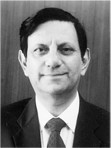
A retired Indian Administrative Services officer, Jamsheed G. Kanga held senior posts in government including that of the municipal commissioner of Bombay. He is at present a senior corporate advisor to the Tata group of companies. A former trustee of the Bombay Parsi Punchayet, he is on the board of several companies and is active in heritage conservation and town planning.
◆ ◆ ◆
From the archive