
Books
The Parsi stamp
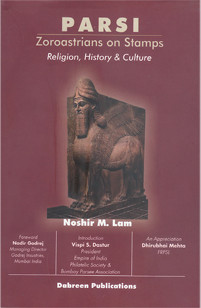
Parsi Zoroastrians on Stamps — Religion, History and Culture by Noshir M. Lam. Published in 2003 by Dabreen Publications, 23, Merry Niketan, Mount Mary Road, Bandra (W), Bombay 400050. Pp: xv + 144. Price: Rs 350.
Stamp-collecting was a fairly common hobby held by almost anyone through his growing years in the last generation, and probably, even over the past century when stamps were first introduced in the mid 19th century. But, philately, as it is known today has lately been on the decline.
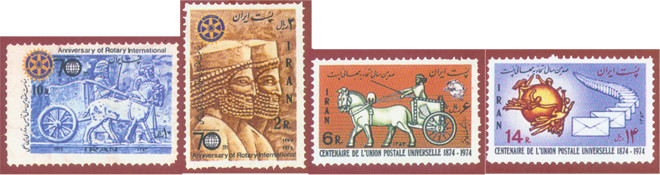
Noshir M. Lam’s new book, Parsi Zoroastrians on Stamps — Religion, History and Culture is a catalog of Parsis who have been honored on stamps in the world, preceded by some fascinating color pages reflecting early so-claimed to be Zoroastrian art and architecture, put on stamps by a gushing Shah of Iran, Reza Shah Pehlavi, who held power in Iran during the 1970s to 1985 or so. Lam, a chartered accountant by profession for nearly five decades, is of the opinion that he has written a work which through the use of stamps reflects, as the book’s sub-title goes, the "religion, history and culture” of the community.

Lam: philatelic record
The first part of the book far outreached its brief, including a whole series of stamps, purportedly a part of Zoroastrian heritage in ancient Persia. All the stamps brought out to celebrate Navrooz need not have featured; nor all on the occasion of a Ferdowsi seminar. And, many of the stamps featuring the art and architecture at Pasargade and Persepolis, cannot hold as necessarily being of Parsi origin. It is disputable whether Cyrus the Great was a Zoroastrian, and it is equally debatable, whether these monuments celebrate Parsi or Zoroastrian art, because the religion then, as of now, forbade imagery, or worship of images. The flying bulls and lions could be more a part of the ancient Medean worship which was part of the old religion, and which, we must not forget, found favor with Cyrus’ sister, Anahita, and probably even with his successor, Darius.
But, come to the second part of the book, and Lam has disappointing news for the community. According to Lam there have been only 20 Parsis who have been honored with a philatelic presence and this includes, as Nadir Godrej prepares us in his foreword, Sanjay and Rajiv Gandhi. Of these 20, all stamps have not been issued by the Indian government: Zubin Mehta has been honored by the Maldives, singer Freddy Mercury (Farok Balsara) by the UK and Jamshed Nusserwanjee Mehta by Pakistan.
Yet, in a loving introduction penned for the book, Vispi Dastur, president, Empire of India Philatelic Society, informs the reader that besides the above countries, stamps have been issued by Sri Lanka, Austria, Singapore, Zanzibar and Canada. Yes, there are these stamps too included in the book in full color, but their links to the Zoroastrian community is not explained anywhere. For example, there are four stamps in commemoration of Zanzibar’s independence "issued in 1963 and overprinted Uhuru (revolution) with the picture of a sultan in their left-hand corner; one featuring and stating, ‘towards the light Mangapwani Cave.’ Pray, where in Zoroastrianism do they feature? Another shows a group of religious buildings, though it is difficult to identify any of these as close to being an agiary. Similarly, Austria issued a set of six stamps, to commemorate the ‘development of the letter,’ but only deserves mention as it purports to show ‘cuneiform — Iranian script.’
For a philatelist though, Lam disappoints by restricting his coverage to stamps which were brought out in commemoration of some leading Parsis. The same Parsi gentlemen have been featured on different occasions by the philately department. Jamshetji Tata, for example, was commemorated on a stamp in 1965, but also honored with a portraiture on the stamp brought out by the Government in 1958 on the 50th anniversary of the steel industry. Another scion of the family, the late J. R. D. Tata too, we recall, has made an appearance on Indian stamps on at least two occasions: one after his death in 1994, and one earlier on the 50th anniversary of his maiden flight in a Puss Moth. Dadabhai Naoroji too, we are sure, was honored with his face on Indian stamps on at least two occasions: one when a stamp was issued in 1963 (as mentioned in the book), and again later to commemorate the centenary of his election to the House of Commons in London. Besides, he along with Pherozeshah Mehta, and the ‘disputed’ Rajiv Gandhi, also featured on a stamp brought out in 1985 celebrating the centenary of the Indian National Congress, and featuring the Congress presidents over the past hundred years.
Confusing for the reader is the inconsistent presentation of data. A prominent example is the stamp commemorating Jamshetji Tata. Was it brought out on January 7, 1965, as stated on pg 71, or on March 1, 1958, as stated on pg 78? It is an important figure, because if the Government brought out the stamp in 1958 (as stated on pg 78), it makes Tata the first Parsi to be honored on a stamp in independent India; otherwise, chronologically he ranks fourth.
Actually, the entire history of India has been touched upon by the Parsis, and a lot more stamps should have hence found mention. Every architectural monument in Bombay has a tale to tell, and you can be sure that a Parsi has been associated with it. The Victoria Terminus (since renamed as Chhatrapati Shivaji Terminus), put on a stamp on the completion of a centenary of its construction, is a reminder of Sir Jamsetjee Jejeebhoy, one of the first directors of the company which set it up, and one of the ‘passengers’ on the first momentous ride in 1853. The Cama and Albless Hospital, the Grant Medical College/Sir J. J. Hospital, are all reminders of Parsi philanthropy. A set of stamps recently issued by the government celebrating the forgotten traditional art of kalamkari too should have come under the spectrum, as this forgotten tradition was given an all-new life and meaning by the late Nelly Sethna, and continues to flourish and even contribute to India’s export economy, under her protégé, Roshan Mulla. In journalism too, a stamp has been issued to honor The Mumbai Samachar on being India’s and Asia’s longest extant newspaper. The community, through the Camas, are a part of this heritage. We feel Lam could have told the post-independent India’s tale through the inclusion of a lot more stamps.
Homi J. Rogers
◆ ◆ ◆
From the archive