
Books
Careless in Calcutta
The Parsees of Calcutta by Dalia Ray. Published in 2005 by Sujan Publications, 7B, Lake Place, Calcutta 700029. Pp: xxvi + 236. Price: Rs 600.
The Parsees of Calcutta by Dalia Ray. Published in 2005 by Sujan Publications, 7B, Lake Place, Calcutta 700029. Pp: xxvi + 236. Price: Rs 600.
I thought long and hard. Was I being unduly prejudiced because I’m a Calcutta Parsi and possessive about my legacy? Was I being unduly pernickety about the sloppy facts, careless spelling and an irrational use of the definite article because I’ve spent a large part of my professional life editing copy? The answer to both was "Uhmm, no, I honestly don’t think so.” Which is why I am going to slam this book, no apologies offered.
The Parsis of Calcutta are proud of their 200-year-long achievements and their sophistication. Thank you, Dalia Ray, for recognizing the "pressing need for documenting” their history and "undertaking” what you call the first "authentic study,” but I think this urbane community deserves better than a mofussil gazette record. The photographs would embarrass even a zilla parishad souvenir.
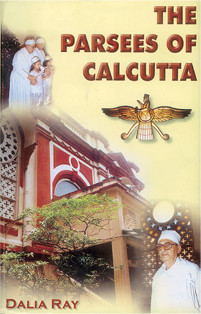
The jacket flap itself warns us of what to expect. It says, "The Parsees of Calcutta is an account of the Parsees in Calcutta who have become part of the history of India.” After 19 lines of verbosely saying nothing, it ends with, "The Parsee heritage of Calcutta is enduring and let us preserve it for the posterity.”
The text is of a piece with this repetitive, cliché-ridden and shoddily edited blurb. If "the scope of the study is limited to a great extent,” the fault, dear Dalia, lies not in the "paucity of sufficient archival records,” but in a shortfall of sufficient effort. I am sure the late C. R. Irani, the exacting MD of the punctilious Statesman, would have bristled at your claim of his "going through the manuscript and reviewing the same.” You may have referred to him as the "doyen of the community (who) cannot be adequately thanked,” but you could have also extended him the courtesy of not spelling his name as "Cushrew” instead of Cushrow.
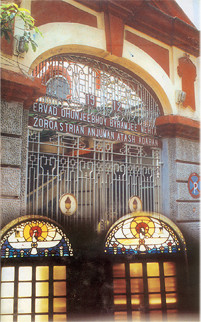
Front (top) and back cover of book
This might be dismissed as nitpicking, but the book falls harder on the big picture. The profuse annotations may convey a sense of scholarship, but there is little that hasn’t been read before. Ray’s long bibliography lists not just the usual books, but curiously all the ‘personal interviews’ she conducted. The turgid prose contains few new facts, and several incorrect or incomplete ones. Out of vain curiosity, I promptly looked up my own family references. The dates of my grandfather’s printing press and newspaper were mixed up; she mentions the silver jubilee of the Navroz in 1943, but not the subsequent ones, suggesting that it didn’t last beyond 25 years, when in fact this weekly served all the Gujarati-speaking communities of eastern India for over seven decades.
My eye drifted to the opposite page featuring another pioneer, R. K. Modi; she gives the source of his fortune as a Kashmiri ‘root called kooth,’ but does not add the engaging trivia of what this humble creator of fabulous wealth was all about (it is an important component of Buddhist ritual, and so had a large Asian market). Indeed, this absence of any sense of occasion is my major complaint. There isn’t the slightest whiff of the mystique of men of modest means shifting base to the other side of the subcontinent and establishing fabled mercantile empires. Ray has borrowed heavily from my mother’s research on the community’s first family, the Banajis, but her version is all dry CV and no legend. The drama hasn’t been missing in recent times either, but the charming institutions or delightful individuals find no place on the bare boards of Ray’s humdrum stage.
All through, the mundane triumphs throughout over the mythic. The author painstakingly lists the pilots, doctors and schoolteachers and — sorry to keep returning to this — getting even the names of well-known schools wrong (‘Well and Goldsmith’, instead of Welland Gouldsmith). The amazing achievements of the visually impaired Cawas Tamboli come at the tail-end of inconsequential primary teachers. The proportion is skewed throughout, PR spiels collected and regurgitated without discernment.
Ray: "pressing needs”
Arguably, a book specifically on Calcutta Parsis could be padded up with chapters on general rites and rituals. But it’s inappropriate here because the ceremonies trotted out are so arcane that certainly no Calcutta Parsi would have even a passing acquaintance with them. Consider this statement: "The Parsees also attach much importance to the wearing of a skullcap under the turban and leather under their feet… The first purification every morning should be the application of a little of cow’s urine on the face.” Really?
This tiny outpost is proud of its many achievers, and will be offended by the cavalier indifference. This is most visible in the pathetic presentation of photographs (an inordinate number of them featuring the author). The much-respected Dr Russi Anklesaria’s name appears under three photographs, one solo, one taken on the same sofa on the same arm-in-a-sling occasion but with the ubiquitous Ray, and one under a picture of his son, Darius!
The photographs, many of them simply album snapshots, are so badly printed that everyone looks weird. Views of the Tower of Silence get a whole page though it is difficult to see the rationale for two of the six visuals being that of an unspecified grave with no explanation of why this form of disposal is included on a traditional site; the second picture was that of its epitaph, but so mottled that you could only make out the surname. The hapless remainder of ‘Other Distinguished Parsees’ have been shoved to the bottom of the last page of illustrations, below two atrocious pictures of the ravangah, one of them again featuring The Dalia.
The prosecution rests.
◆ ◆ ◆
From the archive