
Professions
Stories the stones tell
Architect Cyrus Rivetna is researching the architecture of fire-temples
"When you go to the Dadyseth Atash Behram at Fanaswadi you appreciate all the aspects of nature — the bull, the plants, the breeze — not only the fire. The new agiaries only focus on the fire,” observes Cyrus Rivetna.
The University of Illinois trained architect spent four months in India recently, studying the agiairies and atash behrams of Gujarat and Bombay, "trying to understand what goes into fire-temples, studying the culture of religion through architecture.” With North American Zoroastrians keen to create religious infrastructure, Rivetna believes it is important to understand what has been built in the past. While there is enough opportunity to examine historical buildings in Chicago, information on Zoroastrian fire-temples is hard to find. An earlier trip to Iran had enabled him to see the trend in religious architecture there.
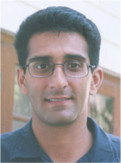
Rivetna:"Parsis are more humble” Photo: Arnavaz Mama
Commenting on the fact that the architecture of these religious buildings is always very simple, Rivetna believes there must be some reasons why we haven’t gone into fancy fare. "Parsis are more humble (than other communities). It shows in the architecture. In India we were a small community, couldn’t afford to build (on a grandiose scale). But even in Iran, they were small, simple structures... (When) you see monuments in stone you realize what the religion really is... great architectural statements are not a part of our religious tradition... They (the Achaemenians) produced Persepolis but the fire-temples were small, only fire altars!”
Though grandeur cannot be attributed to our agiaries, a lot of them emanate a unique atmosphere, notes Rivetna. "When you step into the compound you feel you are in a different place.” Surat’s Kadmi Atash Behram, the Navsari Atash Behram with its "beautiful building, one of the nicest,” the Jamshed Baug Agiary in Bharuch, now turned into a dharam-shala, are some of the other places that share the Dadyseth Atash Behram’s aura. Rivetna informs us that the old atash behram at Navsari, where the Iranshah had been enthroned for 317 years, no longer exists. A well has been dug over the old sanctum sanctorum. With the exception of Jamshed Baug (where he says the original pavis have been maintained) everywhere the same type of stone — basalt — seems to have been used. When such places need repair and renewal, he believes they should be restored, not renovated.
"This concept of the Parsis of India that only they can see the (sacred) fire is completely false,” says Rivetna, adding that the stones in Iran tell a different story. The Achaemenians had open fire altars; the Sasanian concept of the "cha-har-taq” comprised four arches and a dome which has been incorporated in our kebla. "Our way is not the way Em-peror Cyrus practiced Zoroastrianism.”
The youngest of Federation of Zoroastrian Associations of North America (FEZANA) founder president Rohinton and FEZANA Journal editor-in-chief Roshan Rivetna’s three children, Cyrus worked for nearly four years as an architect in Chicago before spending more than a year in Ahmedabad in 1998-2000 working with architect B. V. Doshi. One of the few internationally known architects from India, Doshi had worked with the famed architect and town planner Le Corbusier who designed the city of Chandigarh, Rivetna informs us. For the past three years Rivetna has worked as consultant to other architects, undertaken restoration work, and studied photography, producing essays in photo journalism.
Cyrus’ brother Jamshed, an engineer with a master’s degree in business administration is an IT (information technology) consultant. Sister Zenobia Damania is into publishing and graphics.
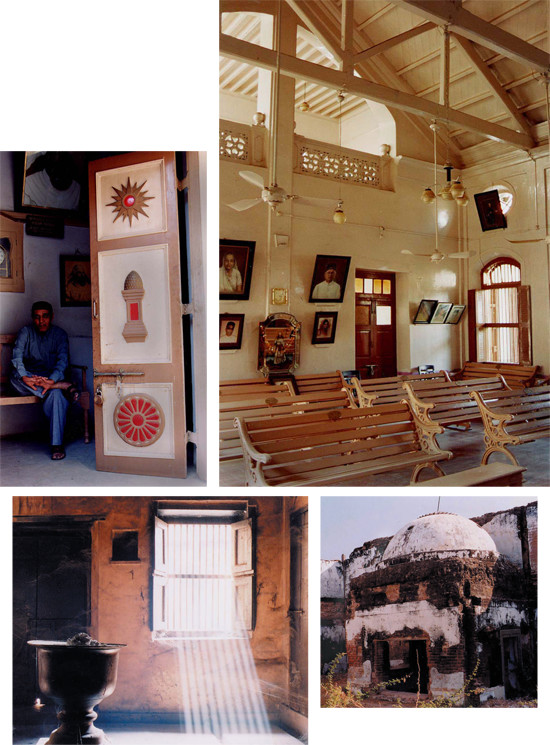
Top: Multi-purpose hall of the Hamawalla Daremeher, Bharuch Below: Detail of door of the Shri Pak Navsarina Adarian in Surat Bottom row (left): Unidentified prayer room and (right) ruins of the Pestonji Khurshedji Modi Khambatwalla Agiary in Khambhat;
Part of Rivetna’s sojourn in India was spent in South India. The trip has shored up his belief that an architect’s "actual client is the site, because the site will never change” though the building must be adaptable to change with the times. As an example he cites the French and Tamil quarters of Pondicherry which he says retain their original flavor. He is impressed by the "beautiful wooden temples” of Kerala where he says, mosque, church or temple, the edifices have been built by the same craftsmen.
Having used his time in India to also attend the Third World Zoroastrian Youth Congress in Poona, Rivetna was all praise for the organizers who had set a varied social agenda for the young Zarathushtis to meet and mingle. On that level Rivetna considered the Congress very successful. He also admitted having learnt a lot — more about "the traditions of the religion than the religion itself” — and was full of praise for Firoza Punthakey-Mistree’s presentation on Parsi and Irani cultures. He says he was inspired by the way she presented the cultural heritage. On the other hand, there was "not a single youth among the speakers, not even in the session for empowering the youth!” Besides, all the speakers projected a single point of view instead of the diversity of opinion that is a hallmark of the worldwide community. Rivetna was categorical that it was the "responsibility of speakers to state facts, not (project) their opinions as facts. Often the speaker’s interpretations were presented as facts!”
Rivetna says that he found that there were only two Parsi families left in Khambhat. The kebla, gumbaz and three walls are all that’s left of the agiary there. Everything else has crumbled.
"Everything that needs to survive needs to evolve, whether it is plants, animals, people.” The over emphasis on tradition, holding on to customs which are no longer meaningful "discourages youth from being a part of the community. And if you don’t encourage the youth, if they’re not interested there is no community in the future.” Rivetna feels that the present policies of the Parsis of India may lead them to the same fate as the Jews of Cochin — ultimate extinction.
◆ ◆ ◆
From the archive