
General Articles
Protest by candlelight
The shattering of stained glass at the Bhikha Behram Well leads to cosmopolitan protest
The desecration of the beloved Bhikha Behram Well stung the Parsis of Bombay to cross ideological divides and present a monolith of anguished protest. Variously estimated at over 2,000 (The Times of India), 2,500 (The Indian Express) and 3,000 (Mid Day) — Bombay Parsi Punchayet (BPP) and Well trustees among them — the normally garrulous community held their flickering candles in silent prayer in the breezy Azad Maidan as dusk fell over the city on April 13, 2004.
To date, the appeals of Zoroastrian akabars to all the powers that be — from the Prime Minister of India to Bombay’s commissioner of police — had yielded sympathy but no answer to the question why the stained glass in the Well’s canopy had been shattered to smithereens on the night of March 11, 2004 and by whom.
That this act of vandalism followed hard upon the wanton destruction of priceless Sanskrit manuscripts of the famed Bhandarkar Oriental Research Institute (BORI) in Poona undermined the Maha-rashtra state’s once celebrated reputation for urbanity and brought lovers of heritage and votaries of good governance from all communities to participate in the protest.
"Why was a sacred monument of the peace-loving Parsi community targeted; and what security and protection can other communities expect in similar circumstances? Is there need for better governance and vigilance by the law and order authorities to prevent such incidents in future?” asked the press release of the Public Concern for Governance Trust (PCGT) which had organized the candle light vigil. Acknowledging the substantial turnout as a "good sign that people are prepared to come forth and say they will not tolerate injustice and wrongs being perpetrated,” former Bombay police commissioner and executive chairman of the PCGT Julio Ribeiro urged the audience to fight the two great evils of communalism and corruption. "Protest and go beyond protest to demand your rights,” he exhorted the audience adding that the Well was vandalized "because there is no respect for law, because laws are not enforced. Therefore people take advantage. They wouldn’t have vandalized if they knew they would be ... punished.”
The PCGT, which seeks to promote "honesty, transparency and accountability in governance,” distributed membership forms among the audience, seeking endorsement of, and greater public participation in, its aims.
In a brief address in Marathi PCGT chairman B. G. Deshmukh said the meet was organized for people to join in mutual help and to tell everyone that breaking such institutions would lead nowhere.
PCGT trustee and master of ceremony Dara Gandhy traced the history of the 279-year-old well sunk by Bhikhaji Behramji Panday in 1725. The evening began with brief prayers from all communities starting with a Buddhist chant and ending with a Zoroastrian invocation. Environmental and heritage activist Pheroza Godrej who had conceived the idea of the candle lit vigil cautioned the gathering before the candle-to-candle relay began as the evening promised to be somewhat breezy.
Zoroastrian Studies founder Khojeste Mistree made brief references to the 3,000-year-old concern for ecology preached by the Zarathushtrian religion as also the commitment to charity: the trust managing the Well has gone to great lengths to share its water with all citizens of the city, he noted.
"Mumbai is a melting pot of various communities of diverse cultures and traditions. This spirit must be nurtured and protected from any element that stirs discord,” noted PCGT managing trustee Dr R. K. Anand in a subsequent press release.
The vandalization of the Well had been reported by most of the English language dailies in Bombay. Pervez Dumasia and Nader Tangri who sell divas at the Well told Parsiana on March 17, 2004 that they are normally there between 7.30 a.m. to 7.30 p.m. after which they close the gate and go home. There is no other security. On the morning of March 12, 2004 "the man hired to sweep the premises came at 6.15 a.m., saw the broken glass and phoned me,” said Dumasia who added that he reached the Well and immediately phoned homeopath and trustee Dr Viraf Kapadia who, along with solicitor and co-trustee Burjor Antia came, inspected the damage and reported the matter to the police. According to the Mid Day (March 15) the Azad Maidan police have registered a case under Sections 297 (injuring a place of worship) and 425 (mischief).
Surprisingly, the hawkers who surrounded the Well (they have since been cleared by the police) disclaim any knowledge of the miscreants. Some of these hawkers were known to sleep in the area. As Mistree noted, they must have heard the splintering of the glass.
Dumasia and Tangri deny having had an altercation with anyone. They told Parsiana that they regularly refill the overhead tank that supplies the hawkers with water which they use liberally for drinking, washing, etc.
BPP chairman Minoo Shroff and/or his co-trustees and BPP officials made a personal representation to Bombay’s commissioner of police A. N. Roy and Maharashtra chief minister Sushilkumar Shinde who had summoned Roy and cabinet secretary Ajit Nimbalkar and charged them to give the matter its due, as per a report by BPP PRO Godrej Dotivala.
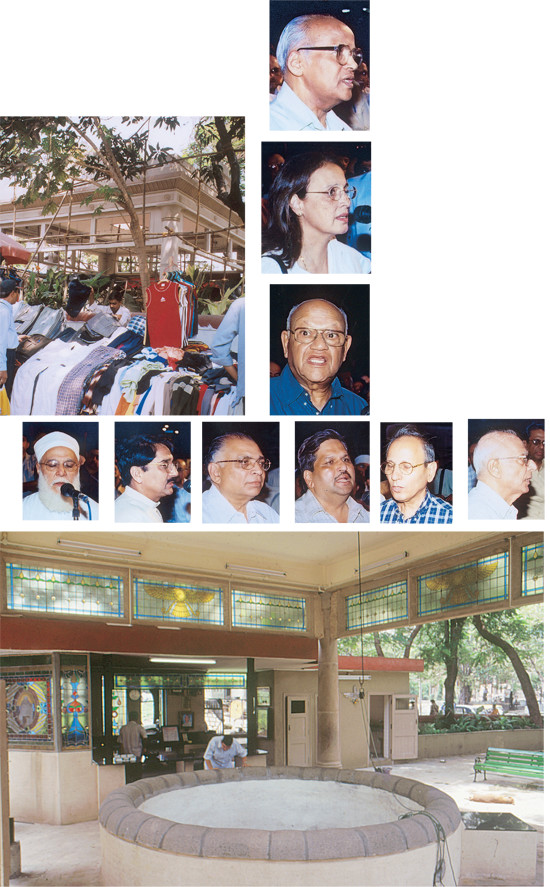
Right (from top): Deshmukh, Godrej and Ribeiro. (Below) Vandalized canopy and engulfing hawker stalls; Ervad Aspandiar Dadachanji and other speakers; shattered glass swept into a corner ; Bottom : The Well in happier times;
"On the night of Thursday the 11th of March, a group of miscreants entered the precinct and totally destroyed 12 beautiful stained glass panels which decorated the high canopy over the Well. The panels had religious icons, important to the Parsi Zoroastrian community. Parsi pilgrims from all over the world come to Bombay to visit the Well. May we add that in our old and checkered history in India, never before has a public Parsi precinct been desecrated and vandalized as has now happened. Moreover, the water from the Well has always been used by non-Zoroastrians as well, for it is deemed to have healing properties and hence we are aghast at the viciousness of the attack.
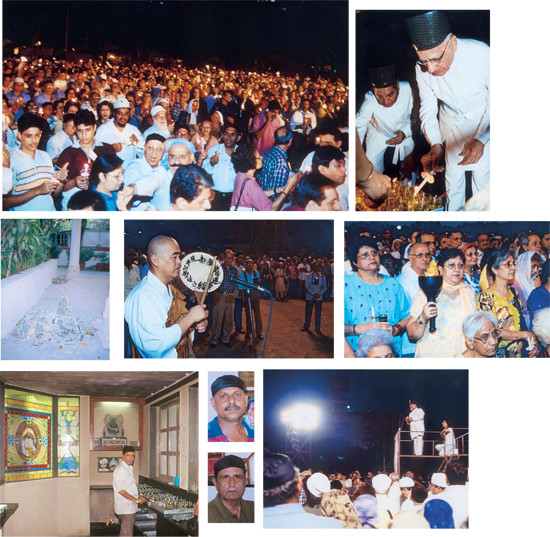
Silence at the vigil (top left and alongside); Antia and Shroff lighting candles; 2nd row: Shattered glass swept into a corner; Mistree addressing gathering; Bottom: The Well in happier times; Dumasia (top) and Tangri
"We would urge you to direct the security agencies, including the CID force of (Bombay), to take an active interest and immediate action in order to apprehend the perpetrators of this senseless crime,” notes the letter signed by Shroff which was hand delivered to Prime Minister Atal Behari Vajpayee by a team of Parsis including Udwada High Priest Dastur Khurshed Dastoor, who visited him on March 21, 2004.
"These murals in stained glass depicting Zoroastrian icons were pieces of art, not just for one community but for all in the city of (Bombay). The Well was a place of pilgrimage for many, and its water, deemed to have medicinal benefits was used by ... all communities.
"We from the National Commission for Minorities have already appealed to the Government of Maharashtra at the chief minister and chief secretary levels to handle the matter from the law and order point of view and bring the culprits to book.
"I write appealing to you, the governor and head of state of Maharashtra, to apply your healing touch. You may care to have this matter taken up with a number of like-minded people from all communities to reassure and restore the confidence of the micro-minority, the Parsis, which has been badly shaken by this incident,” wrote Lt Gen (Retd) Adi Sethna in his capacity as Parsi member of the National Commission for Minorities in a letter to Governor Mohammed Fazal.
Godrej had initially sent letters of protest — to the President and Prime Minister of India with 700 co-signatories with copies to Rajya Sabha member Fali Nariman, Fazal and non governmental organizations like Action for Good Governance and Networking in India (AGNI), the Bombay Environmental Action Group (BEAG) and others.
With the onset of the month of Ava Ardavisura on March 18, the Bhikha Behram Well Trust went ahead with the whitewashing and minor repairs on the property to ready it for the Ardavisura Parab on March 27. They were slapped with a notice from the Heritage Committee challenging their right to repair, restore or paint a Grade I heritage structure without a no-objection certificate from the Committee. Its chairman D. M. Sukthankar was quoted by Mid Day (March 30) as stating, "We have told the trust to stop all work. However, we discovered that they have already finished painting the Well. Now they will have to send us a proposal for any further renovation work, only then can they proceed.”
Though the Bhikha Behram trustees eventually ironed out the misunderstanding with the Heritage Committee, this seeming contradiction of interests and purposes is grist for political parties in an election year. BJP MLAs Raj Purohit and Mangal Prabhat Lodha staged a dharna outside the Well. The Times (March 17, 2004) quoted Purohit: "The government has failed to protect an ancient monument. Moreover, Parsis are feeling insecure because of the incident.”
Initially, Flora Fountain had been the preferred venue for the vigil. It was changed to honor a High Court ban on large gatherings or morchas beyond Azad Maidan. At the vigil the organizers advised the Zarathushtis who might wish to visit the Well that night to do so individually and not in large groups.
Referring to the Kuva as well as the BORI where 13th, 14th and 15th century Sanskrit manuscripts were destro-yed by vandals, Godrej asked Parsiana in the course of a telephone conversation, "Are we just going to stand by, watch history taking place? The world looked on as six million Jews went to the gas chamber... People feel paralyzed as common citizens.” To those who voiced their concern Godrej said, "Sign a letter, participate in a peaceful demonstration...”
◆ ◆ ◆
From the archive