
Comment
`No prohibition' to conversion'
The committee formed in 1903 to study conversion observed Zoroaster’s religion was for all the people of the world
This has reference to Jamsheed G. Kanga’s article ("Priestly contradictions,” Parsiana, April 2003) in which he refers to the committee appointed by the Anjuman to ascertain the correct position in our scriptures on whether conversion is permitted in the Zoroastrian religion.
Recently, I was privileged to read a Gujarati book, written for the information of the Parsi Zarthoshti Anjuman by Ervad Nadirshah Hormuzdji Sukhia and printed in 1905. Following the controversy on the "Parsi-French marriage,” the trustees of the Parsi Punchayet had convened a meeting of the Anjuman at the Albless Baug on August 2, 1903. Over 1,000 Zarathushtis were present at the meeting. On July 13, 1903, several well-known gentlemen had sent a requisition to the trustees which was read out at the above meeting of the Anjuman. The meeting appointed a committee, consisting of some 145 members, to consider the matter. At the meeting on August 2, 1903, a smaller committee of some 38 scholars and experts was appointed to investigate on the points raised in the requisition and to report. This committee appointed yet another smaller subcommittee, consisting of some 11 eminent religious leaders and scholars to investigate the matter from the standpoint of religion and our scriptures and report, giving adequate proofs and evidence. K. R. Cama was a member of this subcommittee. This subcommittee reported on February 9, 1904. The eminent scholar in Avesta and Sanskrit, S. K. Hodiwala and others had indicated that the views expressed in this report were incorrect. On March 10, 1904, the subcommittee met and by 10 votes in favor and two against (the two included Dr Sukhia and Dr Daji), adopted the following resolutions:
"To take note of the report of the subcommittee appointed by the public meeting of the Anjuman held on August 2, 1903 to investigate, from the standpoint of religion, and report with proofs, and further resolved that consideration of that part at pages 8 to 13 be withheld. This meeting, after deleting consideration of what is stated on pages 8 to 13 of the report, agrees with the proofs advanced. After taking into consideration all the proofs produced, this meeting agrees that there is no prohibition in any of our Zarathushtrian scriptures to admit any juddins to the Zoroastrian religion and faith. On the contrary, it seems that it is enjoined to admit juddins to the Zoroastrian religion.”
The above meeting had also further resolved to obtain, from some seven Dasturs mentioned therein, their opinions in writing, indicating by arguments and examples, whether it was proper to admit to the Zarathushtrian religion those following other religions. The secretary was authorized to write on similar lines to other Dasturs.
The subcommittee, at their meeting held on March 15, 1904, noted the opinions of the learned Dasturs and thanked them. Thereafter, the subcommittee, in eight meetings, considered from the standpoint of religion, the questions entrusted to them. On the question whether, in consideration of the then prevailing family conditions, it was proper to admit persons belonging to other religions in the Zoroastrian religion, the subcommittee did not come to any firm decision. With a view to arriving at some decision, the following motion was considered:
"On examining the question of admitting juddins to the Zoroastrian religion from the social and family standpoint, this meeting is of the opinion that if, after due investigation and care, and after following all reasonable restrictions and performing appropriate ceremonies, juddins desirous of following the Zoroastrian faith, with holy good aspirations, may be admitted to the faith, there being nothing objectionable.” At the meeting of the subcommittee held on April 20, 1904, eight votes were cast in favor and nine against. On a poll being demanded, an equal number of nine votes in favor and nine against were cast. The subcommittee could not come to any firm decision. Hence the chairman Hormusji Dadabhoy and the secretary Jivanji Jamshedji Modi, on April 25, 1904, reported that the subcommittee is, by and large, of the opinion that "from the point of view of religion, it is proper to admit followers of other religions to our religion. Even so, considering our present social and family conditions, the subcommittee is of the view that it cannot come to a firm opinion as to whether this is proper or not.”
It is important to appreciate that the resolutions were passed by the Anjuman Committee (AC) or its subcommittees and not by the Parsi Punchayet. I have gone through the catalog of the K. R. Cama Oriental Institute and can, with confidence, say that the report of the AC or its subcommittee does not appear to have been printed. On completion of the task entrusted to it, the AC must have handed over all records to the Parsi Punchayet. Kanga may like to probe the records in the archives of the Parsi Punchayet.
Admit juddins
In an excellent Gujarati booklet, printed in 1882, i.e. some 21 years before the Anjuman meeting convened on August 2, 1903, the illustrious Avestan researcher and scholar Ervad Tehmuras Dinshawji Anklesaria had quoted several examples from our holy scriptures to convincingly indicate that it is permissible to admit juddins in the Zoroastrian religion. In his preface, the learned scholar emphasized that Ahura Mazda has revealed the Zarathushti deen (faith) for the benefit of all humanity. In his superb introduction, the author stated that:
•Zarathusht was sent as a prophet for the benefit of all the seven continents of the earth (haft Keshwar-e-Zamin)
•in the Avesta, at several places, Zarathushtra has been referred to as the leader of all people — and of both the worlds
•anyone, anywhere in the world, has the full right of following the teachings of Zarathushtra if he wants to do so
•Yazeshne — Has 1, 2 and 65 — clarifies that whatever Ahura Mazda has taught to Zarathushtra is for the benefit of the entire humanity and not for the benefit of any one country or group of people
•before the advent of Zarathushtra, the Devyasani religion — idol worshipping — was rampant and Zarathushtra convinced them and converted them to believe in one Supreme Creator
•Yazeshne — Ha 45 — indicates that when Zarathushtra gave his first main discourse, many people from all over Iran and several other countries came to listen to him
•from the Gathas we learn that Zarathushtra, on securing the acceptance of his religion by emperor Gushtaspa, Farshoshter, Jamasp and their families, made them spread the new religion all around
•as stated in the 19th pargarad of the Vendidad, the idol worshippers viz Devyasani followers, had tempted the holy Zarathushtra, offering him a big kingdom but the holy prophet succeeded in convincing them in following the new religion
•in several Yashts, it is indicated that Gushtaspa, his wife Hutoshi and other followers had greatly assisted in converting the Darvands and the Devyasanis from other countries, sometimes fighting battles. The Shah Nameh and other historical works also support this view.
•in para 87 of the Farvardin Yasht, the Fravashi of Zarathushtra has been invoked and he has been referred to as the first to think good, to speak good and to do good; the first athornan, the first to fully realize the excellence of Ahura Mazda, the first to explain God’s and Nature’s excellence, the first to convince the evil minded and the idol worshippers, the first to show them the true path and the first to detest idol worshippers
•from the astodan (i.e. grave or collection of bones) of Dariyush, it is clear that he conquered several countries and spread the good Zarthoshti religion there
•the Dinkard also makes it clear that the Sasanian kings had deputed knowledgable athornans to all parts of the world to spread the Zoroastrian religion
•former dasturs had also admitted children born of juddin mothers to our religion.
Anklesaria then proceeded to quote from our scriptures. He gave some 37 examples, giving extracts from the Avesta in Avestan, followed by correct Avestan pronunciations and the translation in Gujarati. Before these, he gives an introductory paragraph. He has quoted from Yashts, Yajeshneh, Vendidad, Dinkard, from the Revayats and from some books and magazines. I would quote some of the examples:
•in pargarad 19 of the Vendidad, Zarathushtra questions Ahura Mazda, "May I admit to my religion those among the Darvands and Devyasanis who ruin the lives of people?” Ahura Mazda replies, "Oh holy Zarathushtra, you admit them to your religion.”
•the Farvardin Yasht, paragraphs 93 and 94, in the end, mention that the good Mazdayasni deen would hereafter spread to all the seven continents (of the world)
•from the inscriptions on the astodan of Darayush Vishtasp, it is clear that all the people of all countries conquered by him, have been admitted to the good religion
•Dinkard — dafter five — enjoins that juddins and idol worshippers may be taught the tenets of our religion and their faith diverted to the good religion
My recommendation is that this excellent booklet be translated into English by any Avestan scholar for the benefit of the community and the oriental scholars.
When, during the reign of Yazdegard, the Arabs conquered Iran, the Zoroastrian population was estimated at approximately four crores. Would this have been possible if no conversion was permitted? Today, including Iran’s Zoroastrian population of some 30,000, the global Zoroastrian population is about 2,00,000.
In yet another interesting book in Gujarati entitled Proofs for admitting to the Zoroastrian Religion those following other religions, with arguments and collection of other writings by one Mazdayasnan, printed in 1909, reference is made to the Anjuman Sabha held on August 2, 1903 and the reports of its subcommittees. The first part of the subcommittee’s report deals with the question whether it is proper or not, in the light of the prevailing social and family conditions, to admit juddins to our religion.
Kanga is keen to know the views of Cama who was a member of the subcommittee and not its chairman. The portions of the subcommittee’s report, which were deleted by a majority vote, are given at pages 9 to 16 of the book. The two main questions on which the subcommittee had reported, and which were withheld by the majority vote are:
•whether for the propagation of the Zoroastrian religion, a limit on time or place had been fixed and
•detailed investigation giving relevant arguments and proofs be given. The subcommittee quotes Prof Jackson from A Hymn of Zoroaster — Yasna 31 stating "Zoroaster’s religion was active and vigorous, seeking and gaining converts, as we see from many passages in the Gathas”... "By this, we win an admirable sense for the whole passage, which is thus in keeping with the proselyting spirit of Zoroaster’s religion (ibid, pg 53). He quotes from the Vendidad of Ervad K. A. Kanga, third edition, pg 312, "Zarathushtra asked Hormazd, ‘Oh, all knowing Hormazd, I lead holy men on the right path, I lead holy women on the right path? I lead, from amongst the Darvands, those who worship idols and lead evil and sinful lives on the right path?’ Thus Hormazd answered, ‘Oh holy Zarthusht, you must lead them on the right path.’”
Jackson in his book Promulgation of the Gospel — Early Religious Propaganda, quotes from Yajeshneh, Ha 31, Zarathusht as saying, "May I make all men, true adherants of the faith.” Again, in his book Zoroaster, the Prophet of Ancient Iran, pg 92, Jackson states, "The story of the spread of the faith, so far as we can gather it from tradition, implies that missionary efforts carried the Avesta to foreign lands as well as throughout the territory of Iran. Tales are told of Hindu conversions, and even Greeks are fabled to have accepted the creed, Zoroaster himself may possibly have engaged personally in the general movement of the propaganda.”
The subcommittee gives various quotations from our sacred books, etc to substantiate that no limit on time or space had been fixed for the propagation of the Zoroastrian religion. The subcommittee had also obtained the opinions of several dasturs which were all favorable.
Evidence galore
There is adequate evidence in the Avesta, in our religious scriptures and other books, in the writings of oriental scholars of repute and the opinions expressed by our revered Dasturs of the last two centuries or so to convincingly prove that our religion is authorized to propagate and convert followers of other religions to Zoroastrianism. The matter has been studied in depth by outstanding oriental scholars.
If Zarathushtra and his followers, if the Zoroastrian Shehanshas, their reputed and wise ministers and administrators, if the maghavas, mobeds and athornans of ancient Iran can go to the conquered lands outside Iran and convert the Devyasanis, the Darvands and followers of other primitive faiths, what is wrong in admitting to the faith a child of seven or nine, whose father belongs to another faith? Parsis often talk of our pure Kayanian blue blood. Forget it! In most families today — including families of athornans, some girls are married outside the community.
Jamsheed Kanga seemed to be keen on knowing the views of K. R. Cama on the subject of conversion. In his Gujarati letter of February 20, 1903 addressed to Seth Rustomji Dosabhai Sethna, the then trustee and vice chairman of the Anju-manna Atash Behram, he writes, "In reply to your letter of 16th instant and the question asked therein, I take leave to briefly state that if any juddin, by his understanding, or by being convinced by a Zarathushti, gets to know the deficiencies of his own religion and simultaneously realizes the purity, truth and righteousness of the Zoroastrian religion and, by his own free will, admits this in the public and openly wants to become a Zarathushtrian and just for this gets his navjote done, and by his desire to be identified as one belonging to the Zoroastrian faith and, as a symbol thereof, longs to wear sudreh and kusti, there is no prohibition in admitting such a person to the Zoroastrian faith. Not only that but it is the duty of every true Zoroastrian to accept such persons in the Zoroastrian faith and thus to spread the Zoroastrian religion. Such newly accepted Zarathushtis are eligible to enjoy all the rights and privileges as the original Zarathushtis.
"Those who, on their own, appeal to be allowed to be Zarathushtis, if in letting them be one, we cause delay or obstructions, then it amounts to knowingly committing the sin or mistake of obstructing a person going astray on endeavoring to come to the right path.”
May our religion spread! May our tribe increase! Amen
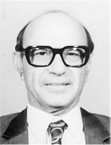
Capt Hormazdiar Desai retired from the Indian Administrative Service as joint secretary, finance, Maharashtra state. Thereafter he served many charitable causes, working as honorary secretary of the National Association for the Blind and as founder member of the National Society for Equal Opportunities for the Handicapped. He was joint honorary secretary and trustee of the K. R. Cama Oriental Institute and has been associated with religious institutions like the Anjuman Atash Behram and Sorabji Ranji Agiary as governing council member/trustee.
◆ ◆ ◆
From the archive