
Zoroastrians Abroad
Parsi footprints in Mombasa
Those who crossed the Indian Ocean seeking avenues of employment prospered and left their imprint in East-Africa
"Life in Mombasa is comfortable. When people talk about murder and theft, I don’t see the difference between Kenya and India or Canada. One sees eight - l0 reports of murders every day in Mississauga (a satellite town of Toronto). And theft is common everywhere.”
Dara Edalji Patel, treasurer of the Mombasa Parsi Anjuman and one of its board of three trustees, says he was amongst the first batch of non-Africans who applied for citizenship of independent Kenya. "Once we took up citizenship we had no problems. Asians with citizenship are protected by the constitution,” he affirms, though being richer, they make for easier targets for criminals.
Manufacturing, banking and business are sectors where Asians lead the way. "The government knows that if they all leave the country, the economy of Kenya would collapse,” says Patel adding that Asians look after their African employees fairly well — better than African bosses who tend to exploit them. Yet, he admits, the government agencies would intervene only when the employer is a non-African.
A once substantial Parsi settlement numbering nearly 250 during World War II, the Zoroastrian community has dwindled to 30 members at present with the youngest aged 25 and the majority over 55. Many Parsis migrated to the UK and the US after Kenya became independent. Many returned to their roots in India after the end of their working lives as had been happening routinely since the initial advent of the Parsis to Mombasa in the l870s. With a lot of property, the Anjuman pays heavy municipal rates, notes Patel. Most of the community is accommodated in anjuman flats in three buildings. In addition they have a prayer hall and a rest house, a community building and a school. With 110 graves, only l0 percent of the cemetery is occupied. Largely a group of retired people, there are no mobeds left among them. Patel recalls an anecdote before l960 when a mobed, Ervad Charna, lived alone in the Parsi Shamba (garden in Swahili). Some natives saw him doing his kusti on the verandah and, concluding that he was a witch doctor, were going to attack him when he was saved by other Indians who came to his aid.
Originally, funerals were conducted as required, says Patel. Even after the priests left there were Zarathushtis who knew how to conduct a funeral. Now the volunteer pallbearers — Jal Avari, Rustom Bajina and Patel — prepare the body for the grave. They wear white gloves and cap, wash the body and sprinkle taro (bull’s name) and lay the dead to rest reciting five Yathas and three Ashems. Non-Zoroastrians are allowed to attend the ceremony if the family wishes though in Nairobi there have been cases when people have said "maaru mohunu nahi dékharwanu (let not my face be seen after the ceremonial bath).”
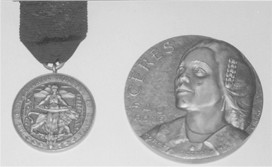
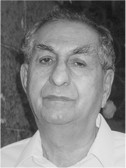
Patel (above) and medals (alongside) earned for cultivating grapes
When Prof John Hinnells visited Mombasa in l978 in the course of his worldwide research on Parsis, Patel began to document the history of the settlement. The project lapsed after a while to be taken up again in June 2002, he notes. Scanning old government records, translating the earlier minutes dating back to 1910 written in Gujarati and drawing upon his own rich experience, having served the community since 1943 when he reached the age of 18, Patel’s "History of Parsi Settlement in Mombasa” portrays a community that stoutly crossed oceans in search of employment — merchants, civil and general engineers, accountants and auditors, advocates, teachers, doctors, law clerks and general clerks, revenue and immigration officers and contractors. Many retired after a lifetime in the employ of the same company. Some changed tracks to become entrepreneurs — auctioneers and estate agents, automobile service providers, organizers and inspectors of wild life safaris, building renovators and repairers, et al.
They formed "a well-knit community in social, domestic and religious matters. New arrivals were welcomed and accommodated in their homes until they found employment and living quarters.” Jashans, gahambars, navjotes, weddings, funerals brought the community together in mutual support. By l936 there existed a Parsi Dramatic Group organized by Dhanjisha Parekh whose Gujarati productions became very popular among Indians in Mombasa. The Parsis, led by Parekh and Burjorji Commerciate, were said to have introduced cricket to Mombasa.
Patel, born and educated in Mombasa, had started his working career in the Standard Bank of South Africa Limited, then joined the customs and excise department for three years and went on to establish a business in radio and refrigeration. He also essayed the fields of dairy farming and horticulture and in l970 was awarded the Food and Agricultural Organization’s medal and won the recognition of the Agricultural Society of Kenya for successfully cultivating grapes for the table. "Europeans believe that you can’t grow grapes on the east coast of Africa. But I have developed a system to grow them successfully and commercially,” he notes with pride.
Politically inclined since his early youth, Patel says he was a staunch follower of Kenya’s founding father, Jomo Kenyatta. In l96l he joined active politics and was elected to the post of treasurer of the Kenya African National Union’s (KANU) Mombasa branch. He also functioned as its publicity secretary during the general election prior to Kenya’s independence.
At that time the Swahili People’s Party was demanding the secession from Kenya of the coastal strip stretching between the small ports of Lamu in the north and Vanga in the south. This land, a part of the British Protectorate a few miles wide, was then under the domain of Zanzibar. On two occasisons Patel organized and took joint delegations from KANU and the opposition Kenya African Democratic Union (KADU) to Zanzibar. There they met representatives of the Nationalist Party and the Afro Sirazi Party, as well as the Sultan of Zanzibar, the nominal ruler of the coastal strip, and informed them that the inhabitants of that land had no wish to secede from Kenya. They received the assurance of the political parties as well as the Sultan that their representation would be taken into consideration during the independence conference with the British Government. Also, when a Royal Commission came from Britain to ascertain the wishes of the indigenous people, Patel appeared before it along with a delegation from KANU and submitted a written memorandum. The efforts bore fruit: the Sultan of Zanzibar renounced his claim in deference to the majority wish of the local population and the coastal strip became part and parcel of Kenya when it attained independence, records Patel. On independence day (December l2, 1963) Patel and his wife Tehmina (née Digharia, also of Mombasa) were honored guests as Jomo Kenyatta unfurled the national flag at Nairobi Stadium and at the subsequent civic ball at the invitation of the mayor of Nairobi where the governor of Kenya and Kenyatta were also present. Patel chose to retire from active politics when KADU, the party in opposition was dissolved and merged with KANU, he writes.
Dara and Tehmina Patel’s son Kersi now works for the Ford Motor Company in Toronto, daughter Mahrukh Rohin Hilloowala is vice president and director of Toronto Dominion Bank. The youngest, Roxy, is married to Rustom Jokhi of Hong Kong.
Patel’s father Edalji, originally from Dumas, had followed his elder brother Jamshedji to Mombasa. He worked as a law clerk in various firms of advocates and was the author of the Anjuman constitution that was registered in l945. Secretary, vice president and trustee of the Anjuman, Edalji helped the community in all legal matters, specifically the obtaining and renewal of passports. Dara is the only one of his four sons who has remained in Mombasa where Edalji and his wife Shirinbai are buried.
Dara Patel’s brothers Noshir and Ratanshaw both joined the judicial department. After retirement both left Mombasa. Noshir, his wife Maneck and their two daughters returned to Bombay while Ratanshaw and his family migrated to England.
◆ ◆ ◆
From the archive