
Tribute
The vivacious virologist
Celebrating the legacy of pioneering scientist Dr Khorshed Pavri
Dr Khorshed Minocher Pavri, former director of the National Institute of Virology (NIV), Poona, who passed away in Bombay on December 27, 2021 at the age of 94, was a pioneering virologist, brilliant author and researcher, loving daughter and sister, a dear aunt, and loyal friend to so many. Fearless, with a quick wit and a contagious chuckle, she was full of stories about her growing up years, her travels, and her large circle of family and friends. She was passionate about her research and writing and the study of viral diseases.
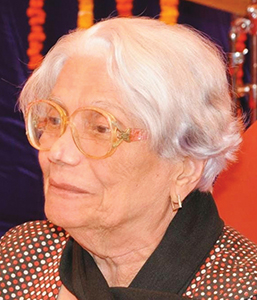 On this first anniversary of her passing, we reflect on her legacy. She established many firsts throughout her lifetime. One of the first girls in Navsari to attend an all-boys school, she was the first in her family to earn a PhD, a Fulbright award recipient who pursued postdoctoral study in the United States, and the first woman director of the Indian Council of Medical Research’s (ICMR) NIV.
Pavri was born in Bombay on July 20, 1927, the third of five children. In a tribute published in The Indian Journal of Medical Research, February 2022, Lalit Kant, former head, division of Epidemiology and Communicable Diseases, ICMR, New Delhi and D. A. Gadkari, ICMR-NIV wrote that Khorshed’s mother Tehmina came from a family of merchants who had business in India and China. Her father Minocher was a well-known lawyer and public prosecutor in Navsari where Khorshed spent much of her childhood.
Khorshed completed her schooling from Sir C. J. Navsari Zarthosti Madresa High School. She had so impressed her teachers by her brilliance that they gave her a double promotion. On the death of her father in 1943 she moved to Bombay. She studied microbiology at St Xavier’s College and later at the Haffkine Institute, earning her doctorate from Bombay University in 1951. She went to the USA on a Fulbright Smith-Mundt Scholarship as a post-doctoral fellow, funded by the Rockefeller Foundation. All her studies from school to post-doctoral training were through merit scholarships. "In the US, she switched to a new and emerging specialty of virology and carried out research-cum-training programs at the laboratories of the New York State Department of Health and later at the Rockefeller Foundation,” wrote Kant and Gadkari. With her insatiable thirst for knowledge, she impressed everybody wherever she worked. When the Rockefeller Foundation in collaboration with the ICMR established the Virus Research Centre (VRC) in Poona, on her return from the USA in the late 1950s Khorshed joined the institute as an assistant research officer. "She blossomed as a virologist and rapidly rose up the ranks. She was selected to head the VRC in 1978, the year it was renamed as the NIV,” wrote the duo. As director, she helmed the Institute from 1978 to 1988.
On this first anniversary of her passing, we reflect on her legacy. She established many firsts throughout her lifetime. One of the first girls in Navsari to attend an all-boys school, she was the first in her family to earn a PhD, a Fulbright award recipient who pursued postdoctoral study in the United States, and the first woman director of the Indian Council of Medical Research’s (ICMR) NIV.Pavri was born in Bombay on July 20, 1927, the third of five children. In a tribute published in The Indian Journal of Medical Research, February 2022, Lalit Kant, former head, division of Epidemiology and Communicable Diseases, ICMR, New Delhi and D. A. Gadkari, ICMR-NIV wrote that Khorshed’s mother Tehmina came from a family of merchants who had business in India and China. Her father Minocher was a well-known lawyer and public prosecutor in Navsari where Khorshed spent much of her childhood.
Khorshed completed her schooling from Sir C. J. Navsari Zarthosti Madresa High School. She had so impressed her teachers by her brilliance that they gave her a double promotion. On the death of her father in 1943 she moved to Bombay. She studied microbiology at St Xavier’s College and later at the Haffkine Institute, earning her doctorate from Bombay University in 1951. She went to the USA on a Fulbright Smith-Mundt Scholarship as a post-doctoral fellow, funded by the Rockefeller Foundation. All her studies from school to post-doctoral training were through merit scholarships. "In the US, she switched to a new and emerging specialty of virology and carried out research-cum-training programs at the laboratories of the New York State Department of Health and later at the Rockefeller Foundation,” wrote Kant and Gadkari. With her insatiable thirst for knowledge, she impressed everybody wherever she worked. When the Rockefeller Foundation in collaboration with the ICMR established the Virus Research Centre (VRC) in Poona, on her return from the USA in the late 1950s Khorshed joined the institute as an assistant research officer. "She blossomed as a virologist and rapidly rose up the ranks. She was selected to head the VRC in 1978, the year it was renamed as the NIV,” wrote the duo. As director, she helmed the Institute from 1978 to 1988.
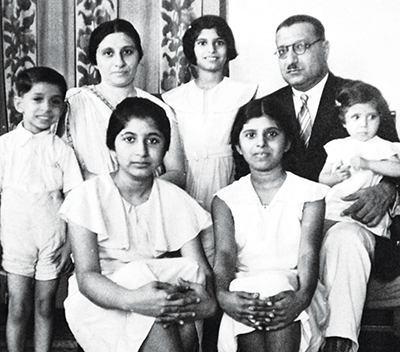
Top and above, standing 3rd from left: Dr Khorshed Pavri,
flanked by mother Tehmina, father Minocher, and her siblings
While a graduate student she published papers on the microorganisms in the leaves of various forest plants. She went on to make critical contributions to the study of hepatitis, encephalitis, dengue fever, West Nile virus, chikungunya, and a variety of other viruses and their impacts in India and across the globe. She had over 70 professional publications that addressed the etiology, impact and remedies for these viral diseases. Perhaps her most meaningful work related to her study of HIV AIDS which she began researching in 1986. A member of the World Health Organization expert panel on viral disease, she also served on the World AIDS Foundation. As project director of the ICMR’s Center for AIDS Research and Control (CARC), she also edited their quarterly journal CARC Calling.
Khorshed was passionate about educating others on virology to help curb the spread of disease. In addition to her professional publications she wrote several books. Her first children’s book, Vimla in Virusland (1976), was about a young girl, Vimla, who contracted a viral fever and proceeded to learn about the virus as she slept. The book was later updated in 2010. As Kant and Gadkari noted, "Writing a book for children is not child’s play. Only a person with clear concepts can write in language that is simple for children to understand and at the same time keeping their interest alive. Pavri had that winning combination. Short, amusing and informative verses she had written showed her skill as a poet as well. The book had several reprints and two editions.” Her second book, The Challenge of AIDS, on the elusive and deadly disease, was published in 2000 by the National Book Trust of India.
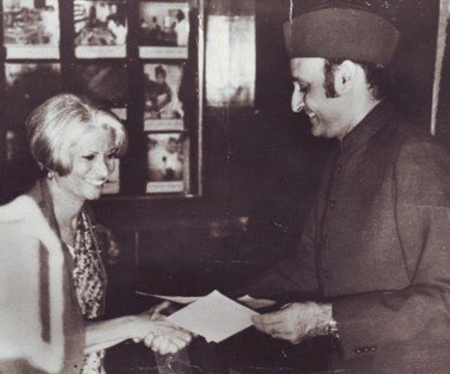
Pavri receiving award from Dr Karan Singh
Kant and Gadkari recalled: "Over the years at NIV, she emerged as a no-nonsense, matter-of-fact person. Her actions and decisions were unbiased, taken in the best interest of the work. She would examine all data shared with her critically, and almost always had ‘uncomfortable’ questions… She threw challenges, but at the same time gave a free hand and encouraged young scientists. She appreciated free expression, was open to fresh ideas and never distinguished between senior and junior scientists in scientific discussions. She loved scientific arguments. She had inherited the art of convincingly articulating her point of view from her father and most often ended up convincing the others to her point of view. Her quality of encouraging young scientists was unparalleled... (allowing them)… to follow their own ideas and ways to pursue research… She wanted them to become excellent scientists and not super-technicians. She made no compromises on quality of work and expected high standards of research… (She) could not tolerate carelessness and a casual approach… and did not hide her unhappiness when she noticed them…
"‘Pavri bai’ as she was affectionately addressed at NIV, wore western dress most of the time. One could hear her high heels click-clacking and the volley of instructions she gave while walking down NIV’s corridors. Coupled with her brilliance, talent and success, the overall impression she created was that of awe and respect…
"Hidden behind the smokescreen was a lady with a golden heart… She was witty, with a great sense of humor... warm and helpful. She had tremendous will power. She got rid of nicotine dependence in one go. After her retirement, some of the scientists and other members of NIV would meet to felicitate her on her birthday and reminisce about the old times. She loved the affection and the attention she got from her former colleagues… (This) continued for almost 30 to 35 years, till the Covid-19 pandemic cruelly brought an end to it. Dr Pavri was wedded to virology and found no time to tie the knot.”
Prof T. Jacob John, former head of the departments of Clinical Virology and Microbiology, Christian Medical College, Vellore, said, "Everyone knew Dr Khorshed Pavri as an eminent virologist, but we knew each other as friends also — she always addressed me by my family moniker. To describe her in one word: vivacious. As we were both retired, we lost touch with each other and the news of her demise was received with sadness. However, we must really celebrate her life as a great scientist and a wonderful person,” noted The Indian Journal of Medical Research.
A staunch Zoroastrian, Khorshed lived by the maxims of good thoughts, good words and good deeds. She cared deeply about her community and family, and enjoyed the company of the children in her family — her nieces and nephews and their children. Each summer the nieces and nephews would spend their school holidays with Khorshed Aunty at her house in the NIV premises in Poona. They looked forward to those few weeks — running around the large compound, riding bicycles, and visiting the animals on the campus was so much fun.
Khorshed has been an inspiration and a mentor for so many and particularly for women in her family, in her friends’ circle and in the scientific community. She was a role model — a strong, independent and successful woman — who showed by example how to dream big, break boundaries, establish firsts and give back to the community and the world through thought and action.
She leaves behind a rich legacy in her significant contributions to the understanding and curing the world of viral diseases, particularly AIDS.
She is survived by her sister Dr Roshan Homi Dastur.
With inputs from her niece Dr Shireen Pavri.
◆ ◆ ◆
From the archive