
Gamut of Gimi’s life
Rusi B. Gimi by Prochy Noomi Mehta, edited by Tehnaz Bahadurji. Published in 2021 by Selvel One, 10/1B, Diamond Harbour Road, Calcutta, 700027; email: care@selvelone.com; website: www.selvelone.com. Pp: 164. Price: Not mentioned.
A biography usually makes an interesting read as it is true to life and enlightens readers about the way of life during the relevant era. When it is written by a daughter it tells us about family life and gives a true insight into the character of the individual both in his home and with his friends and colleagues.
The introduction highlights the interaction of the Parsi community with the British due to their knowledge of the English language and its importance in improving one’s status in life. It stresses on hard work and determination, as portrayed in the case of Rusi 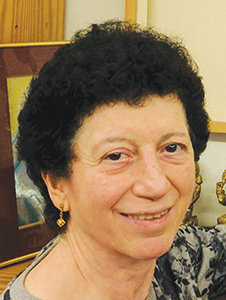 Gimi, author Prochy Mehta’s (pictured) father, who rose to top positions yet remained humble.
Communal harmony pervades all areas as one realizes while going through the pages; the Gimis’ home being open to both personal friends and colleagues, as also to strangers who sought Rusi’s help and guidance. Reading this brought back memories of my own childhood, (as it may bring back yours); our home too was the center for our father’s family who lived in Gujarat and elsewhere, thanks to our mother’s caring nature.
The bond between Rusi and his wife Zarine, their togetherness both at work and in leisure reinforces faith in the institution of marriage which many today consider no longer necessary. The story of the rise of Selvel and the concept of outdoor advertising owed its success to Rusi’s personal involvement from initiating and selling the idea to private and industrial clients, and later ensuring its future by handing it over to family members to run, namely his three sons-in-law, Noomi Mehta, Rustom Daroga and Darius Bahadurji.
Thereafter, most of Rusi’s time was spent doing social work. As one goes through the book, one is amazed at the foresight of the man, the number of societies that he not only started, but continued to develop throughout his lifetime. Business organizations and individuals readily gave him funds for these societies — from a rehab center for children, homes for the blind and aged, societies for the handicapped, as well as being involved in the Rotary and several other clubs, amounting to 104 in all. His famous line when fund raising was, "My name is Gimi, so please give me money.” It is difficult to imagine, but he was not associated in name only, but was an active participant at all levels.
He came into contact with all the top leaders of the time, Mahatma Gandhi, Jawaharlal Nehru, Mother Teresa, vice president Mohammad Hidayatullah, among others. Gimi also rose to be sheriff of Calcutta.
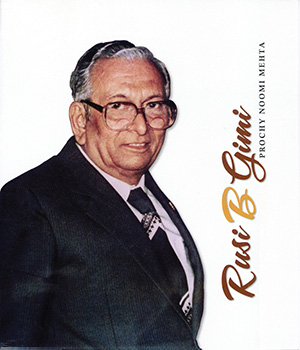 This book is different from other biographies in that it contains excerpts by different authors — individuals who were close to Rusi and who knew him well, either professionally or as relatives or friends — thus highlighting varying aspects of his personality.
Bharuch born, his school and college education were away from home and he made full use of his opportunities in acquiring language skills, including Persian and Sanskrit and later being fluent in Bengali. He consciously focused on improving his English, eventually becoming an accomplished public speaker at any forum.
Gimi was an outsider in Calcutta and not well-to-do but rose to become president of the Parsee Zoroastrian Association and vice president of the Calcutta Parsee Club.
His home and office were in one building, thereby allowing him maximum use of time without neglecting his family. "Rusi was a novice in the field of outdoor advertising,” but many assisted him. The initial billboards were hand painted and "Yes, Maqbool Fida Hussain… painted many of Rusi’s billboards.” Selvel soon became "synonymous with outdoor advertising.”
Rusi travelled to many countries for meetings and lectures mainly related to his philanthropic activities and received many accolades both in India and abroad.
Unfortunately, at the relatively young age of 69, he succumbed to cancer of the pancreas in February 1992. He was honored in a memorial service held by the governor of West Bengal at Raj Bhavan, and the words with which they describe him are "we live in deeds not years.”
This book shows us the advantages of living in a harmonious joint family, especially for growing children, leading to adjustment and tolerance in later life. We realize some advantages in combining work plus home in today’s Covid crisis times, and the importance of compromise in both old and young.
This publication is indeed a must read. Turning the pages of this coffee table book will inspire teenagers and adults alike to live beyond themselves, to create, to inspire others in an honest yet humble manner. Dr PILLOO HAKIM
Dr Hakim is professor emeritus, Grant Medical College and Sir J. J. Group of Hospitals, Department of Ear, Nose and Throat (ENT) and Head and Neck Oncology, and honorary consulting ENT surgeon at Saifee and The B. D. Petit Parsee General hospitals.