
Navsari’s notables
Prominent Parsis of Navsari by Marzban Jamshedji Giara. Published in 2021 by Bapsy and Marzban Giara, Dhunamae Building, 667, Lady Jehangir Road, Dadar, Bombay, 400014. Pp: x + 172. Price: For free distribution.
This is a collection of biographical sketches of "prominent” Navsari Parsis. The author Marzban Giara (pictured), himself a product of Navsari, is a painstaking and dedicated chronicler of community matters. The criteria for inclusion in the collection are unclear. Barring four of the 63 entries, all are deceased and most of them a long time ago. While several would naturally be included in any such compendium, a few insertions lack the claim to be called prominent. Be that as it may, this exercise definitely contains some interesting insights and nuggets about Parsis and Navsari. For this alone, grateful thanks are due to the compiler.
Starting with Behdin Changasha who died 600 years ago and was referred to as the "King of Navsari,” the latest entries in the collection are those of Dastur (Dr) Firoze Kotwal (of course, a most worthy entry), now aged 86; Keki Jokhi of Hong Kong, now 92 and Rati Peer, 97 [whose predeceased husband Ervad (Dr) Peshotan is also listed]. Perhaps, youth is represented by a bodybuilder named Kersi Kasad who at 74 years is 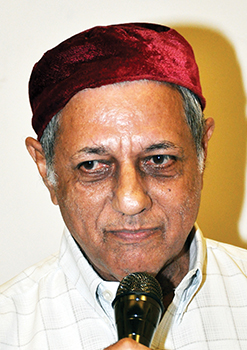 presumably still building muscle. The conclusion, therefore, is that either Navsari ran out of prominent Parsis or the latter ran out of Navsari, as there is not a single entry of anyone born after Independence.
King Changasha’s son, Manecksha, later known as Raja Mangasha, "had the authority to have hands and legs chopped off.” Giara does not cite any instance of the exercise of such authority.
Some of the more interesting facts revealed are: a portrait of Dastur Jamasp Asana (1830-1898) hangs in the Bodleian Library at Oxford; philanthropist Shapoorji Jokhi of Hong Kong was jailed during the Japanese occupation of Hong Kong in 1944; Peshotan Peer (1924-1996) was awarded a doctorate at the age of 53 and became a vegetarian after his marriage to his cousin, Rati, mentioned earlier; one Ruttonjee Deboo (1846-1908) traversed the forests of Dang "on horseback with a gun slung over his shoulder and a whip in his hand;” the founder of the much discussed Parsi Lying-In Hospital, Dr Sir Tehmulji Nariman, was "the oldest qualified medical practitioner in India and the first Indian Grand 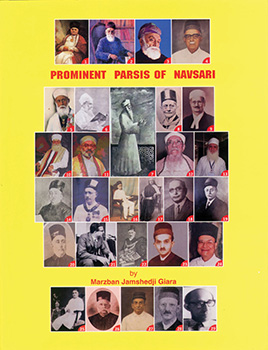 Master of the All Scottish Freemasonry in India;” while one Manchershah Baria, the best Parsi wrestler ever, floored a formidable Ludhiana wrestler in five minutes flat.
Despite the author’s known orthodox credentials, he does mention that the venerable Dastur Khurshed Dabu was a prominent Theosophist; that one Sorabji Desai (1865-1937) had "great admiration for Sadhu Sants” and delivered a lecture on "Prophet Zarathushtra’s Yog Sastra;” and that Khurshid Minocherhomji rocked the Parsi community’s defenders of the faith as Saraswati Devi, the "first Indian woman music director” of Bollywood, along with her sister Chandraprabha (Manek) who acted as a heroine. (Of course, the Minocherhomji sisters are afforded five lines in the book as compared to the 23 lines given to Rati Peer, while nearly one whole page is devoted to one Savak Madan, a Khshnoomist who "loved to eat dates” and whose noble wife, Jerbanoo, "had miscarriage twice.”)
The WZO (World Zoroastrian Organisation) Trust has sponsored this work which includes 55 color photos of famous Navsari landmarks and institutions. A laudable exercise by Giara.
BERJIS DESAI
Desai, author of Oh! Those Parsis and The Bawaji, occasionally practices law.