
Cover Story
Spotlight on Siodia
The artistic legacy of Rustom Siodia, the lesser known early 20th century painter and illustrator, was highlighted recently
A dozen of painter, illustrator and essayist Rustom Siodia’s paintings, predominantly landscapes, are on view till December 9, 2020 on the online platform artintouch.in, a collective of all-India galleries, including Bombay’s Chatterjee & Lal (C&L). The works included cave temples and seascapes, many of them "never seen before,” noted the website. The career of the artist (1884-1946), among the first Indians to study at the Royal Academy, London, spanned portraiture, landscapes and historical paintings, noted Mortimer Chatterjee of C&L, in conversation with Parsiana on November 17. Siodia was most active in the first four decades of the 20th century both in India and the UK, the gallerist stated. Added photographer Behzad Bilimoria, who said he waded through "10 kilos of documents, correspondence, paintings and sketches” belonging to the artist that were with the Bilimorias: "We worked hard to collate, collect and catalog his works… it was necessary for the world to know his genius.” Siodia’s estate in the custody of the Bilimorias consists of "approximately 250 items, including documents and diaries,” stated Bilimoria. There could be more in other private collections, he surmised. Behzad’s father Darayas is the heir of Siodia’s daughter, late artist Cumi Dallas. The online exhibit comes nearly a year after a showing of 30 of Siodia’s paintings at C&L titled "Realism and Fantasy” in November-December 2019.
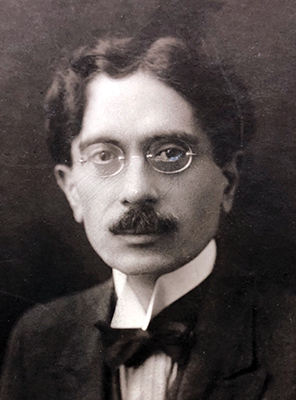
Rustom Siodia
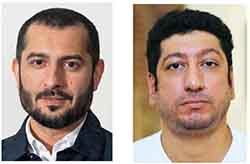
From l: Mortimer Chatterjee, Behzad Bilimoria
An introduction by a mutual friend of Chatterjee and Behzad resulted in the 2019 exhibition. "Siodia’s coloration is vibrant… His use of blues and yellows is very distinctive…that is what immediately struck me,” noted Chatterjee about his first viewing of the artist’s works.
The artist’s early landscapes and historical paintings reveal a "singular artistic vision, quite unlike anyone else working at that time in India,” said the gallerist. Siodia worked in a range of media, from murals and set design, to book illustrations, he stated, adding that he saw the artist as one of the successors to the celebrated Malayali painter Raja Ravi Varma in the lineage of salon artists. Though the artist worked on murals for the Royal Opera House in Bombay and the Viceregal Lodge (Rashtrapati Bhavan) in New Delhi, Chatterjee bemoaned that there are no traces of these pictures. Siodia was also an essayist and a regular contributor to public debates in The Times of India (ToI) on the contemporary art scene of the time.
A profile of the painter on the website of C&L states that Siodia was a student at the Sir Jamsetjee Jejeebhoy (JJ) School of Art till 1908. After his studies, he worked in London till 1913. On his return to Bombay, he set himself up in a studio at Petit Compound, New Foras Road till 1929. That year also saw him relocate to Jogeshwari for the next decade. "That is where he probably painted his forest scenes… The landscapes of this later period are different from his earlier Bombay views…the later ones are more invested with symbolism drawn from nature,” stated Chatterjee. The artist moved to England before World War II (WWII). Behzad and Chatterjee speculate that he was unable to return to India during the War years. He died in England and was buried there, according to Behzad.
Not a lot is known about Siodia’s work and life, remarked art historian Dr Pheroza Godrej to Parsiana on November 22. "I am so happy that he is being recognized now… He is getting his due, which is good.” She fondly remembered Dallas, who she acknowledges as a mentor who encouraged her to formally study painting.
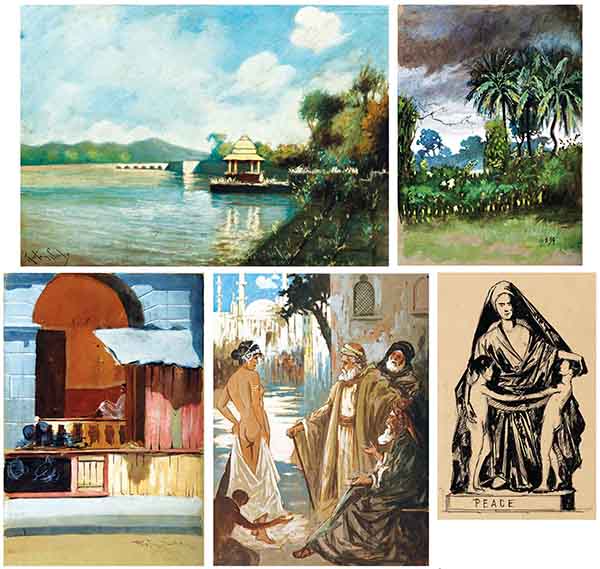
From l, 1st row: Untitled (water body with mandap); untitled (forest), watercolors heightened with body color on paper;
2nd row: untitled (street vendor), watercolor on paper; untitled (study for the slave market), watercolor heightened with
body color on paper; design for Poona War Memorial, graphite and ink with newspaper cutouts on paper
Images: Heirs of Rustom Siodia and Chatterjee & Lal (C&L)
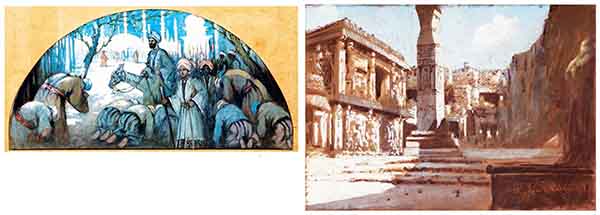
From l: Study for Flattering the golden prime of good Haroun Alraschid;
untitled (Ellora), watercolors heightened with body color on paper Images: Heirs of Siodia and C&L
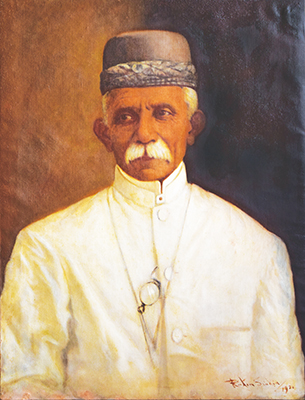
Khan Saheb Manchersha Palonjee Kikobad
Image: Personal collection of Anil Relia
His calling card
An undated 28-page booklet that Behzad provided Parsiana carries reproductions of some of Siodia’s portraits, along with commendations from his sitters, and extracts from the Press about his works. "He probably used it as a calling card to explain his work to prospective patrons…The booklet allowed us to put flesh on the bones of the early career of Siodia… It gave us an insight into his work as a portraitist in London and India during the 1910s,” noted Chatterjee.
An account reprinted from ToI of 1907 stated Siodia’s work could have been "taken for that of a European painter.” A "promising artist,” recorded the Indian Chronicle, on the painter’s entry to the Royal Academy. "One of the cleverest pictures” at the exhibition, stated The Statesman about a 1915 group showing in Calcutta, while The Bombay Chronicle of December 17, 1917 noted that the artist’s portrait of Justice Sir Dinshaw Davar of the Bombay High Court unveiled in the late judge’s courtroom "is an exact likeness of the late judge.” Of Siodia’s portrait of Bombay High Court Justice Sir Frank Beaman, the judge stated that no other artist in Bombay could have done a better rendering. A portrait of Byramjee Jeejeebhoy, Companion of the Order of the Star of India, "obviously represents a true likeness of the distinguished sitter,” noted yet another extract from ToI. Chatterjee explained that Rustom’s father Dadabhoy was in the "lifelong employ of Jeejeebhoy.”
The booklet includes a copy of one Ervad Navrojee Bhandari’s portrait that won Rustom a prize at the Simla Fine Art Exhibition in 1913. In July of the same year, London-based politician Sir Mancherjee Bhownaggree commended the portraitist’s execution of a "pleasing likeness” of King George V that highlights the monarch’s "pleasent (sic) sedate lineaments of his countenance.” We gather from an extract from The Englishman, 1917, of Calcutta that the king-emperor’s portrait was displayed at "the New English Art Club and the London Saloon, which was much admired.”
In the three years starting 1922, we see Rustom’s fascination with the caves of Ajanta and Ellora, said Chatterjee. He explained that while most artists of that time would focus on copying the frescoes and architectural details of the caves, Rustom "stripped the caves off its Buddhist and Hindu religious iconography…they are white-washed out.” Having trained under traditional Victorian academicians at JJ School, he possibly thought they were degenerate depictions, stated the gallerist. "The artist has recast the ancient Indian sites as quasi-Achamenid architectural structures,” read C&L’s exhibition brochure. Shadowy figures in white, depiction of possibly holy fires, and torans pop up amid the pictures of the caves and other landscapes in this period. "You could call it augmented reality,” smiled Chatterjee.
An undated 28-page booklet that Behzad provided Parsiana carries reproductions of some of Siodia’s portraits, along with commendations from his sitters, and extracts from the Press about his works. "He probably used it as a calling card to explain his work to prospective patrons…The booklet allowed us to put flesh on the bones of the early career of Siodia… It gave us an insight into his work as a portraitist in London and India during the 1910s,” noted Chatterjee.
An account reprinted from ToI of 1907 stated Siodia’s work could have been "taken for that of a European painter.” A "promising artist,” recorded the Indian Chronicle, on the painter’s entry to the Royal Academy. "One of the cleverest pictures” at the exhibition, stated The Statesman about a 1915 group showing in Calcutta, while The Bombay Chronicle of December 17, 1917 noted that the artist’s portrait of Justice Sir Dinshaw Davar of the Bombay High Court unveiled in the late judge’s courtroom "is an exact likeness of the late judge.” Of Siodia’s portrait of Bombay High Court Justice Sir Frank Beaman, the judge stated that no other artist in Bombay could have done a better rendering. A portrait of Byramjee Jeejeebhoy, Companion of the Order of the Star of India, "obviously represents a true likeness of the distinguished sitter,” noted yet another extract from ToI. Chatterjee explained that Rustom’s father Dadabhoy was in the "lifelong employ of Jeejeebhoy.”
The booklet includes a copy of one Ervad Navrojee Bhandari’s portrait that won Rustom a prize at the Simla Fine Art Exhibition in 1913. In July of the same year, London-based politician Sir Mancherjee Bhownaggree commended the portraitist’s execution of a "pleasing likeness” of King George V that highlights the monarch’s "pleasent (sic) sedate lineaments of his countenance.” We gather from an extract from The Englishman, 1917, of Calcutta that the king-emperor’s portrait was displayed at "the New English Art Club and the London Saloon, which was much admired.”
In the three years starting 1922, we see Rustom’s fascination with the caves of Ajanta and Ellora, said Chatterjee. He explained that while most artists of that time would focus on copying the frescoes and architectural details of the caves, Rustom "stripped the caves off its Buddhist and Hindu religious iconography…they are white-washed out.” Having trained under traditional Victorian academicians at JJ School, he possibly thought they were degenerate depictions, stated the gallerist. "The artist has recast the ancient Indian sites as quasi-Achamenid architectural structures,” read C&L’s exhibition brochure. Shadowy figures in white, depiction of possibly holy fires, and torans pop up amid the pictures of the caves and other landscapes in this period. "You could call it augmented reality,” smiled Chatterjee.
Inspired by Persia
"It is from this period (mid to late 1920s) that he begins his unpublished illustrated manuscript Legends of Ancient Persia… He keeps on returning to works inflected by Persian-inspired stories,” noted the exhibition brochure. "It is a compilation of stories taken from ancient Persian history, some of which are illustrated with miniature-scaled paintings,” Chatterjee stated. During this phase, we learn that Rustom took up commissions to design murals for the grand Viceregal Lodge coming up in New Delhi. "The subjects he chose to depict were a mixture of Western and Persian… The friezes on literature and art; an oriental slave market; Cinderella; stories of Abbasid Caliph Haroun Alraschid are testament to that,” stated Chatterjee. "Unfortunately, we were unable to trace these in the art collections of Rashtrapati Bhavan,” he bemoaned.
An undated watercolor by Rustom, thought to have been painted sometime in the 1930s, incorporates a ritual scene, "perhaps Zoroastrian in nature,” complete with an unspecified Persian architectural backdrop. "It looks for all the world like actors or singers on a stage,” noted the exhibition brochure. "A preparatory sketch for this work was published after the artist’s death in the leading Gujarati art journal, Kumar, where the work is referred to as a ‘cine-set design,’ noted the brochure. This suggests that Rustom was engaged with set designs for either film or the stage, speculated Chatterjee.
Was the artist turning to his Persian heritage in this phase of his life? Was he turning religious? "We do not know… unfortunately there is very little personal information in the material available,” bemoaned both Behzad and Chatterjee. "We know that the name of his wife was Hirabai and he married her when he was in his twenties,” stated Chatterjee.
The illustrator-cum-humorist in Rustom comes to the fore in three exhibits at C&L: about a dentist who provides whiskey to his patients; "a vain young thing” being encouraged to give up painting by an experienced artist; a potential sitter for a portrait who does not mind being portrayed, but wonders, mistakenly, how he would get the paint off himself!
Rustom’s later debates in ToI often concerned "what should be the future of Indian painting,” notably with artist Samuel Fyzee Rahamin, a contemporary of his at the Royal Academy, noted Chatterjee. "He was conservative at heart, he mourns the large-scale changes going on in the art world, he is almost melancholic in the latter phase of his life,” he stated.
"There is likely to be other paintings of Rustom’s in fire temples, but I have not been able to locate them,” Behzad said. Both he and Chatterjee mentioned that Rustom’s portrait of a Parsi gentleman hangs in the Prince of Wales Museum of Western India, but could not provide details.
Ahmedabad based art collector Anil Relia said his collection includes one portrait of a Surat-based educationist, Khan Saheb Manchersha Palonjee Kikobad (1856-1935), of the Irish Presbyterian Mission Boys School and "a Parsi girls’ school.” The art aficionado who exhibited his Parsi portraits about two years ago (see "Parsi portrayals,” Parsiana, January 7, 2019) told us on November 19 that when he first chanced upon it, he was "quite fascinated to see the very well captured portrait with dramatic lighting, two-toned background with depth and details of portrait… I also got more details about the sitter from Parsi Lustre on Indian Soil.” He reminisced that he acquired the portrait from "an antique/scrap dealer from Surat” about 15 years ago.
In the airy Bilimoria flat, surrounded by the Indian-themed works of Rustom’s daughter Cumi, one can only speculate on what Rustom would have thought about his daughter’s departure from his style of painting which was grounded in the Victorian era. Born in 1907, Cumi was a leading exponent of the Bombay Revivalist style of painting. Explains Chatterjee: "Cumi was a student of the JJ School of Arts in the early 1930s. At this time, the School had created a mural department which became the hub for revivalist tendencies. The style pursued was a synthesis of indigenous painting styles including miniature, the wall frescoes of Ajanta, and folk traditions.” He rues that "Rustom was a victim of successive avalanches of art movements…first Bombay Revivalist, then the new breed of progressive artists who emerged in the 1940s…Perhaps that is why he did not get his full due during his life time.” No dated work remains of the last six years of his life, noted Chatterjee. "But we do have some paintings on paper of scenes from London during the WWII years, which tell us that he was at work then too...
"A lot of effort is required to complete the story behind the man… to understand the trajectory of his career in detail, and also on Cumi’s genre of work” he concluded.
"It is from this period (mid to late 1920s) that he begins his unpublished illustrated manuscript Legends of Ancient Persia… He keeps on returning to works inflected by Persian-inspired stories,” noted the exhibition brochure. "It is a compilation of stories taken from ancient Persian history, some of which are illustrated with miniature-scaled paintings,” Chatterjee stated. During this phase, we learn that Rustom took up commissions to design murals for the grand Viceregal Lodge coming up in New Delhi. "The subjects he chose to depict were a mixture of Western and Persian… The friezes on literature and art; an oriental slave market; Cinderella; stories of Abbasid Caliph Haroun Alraschid are testament to that,” stated Chatterjee. "Unfortunately, we were unable to trace these in the art collections of Rashtrapati Bhavan,” he bemoaned.
An undated watercolor by Rustom, thought to have been painted sometime in the 1930s, incorporates a ritual scene, "perhaps Zoroastrian in nature,” complete with an unspecified Persian architectural backdrop. "It looks for all the world like actors or singers on a stage,” noted the exhibition brochure. "A preparatory sketch for this work was published after the artist’s death in the leading Gujarati art journal, Kumar, where the work is referred to as a ‘cine-set design,’ noted the brochure. This suggests that Rustom was engaged with set designs for either film or the stage, speculated Chatterjee.
Was the artist turning to his Persian heritage in this phase of his life? Was he turning religious? "We do not know… unfortunately there is very little personal information in the material available,” bemoaned both Behzad and Chatterjee. "We know that the name of his wife was Hirabai and he married her when he was in his twenties,” stated Chatterjee.
The illustrator-cum-humorist in Rustom comes to the fore in three exhibits at C&L: about a dentist who provides whiskey to his patients; "a vain young thing” being encouraged to give up painting by an experienced artist; a potential sitter for a portrait who does not mind being portrayed, but wonders, mistakenly, how he would get the paint off himself!
Rustom’s later debates in ToI often concerned "what should be the future of Indian painting,” notably with artist Samuel Fyzee Rahamin, a contemporary of his at the Royal Academy, noted Chatterjee. "He was conservative at heart, he mourns the large-scale changes going on in the art world, he is almost melancholic in the latter phase of his life,” he stated.
"There is likely to be other paintings of Rustom’s in fire temples, but I have not been able to locate them,” Behzad said. Both he and Chatterjee mentioned that Rustom’s portrait of a Parsi gentleman hangs in the Prince of Wales Museum of Western India, but could not provide details.
Ahmedabad based art collector Anil Relia said his collection includes one portrait of a Surat-based educationist, Khan Saheb Manchersha Palonjee Kikobad (1856-1935), of the Irish Presbyterian Mission Boys School and "a Parsi girls’ school.” The art aficionado who exhibited his Parsi portraits about two years ago (see "Parsi portrayals,” Parsiana, January 7, 2019) told us on November 19 that when he first chanced upon it, he was "quite fascinated to see the very well captured portrait with dramatic lighting, two-toned background with depth and details of portrait… I also got more details about the sitter from Parsi Lustre on Indian Soil.” He reminisced that he acquired the portrait from "an antique/scrap dealer from Surat” about 15 years ago.
In the airy Bilimoria flat, surrounded by the Indian-themed works of Rustom’s daughter Cumi, one can only speculate on what Rustom would have thought about his daughter’s departure from his style of painting which was grounded in the Victorian era. Born in 1907, Cumi was a leading exponent of the Bombay Revivalist style of painting. Explains Chatterjee: "Cumi was a student of the JJ School of Arts in the early 1930s. At this time, the School had created a mural department which became the hub for revivalist tendencies. The style pursued was a synthesis of indigenous painting styles including miniature, the wall frescoes of Ajanta, and folk traditions.” He rues that "Rustom was a victim of successive avalanches of art movements…first Bombay Revivalist, then the new breed of progressive artists who emerged in the 1940s…Perhaps that is why he did not get his full due during his life time.” No dated work remains of the last six years of his life, noted Chatterjee. "But we do have some paintings on paper of scenes from London during the WWII years, which tell us that he was at work then too...
"A lot of effort is required to complete the story behind the man… to understand the trajectory of his career in detail, and also on Cumi’s genre of work” he concluded.
◆ ◆ ◆
From the archive