
Trusts
Bridging the gap
Tata Sons chairman N. Chandrasekaran believes technology can offer low cost solutions to assist the disadvantaged
We will become the third largest economy but we will not be a rich economy,” predicted Tata Sons chairman N. Chandrasekaran while delivering the 17th Nani Palkhivala Memorial Lecture titled "Building India for the Future” on January 16, 2020 at the National Centre for the Performing Arts’ Tata Theatre. This year marks the noted jurist’s 100th birth anniversary. A 532-page publication 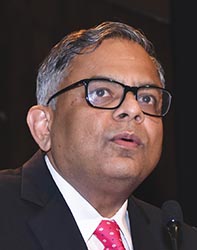 titled Essays & Reminiscences: A Festschrift in Honour of Nani A. Palkhivala was released on the occasion by The Nani A. Palkhivala Memorial Trust (NPMT) and a documentary, Nani — The Crusader, produced in 2015 was re-screened.
"The potential is there but we have to carry our people with us. We are underperforming,” Chandrasekaran lamented. "Corporate expenditure used to grow in double digits. Now it’s 0.1%. There are many reasons” for this. He referred to the mounting non-performing assets in the public sector banks, the stress electricity companies were under, the lack of labor reforms. "The number of hurdles small and medium sized enterprises face is unbelievable. Each obstacle is problematic.” Speaking on risk management, he noted that the growth of a company always involves risks. "Celebrate the risk takers,” he advised. Reforming the economy is "a Herculean task” and "core sector reforms” are required. The public sector should be "unleashed” so it could run on "a race course rather than an obstacle course.”
Tourism comprises nine percent of India’s gross domestic product and is the country’s third largest foreign exchange earner, but "hardly 10 million tourists” visit. In contrast, the state of Hawaii in the USA alone draws the same number while Thailand attracts 38 million and China 60 million.
The former head of Tata Consultancy Services, the largest software company in India, Chandrasekaran believes "technology can provide solutions” at a low cost. "Make technology available to everyone.” He cited the example of the Aadhaar card that provided a digital identity to nearly every Indian as "a tremendous step forward.” He had coined the term "Brigital,” putting technology in the homes of millions of people. In a book which Chandrasekaran and Roopa Purushothaman, chief economist of the Tata Group, have authored, brigital nation: Solving technology’s People Problem, they advocate using technology as an aid to "bridge the huge chasm between urban and rural, illiteracy and educated, aspirations and achievements.”
titled Essays & Reminiscences: A Festschrift in Honour of Nani A. Palkhivala was released on the occasion by The Nani A. Palkhivala Memorial Trust (NPMT) and a documentary, Nani — The Crusader, produced in 2015 was re-screened. "The potential is there but we have to carry our people with us. We are underperforming,” Chandrasekaran lamented. "Corporate expenditure used to grow in double digits. Now it’s 0.1%. There are many reasons” for this. He referred to the mounting non-performing assets in the public sector banks, the stress electricity companies were under, the lack of labor reforms. "The number of hurdles small and medium sized enterprises face is unbelievable. Each obstacle is problematic.” Speaking on risk management, he noted that the growth of a company always involves risks. "Celebrate the risk takers,” he advised. Reforming the economy is "a Herculean task” and "core sector reforms” are required. The public sector should be "unleashed” so it could run on "a race course rather than an obstacle course.”
Tourism comprises nine percent of India’s gross domestic product and is the country’s third largest foreign exchange earner, but "hardly 10 million tourists” visit. In contrast, the state of Hawaii in the USA alone draws the same number while Thailand attracts 38 million and China 60 million.
The former head of Tata Consultancy Services, the largest software company in India, Chandrasekaran believes "technology can provide solutions” at a low cost. "Make technology available to everyone.” He cited the example of the Aadhaar card that provided a digital identity to nearly every Indian as "a tremendous step forward.” He had coined the term "Brigital,” putting technology in the homes of millions of people. In a book which Chandrasekaran and Roopa Purushothaman, chief economist of the Tata Group, have authored, brigital nation: Solving technology’s People Problem, they advocate using technology as an aid to "bridge the huge chasm between urban and rural, illiteracy and educated, aspirations and achievements.”
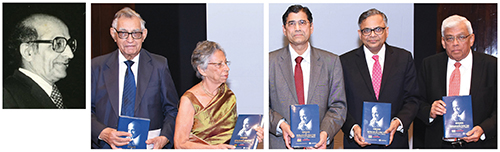
Top: Tata Sons chairman N. Chandrasekaran; above: Nani Palkhivala; above, from l: Yezdi Malegam,
Shirin Bharucha, Arvind Datar, Chandrasekaran, Deepak Parekh
"Digital skills are easier to acquire than learning reading, writing and arithmetic.” While "114 million women engage in paid work, there are 120 million who have a secondary education but do not participate in the work force.” He felt the focus of education should be "problem solving.”
The developed world will see a decline in population...One million Indians join the work force every month... The working age population will come from the low income economies. Many may be employed in the developed world which faces declining populations. Indians could fill that gap. "India is not a low cost nation but a talent rich one.”
NPMT trustee Deepak Parekh, who chairs the behemoth Housing Development Finance Corporation, termed "Chandra” as the "go-to man for the government of India.” He described the "salt to software” boss as a "leader with humility...an ordinary boy who would go on to do extraordinary things.”
Senior advocate of the Madras High Court, Arvind Datar who edited the festschrift, noted the volume was initially to comprise around 100 pages, but with the voluminous material uncovered, the count ballooned to over 500. The Tata Central Archives had a treasure trove of 73 boxes of Palkhivala’s correspondence along with 1,600 photographs. There were "hundreds of letters written to former presidents, prime ministers, central and state ministers and of course, chief justices and justices of the Supreme Court... What struck me was that every letter to him, even by ordinary people, was replied to within a few days,” wrote Datar in the festschrift’s introduction. Datar marveled at the number of letters people wrote. "How did they have time to do anything else?” he queried. Aside from letters, Palkhivala also gave lectures and in his younger days wrote articles for various publications, several of which have been included in the book to honor his memory.
As NPMT chairman Yezdi Malegam noted, Palkhivala "inspired and motivated a whole generation.”
Of the 48 contributors to the festschrift, 16 (or one third) are Parsis. With the permission of the NPMT trustees, Parsiana reprints some of the extracts from: tax authority Sohrab Dastur; solicitor Zia Mody of AZB and Partners; Nani’s brother, the late Behram; Behram’s son Jehangir; Nani’s nephew Homi Ranina; Homi’s daughter Statira; industrialist Ratan Tata; and physician Dr Farokh Udwadia.
NPMT trustee Deepak Parekh, who chairs the behemoth Housing Development Finance Corporation, termed "Chandra” as the "go-to man for the government of India.” He described the "salt to software” boss as a "leader with humility...an ordinary boy who would go on to do extraordinary things.”
Senior advocate of the Madras High Court, Arvind Datar who edited the festschrift, noted the volume was initially to comprise around 100 pages, but with the voluminous material uncovered, the count ballooned to over 500. The Tata Central Archives had a treasure trove of 73 boxes of Palkhivala’s correspondence along with 1,600 photographs. There were "hundreds of letters written to former presidents, prime ministers, central and state ministers and of course, chief justices and justices of the Supreme Court... What struck me was that every letter to him, even by ordinary people, was replied to within a few days,” wrote Datar in the festschrift’s introduction. Datar marveled at the number of letters people wrote. "How did they have time to do anything else?” he queried. Aside from letters, Palkhivala also gave lectures and in his younger days wrote articles for various publications, several of which have been included in the book to honor his memory.
As NPMT chairman Yezdi Malegam noted, Palkhivala "inspired and motivated a whole generation.”
Of the 48 contributors to the festschrift, 16 (or one third) are Parsis. With the permission of the NPMT trustees, Parsiana reprints some of the extracts from: tax authority Sohrab Dastur; solicitor Zia Mody of AZB and Partners; Nani’s brother, the late Behram; Behram’s son Jehangir; Nani’s nephew Homi Ranina; Homi’s daughter Statira; industrialist Ratan Tata; and physician Dr Farokh Udwadia.
Recollections
 Sohrab Dastur
He was always appreciative of the work of juniors who appeared with him and did not hesitate to acknowledge the same in court. For a hearing, a conference was quite often held only the evening before. He would listen to what one had to say, ask a few questions if he thought some clarifications were required, and then worked on his own.
Sohrab DasturHe was always appreciative of the work of juniors who appeared with him and did not hesitate to acknowledge the same in court. For a hearing, a conference was quite often held only the evening before. He would listen to what one had to say, ask a few questions if he thought some clarifications were required, and then worked on his own.
Focus on excellence
Zia Mody
I knew Nani Palkhivala since I was a child. Our families were very close and I often used to go to their wonderful, breezy flat at Commonwealth building at Nariman Point, and always got the benefit of some great Swiss chocolates and very nice presents. Nani always asked about how well I was doing in school. As I now look back, I see that there was his constant focus on excellence. Whenever I came first in class, Nani would promptly give me a present. One of my best presents was an old-fashioned Godrej steel cupboard which was a real big deal for me. It is still there at my parents’ house.
Another memory I have of Nargesh and Nani is when they had to entertain at their home. The most important guest was my mother (Zena Sorabjee)! She was tasked with the mandate of seeing that everybody left by 10 p.m. and if the crowd was around any later, Nani would look at my mother, who would promptly get up and say that it was very late and she was very tired, and make sure "good nights” were said very, very, quickly.
I knew Nani Palkhivala since I was a child. Our families were very close and I often used to go to their wonderful, breezy flat at
Commonwealth building at Nariman Point, and always got the benefit of some great Swiss chocolates and very nice presents. Nani always asked about how well I was doing in school. As I now look back, I see that there was his constant focus on excellence. Whenever I came first in class, Nani would promptly give me a present. One of my best presents was an old-fashioned Godrej steel cupboard which was a real big deal for me. It is still there at my parents’ house.Another memory I have of Nargesh and Nani is when they had to entertain at their home. The most important guest was my mother (Zena Sorabjee)! She was tasked with the mandate of seeing that everybody left by 10 p.m. and if the crowd was around any later, Nani would look at my mother, who would promptly get up and say that it was very late and she was very tired, and make sure "good nights” were said very, very, quickly.
Remembrance of things...
The late Behram Palkhivala
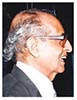 To a question posed by a judge to corner him, he would, without a moment’s thought, come out with "There are four answers” or "There are few answers.” I once asked him how it was possible, for a man of his intellect, to do that. He gestured, stretching out his hand and bringing it back with open fingers towards his head, "I see them coming to me.” "All of them together?” "Yes.”
A Supreme Court judge once met Nani at a private function. He said, "I have now decided never to put you such a question. Because whenever I do, you straightaway reply, ‘There are five answers’ or ‘There are six answers,’ and I am made to look small in the open court.”
The late Behram Palkhivala
To a question posed by a judge to corner him, he would, without a moment’s thought, come out with "There are four answers” or "There are few answers.” I once asked him how it was possible, for a man of his intellect, to do that. He gestured, stretching out his hand and bringing it back with open fingers towards his head, "I see them coming to me.” "All of them together?” "Yes.”A Supreme Court judge once met Nani at a private function. He said, "I have now decided never to put you such a question. Because whenever I do, you straightaway reply, ‘There are five answers’ or ‘There are six answers,’ and I am made to look small in the open court.”
His twilight days
 Jehangir Palkhivala
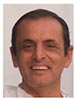
Many tell of his indomitable courage as he tackled the government head-on in the courts and in his budget speeches. I wish they could have seen him struggling against himself; no sign of self-pity or desire for help as he strove to walk, to eat, to be verbally understandable. Hit as he was by stroke after stroke after stroke. Three major, and several minor ones.
More poignantly, a few days after his wife Nargesh’s passing. I found Nani Kaka fretfully looking through his drawers. He urged me to help him find his "eye card.” He wanted to ensure that after his death, his eyes would be of some use to someone.
Jehangir PalkhivalaMany tell of his indomitable courage as he tackled the government head-on in the courts and in his budget speeches. I wish they could have seen him struggling against himself; no sign of self-pity or desire for help as he strove to walk, to eat, to be verbally understandable. Hit as he was by stroke after stroke after stroke. Three major, and several minor ones.
More poignantly, a few days after his wife Nargesh’s passing. I found Nani Kaka fretfully looking through his drawers. He urged me to help him find his "eye card.” He wanted to ensure that after his death, his eyes would be of some use to someone.
Living and working...
Homi Ranina
My grandparents, Sheherbanoo and Ardeshir Palkhivala, brought up their three children, Amy, Nani and Behram, in a Parsi Zoroastrian environment having lived in the Grant Road area of Bombay. My recollection of my uncle Nani goes back to the days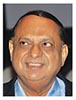 when I visited my grandparents in Petit Mansion, a triangular building in the heart of Nana Chowk, three or four times every week. They were sub-tenants on the fourth floor of Petit Mansion. What comes to my mind is a small room in which Nani used to work, the room being as small as 6 ft by 8 ft. As a child, I was in awe of the books in the study room neatly arranged on shelves which covered every inch of the walls of the room.
Nani had very little space in the chamber of Sir Jamshedji Kanga; most often he would hold conferences just outside the chamber in the back seat of his Chevrolet car which was parked inside the High Court compound. Since these conferences were held in the evening, the area was quite deserted and therefore he could have confidential discussions with clients until nine in the evening when he returned home.
When Nani’s parents passed away, we used to go every morning during the first month to the fire temple where prayers were performed according to Zoroastrian rituals. This, of course, affected his busy schedule as a lawyer but he felt that solace through prayers was more rewarding than mundane legal practice. That was the first lesson which I imbibed from Nani, apart from many others.
Homi Ranina
My grandparents, Sheherbanoo and Ardeshir Palkhivala, brought up their three children, Amy, Nani and Behram, in a Parsi Zoroastrian environment having lived in the Grant Road area of Bombay. My recollection of my uncle Nani goes back to the days
when I visited my grandparents in Petit Mansion, a triangular building in the heart of Nana Chowk, three or four times every week. They were sub-tenants on the fourth floor of Petit Mansion. What comes to my mind is a small room in which Nani used to work, the room being as small as 6 ft by 8 ft. As a child, I was in awe of the books in the study room neatly arranged on shelves which covered every inch of the walls of the room.Nani had very little space in the chamber of Sir Jamshedji Kanga; most often he would hold conferences just outside the chamber in the back seat of his Chevrolet car which was parked inside the High Court compound. Since these conferences were held in the evening, the area was quite deserted and therefore he could have confidential discussions with clients until nine in the evening when he returned home.
When Nani’s parents passed away, we used to go every morning during the first month to the fire temple where prayers were performed according to Zoroastrian rituals. This, of course, affected his busy schedule as a lawyer but he felt that solace through prayers was more rewarding than mundane legal practice. That was the first lesson which I imbibed from Nani, apart from many others.
Nani: My uncle
Statira Ranina
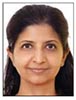 Nanimama was always unfailingly hospitable, welcoming people who stopped by at home, insisting that they stay for a meal, or inviting people home and always making sure that anyone who graced the table ate more and drank more than they normally would. I remember the house always being full, rarely a quiet night with only the family at the table, and I think that this is one of the things I still miss till today. I realize now that I have unconsciously imbibed this trait of his to some extent, as I always think that the food we are serving is not enough or the drinks could be better!
Statira Ranina
Nanimama was always unfailingly hospitable, welcoming people who stopped by at home, insisting that they stay for a meal, or inviting people home and always making sure that anyone who graced the table ate more and drank more than they normally would. I remember the house always being full, rarely a quiet night with only the family at the table, and I think that this is one of the things I still miss till today. I realize now that I have unconsciously imbibed this trait of his to some extent, as I always think that the food we are serving is not enough or the drinks could be better!A kind and considerate...
Ratan Tata
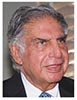 Nani loved his food — particularly Indian curries. The spicier they were, the more he enjoyed them. I believe Goa fish curry was one of his favorites. During his lunches at Bombay House, he heaped his plate with rice and curry, often to the consternation of Mr J. R. D. Tata. The glaring eyes of Jeh never bothered him and he enjoyed his afternoon meal. He also enjoyed the little cakes that were served with tea at Bombay House.
Bombay House was a very formal place. The most common attire would be a business suit or a long-sleeved safari suit. In this environment, it would be surprising to see sadhus in leopard skins, holding a spear. However, the occupants of Bombay House got used to them because they had come to call on Nani. He treated them with great respect.
Ratan Tata
Nani loved his food — particularly Indian curries. The spicier they were, the more he enjoyed them. I believe Goa fish curry was one of his favorites. During his lunches at Bombay House, he heaped his plate with rice and curry, often to the consternation of Mr J. R. D. Tata. The glaring eyes of Jeh never bothered him and he enjoyed his afternoon meal. He also enjoyed the little cakes that were served with tea at Bombay House.Bombay House was a very formal place. The most common attire would be a business suit or a long-sleeved safari suit. In this environment, it would be surprising to see sadhus in leopard skins, holding a spear. However, the occupants of Bombay House got used to them because they had come to call on Nani. He treated them with great respect.
A dear friend and a ...
Dr Farokh Udwadia
We decided a month later to invite Nargesh and Nani home to dinner. The flat was too small to invite anyone else! (My wife) Vera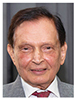 only knew how to make brownies (they undoubtedly were the best brownies in the world!). So, we got biryani from George’s restaurant and gravy cutlets from A1 restaurant (a shop off Grant Road bridge on Proctor Street) and Kwality ice cream. They truly loved it and we had a great time.
He listened to me in all medical matters except one. Whenever I asked him to take a holiday, he would smile and reply he had work to do.
Dr Farokh Udwadia
We decided a month later to invite Nargesh and Nani home to dinner. The flat was too small to invite anyone else! (My wife) Vera
only knew how to make brownies (they undoubtedly were the best brownies in the world!). So, we got biryani from George’s restaurant and gravy cutlets from A1 restaurant (a shop off Grant Road bridge on Proctor Street) and Kwality ice cream. They truly loved it and we had a great time.He listened to me in all medical matters except one. Whenever I asked him to take a holiday, he would smile and reply he had work to do.
◆ ◆ ◆
From the archive