
Blessed to have Allbless
The 150th anniversary celebrations of the iconic Allbless Baug was an occasion to recall its history and ponder its future
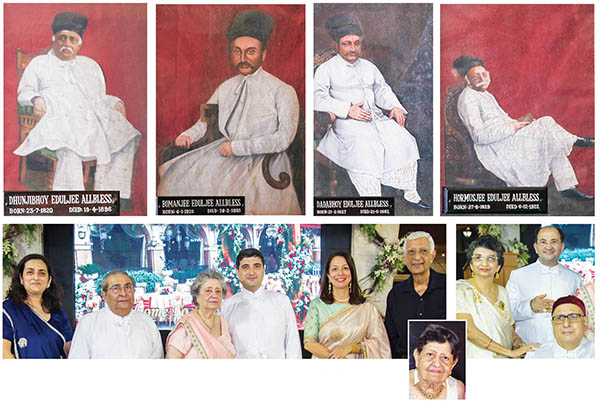
Lentin was "overjoyed” to celebrate the 150th birthday of the Baug with "friends, family and loved ones,” she emphasized in her welcome address. Thanking the "new, dynamic trustees Gool Kalyaniwalla, Navaz Lentin and Tosher Govadia,” who "made life easy for the senior trustees (herself, Eruch Billimoria and Dr Jamshed Dalal) with their able support,” she thanked the Baug staff and other well-wishers.
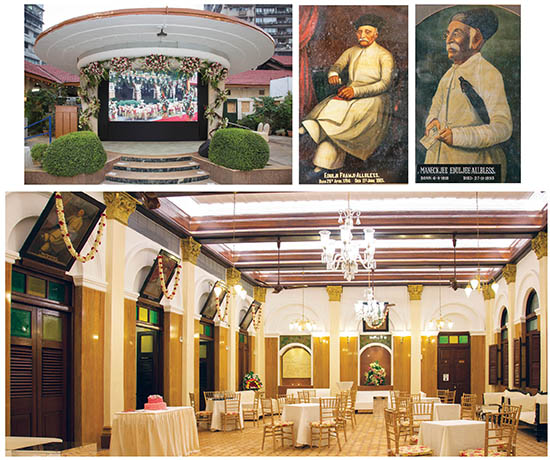
Udvada high priest and member of the National Commission for Minorities Dastur Khurshed Dastoor led the audience in prayer. "We are blessed as a community to have such a wonderful place amid the hustle and bustle of Bombay,” said Dastoor, adding, "may our kom (community) increase… may we have more lagans, peace and prosperity.”
The "permanence” of the venue as a cherished memory for many was reiterated by the speakers who shared their thoughts after Lentin’s welcome to the 120 or so select invitees. "To survive for 150 years is very, very creditable,” noted art historian Dr Pheroza Godrej. When her parents Phiroze and Mitha got married at the venue in 1947, they could only serve 25 guests due to rationing in the aftermath of the Second World War and Independence, but "alcohol, especially whisky, flowed like water.” Recalling that both she and her brother Cyrus were navjoted at Allbless Baug, Godrej wished that the venue would continue to serve the community not just for the next 150 years but "in perpetuity.”
Chairman of World Zoroastrian Organisation Trust Funds (WZOTF) Dinshaw Tamboly recollected that he was navjoted there in 1952 and married to Bachi in 1969. Congratulating the Baug trustees, Tamboly affirmed that "Allbless Baug will be around as long as Parsis are here.” He recollected that the "iconic” venue would have been the "spawning ground for innumerable caterers, photographers, caterers and musicians” down the ages.
Founder and chairman of advertising company Madison World Sam Balsara noted that both he and his wife Homai were also navjoted at this venue. He lamented that the entrepreneurial spirit of the kind exemplified by Baug founder Maneckji Allbless "seems to have been lost… we do not have entrepreneurs in adequate numbers.” Balsara exhorted parents to encourage the youth to "venture out on their own…We are known for being hardworking and diligent…qualities that are needed to succeed in business.”
In a recorded video message, poet-industrialist Nadir Godrej rhymed, "When Eduljee Allbless died/in his will he did provide/The funds to buy a spacious site/His five sons strove with all their might/To build the Baug that you see/Now in its sesquicentenary./A momentous occasion it is indeed/Undoubtedly Eduljee did succeed/In bringing us joy through the years/For which he does deserve our cheers” (see pg 27).
The enclosed hall in the Baug, renovated and air conditioned over a three-month period was inaugurated, with Lentin and other trustees leading the gathering. Many were glad to get indoors on that sultry October evening. Named "Allbless Hall,” the new space will be available for "any joyous occasion” either by the party booking the Baug or by others when the main Baug is not booked, the trustees informed Parsiana on October 18. The air conditioning charges would be over and above the Baug booking charges, and is optional. Exact charges were to be worked out at the time of going to the press, "but we will keep it fair to all,” Kalyaniwalla told Parsiana.
The family surname was derived from benedictions from the needy who had benefitted from Maneckji’s setting up of a hospital in China, explained Lentin in the audiovisual. "They told him ‘God bless you, God bless you’… we could not have the name of God in our family name so it became ‘Allbess,’” she told Parsiana. The audiovisual narrated how Maneckji (1818-1893), one of the five sons of Eduljee (1786-1865), became wealthy in the China trade.
"Specific purpose”
While a documented history of the Baug is not available, writing in The Parsis of India: Preservation of Identity in Bombay City, historian Jesse Palsetia noted that the Baug was built at a cost of Rs 1,50,000, "with the specific purpose of celebrating Parsi functions.” The construction was handled by contractor Jamasji Rattanji Mistry (1848-1920) "who built much of the financial district of Bombay and sites at Colaba and Marine Lines.” (Volume II of H. D. Darukhanawala’s Parsi Lustre on Indian Soil credits Mistry and his father Rattanji with having built National City Bank Building, Old Hong Kong Bank Building, Oriental Life Insurance Company Building and the Old Gresham Life Insurance Company Building.)
A tablet near the dadgah in the Baug mentions that "this building was erected in memory of the late Eduljee Framjee Karani out of his estate by his sons for the use of all Zoroastrians … (on) Monday, 18th October 1868 A.C.” Roshan explained that before changing their family name to "Allbless,” her ancestors used the surname "Karani.” Researcher Marzban Giara notes in Global Directory of Zoroastrian Fire Temples that "In1889, the bungalows near the gates and compound were renovated at a cost of Rs 75,000…Grateful Zoroastrians, under the leadership of Khan Bahadur Mancherjee Murzban raised contributions and installed a bust of Eduljee in the compound on March 21, 1894.”
A venue for community meetings down the years, Dr Simin Patel notes in her doctoral thesis Cultural Intermediaries in a Colonial City The Parsis of Bombay c. 1860-1921 that on March 12, 1874, a meeting of the Parsi residents of Bombay was held at Allbless Baug, "the main congregational center for the community in the city.” The meeting had been called to endorse a communication to the Marquis of Salisbury, the Secretary of State for India to obtain redress for "cruel wrongs suffered by the Parsis of Bombay during the recent Mahomedan riots and security against the recurrence of such outrages,” she noted, quoting from Sapur Desai’s History of the Bombay Parsi Punchayet 1860-1960. Eight thousand attendees packed the Baug to capacity and spilled over onto the street, she wrote.
As explained Lentin in the audiovisual, on certain days, during the peak season, the Baug could be hired by two families for separate functions. So high was the demand for holding functions on auspicious days that the families who wanted to hire the Baug had to draw lots at their Ali Chambers (Fort) office. In later years, the office was shifted to the Baug. While the Baug sees about 80 functions annually, compared to 290 "a few decades ago,” Lentin is sanguine: "Few families prefer holding functions in banquet halls – The Baug is often the preferred choice.”
Even today the Baug is often the venue for gahanbars and other functions held by private bodies and charitable organizations. In addition to running the Baug, five private Allbless family trusts are active in aiding the needy for health and education purposes, Govadia informed Parsiana on October 23. Navaz presented a list of public charities endowed by the extended family, such as the Allbless Bungalow in Trombay given for leprosy care; Allbless (residential) Buildings at Charni Road and Tardeo; the Allbless Dispensary at Nagpada, and the bungli at Doongerwadi. The family also contributed to the setting up of Cama and Allbless Hospitals. "These were set up and handed over to various organizations to run,” noted Govadia.
Resisting electricity
It was the "determination and far-sightedness” of the then trustees of Allbless Baug in the 1920s that brought electric lights to the Baug to replace the gas lights then in use, notes Poarosasp Guzder, director, The Eastern Electric Light and Power Company Private Limited. The company has been providing lighting services to the Baug for many decades. To achieve their vision, they deliberated with a close family friend Kaikhusroo Guzder (Poarosasp’s father) who then headed the company.
"The coming of electricity to the Baug was a challenge and a leap into the unknown…There was significant resistance from the community. People were sceptical and afraid of this invention. The affordability factor also came into play,” notes Poarosasp, in an email to Parsiana. Lighting was installed using the very first-generation carbon arc lamps and incandescent lamps. Lights were few and far between, he noted. The outbreak of the Second World War in 1939 caused a setback and programs for improvements and expansion of the lighting system were put on hold until 1945. During the war years lights had to be protected with shades such that the light did not travel upwards but faced the ground.
The introduction of the microphone and loudspeakers further changed the way navjote and wedding functions were held. "The vacuum tube or thermionic valve by the RCA Company revolutionized live music at the Baug with well-known names in the music field performing at functions,” explains Poarosasp.
In the late 1940s came fluorescent lamps which had to be brought in gradually, again due to resistance by the community. Technology evolved in subsequent decades with the coming of lamps that used mercury vapor, sodium vapor, halogen, halide and LED. The introduction of each of these improved light sources posed problems of acceptance in their own way "by frivolous objections.” The post-Independence years saw restrictions, shortages and curbs on imports. The 1950s brought in social legislations and the 1960s and 1970s were plagued with electricity shortages and rationing of electrical units to be consumed per day, Poarosasp noted.
Govadia’s vote of thanks reiterated that planning for the function was completed over a two-month period. Mahiyar Dastoor was the evening’s master of ceremonies. Theater personality Mahabanoo Mody Kotwal provided the voice over for the audiovisual which was conceptualized by Percy Lentin, Roshan’s son, while Meherzad Patel wrote the script. The event was managed by Stargaze Events led by Percy, with flower arrangements provided by Kamal Kerawalla of Baimai Flora. Zia Bhesania of Kling managed the bar, while Nazneen Vazifdar and Rehaan Daruwalla photographed the evening’s events. Videography was provided by Aresh Patel and sound by Arish Daruwalla. Lighting was provided by Eastern Electric.
Light entertainment came in the form of Cyrus Dubash and entertainer Sharmila Dias belting Can’t help falling in love with you and a few other numbers. A lavish sit down dinner catered by Kaizad Patel rounded off the evening.